
Custom CRM or off-the-shelf CRM: the short answer
For most Ukrainian online stores and small sales teams, an off-the-shelf CRM is the better deal in 2026: KeyCRM, SalesDrive or Odoo go live in days and cost tens to hundreds of dollars a month, and KeyCRM and SalesDrive already work with Nova Poshta, Prom and Rozetka. A custom CRM pays off in other cases: when your process does not fit an "order - payment - shipment" pipeline, when you need many non-standard integrations, when users number in the dozens and the per-user bill grows every year, and when the code and data must be yours.
Lytvynov Production builds custom CRM and ERP systems, so this guide is written from our side. That is why it includes an honest section on when you do not need a custom CRM.
How much do KeyCRM, SalesDrive and Odoo cost?
The prices below come from each vendor's own pricing page and were checked on 19 November 2026. Plans change, so open the vendor's page again before you decide.
| CRM | How it is billed | Price (checked 19 Nov 2026) | Source |
|---|---|---|---|
| KeyCRM | By usage, no per-user fee | $19/month base (up to 200 orders, 2,000 leads, 20,000 messages), each further block $9; platform integrations such as Prom, Shopify or Etsy another $19/month | keycrm.app/pricing |
| SalesDrive | By number of users, in hryvnia | 1-2 users: UAH 791/month billed yearly or UAH 991 quarterly; 3-9 users: UAH 361 / 452 per user; 50-user package: UAH 6,632 / 8,290 per month; limit of 600 new orders per month per user | salesdrive.ua/prices |
| Odoo | Per user per month, in euros | One App Free: EUR 0 (one app, unlimited users); Standard: EUR 11.90 - 18.60; Custom: EUR 22.90 - 33.90 per user per month, depending on yearly or monthly billing; the lower price is a discount for the first 12 months | odoo.com/pricing |
What to keep in mind about these numbers:
- The license is not the whole price. Add implementation, configuration, training and customization. For Odoo with many modules, that part often costs more than the licenses.
- Limits matter more than the base price. KeyCRM charges for volume (orders, leads, messages), SalesDrive ties order volume to the number of users, and Odoo prices by users and plan.
Bitrix24 is left out on purpose: its developer, Bitrix24 LLC of Kaliningrad, has been under Ukrainian NSDC sanctions since 15 April 2023 (Annex 2 to the decision put into force by Presidential Decree No. 227/2023), and its cloud version has not served Ukrainian users since 1 June 2023.
What do off-the-shelf CRMs offer for the Ukrainian market?
Ukrainian off-the-shelf CRMs are strong exactly where most online stores operate: marketplaces, delivery, payments and fiscal cash registers. This is what the vendors state on their own sites (checked 19 November 2026):
| CRM | Built for | Nova Poshta and delivery | Marketplaces | Payments and cash registers |
|---|---|---|---|---|
| KeyCRM | Online stores, social and messenger sales | Nova Poshta, Ukrposhta, Meest Express, Rozetka Delivery, DHL, UPS | Rozetka, Prom, Allo, Epicentr, Kasta, OLX, Etsy, eBay, Amazon | PrivatBank, Monobank, RozetkaPay, WayForPay, LiqPay, NovaPay; Checkbox, Vchasno.Kasa |
| SalesDrive | Online store order processing, waybills, stock | Nova Poshta, Ukrposhta, Rozetka Delivery, Meest | Prom, Rozetka, Epicentr, Kasta, Allo and others; OpenCart, WordPress, Horoshop sites | PrivatBank, Monobank; Checkbox, Vchasno.Kasa |
| Odoo | A suite of apps for the whole company: sales, inventory, accounting, manufacturing | Not mentioned on the pricing page | Not mentioned on the pricing page | Not mentioned on the pricing page |
If you need Ukrainian delivery services or marketplaces in Odoo, ask the vendor or its partner about the specific module before you sign.
Where do off-the-shelf CRMs run out?
An off-the-shelf CRM models a standard order path well. Trouble starts when the business does something else:
- The order turns into work. After the sale come production, installation, service, crew scheduling or stock movements, and all of that lives in spreadsheets next to the CRM.
- You need your own delivery or subscription logic. Recurring delivery schedules, your own couriers next to third-party ones, tracking for the customer.
- You need more integrations than the vendor's catalog. Your accounting system, equipment, third-party alerts or internal services without a ready connector.
- There are many roles. Office, warehouse, field staff, contractors and management see different things, and paying for every seat is expensive.
- Plan limits become a ceiling. You have more orders, leads or messages than the package allows, and the bill grows with turnover.
When does a custom CRM pay off?
A custom CRM pays off when at least two or three of the four conditions below apply.
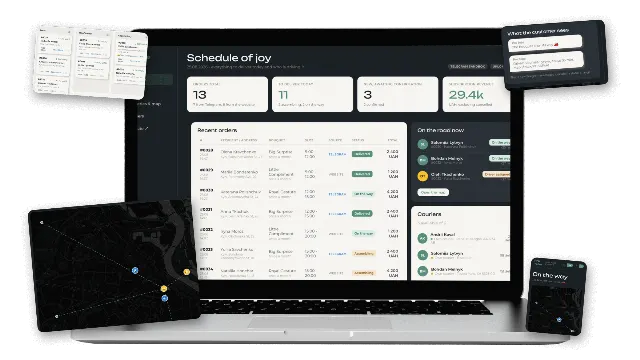
1. Unique processes. The way you work is a competitive advantage, not something to squeeze into someone else's pipeline. An example from our work: a Kyiv flower service sells bouquet subscriptions. We built a Telegram bot that takes the order in eight steps (bouquet, frequency, recipient, phone, address, time slot, confirmation), a CRM with an order kanban, a courier directory and a live map where every delivery moves along its route with updates every ten seconds, and the customer gets a tracking page in Telegram.
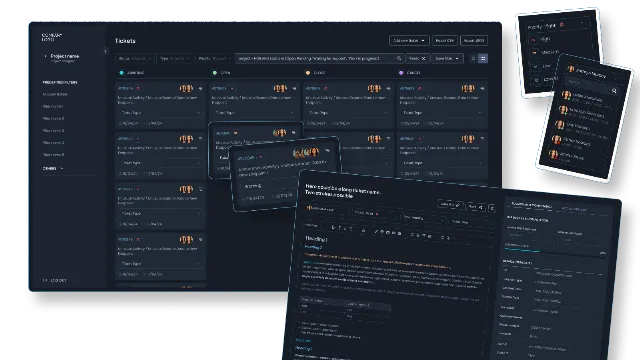
2. Many integrations. In the same project the CRM requests an Uklon Delivery driver through the API in one click and immediately gets the driver, car, ETA and price back, and Uklon's status callbacks move the order forward. Every integration had a sandbox implementation behind the same interface, so the whole flow worked in demos before real credentials were connected. In another project, a task system for a telecom support team in France, tickets are created automatically from third-party alarm systems, and sign-in and roles run through Keycloak.
3. Per-user cost at scale. Price the licenses several years ahead. For example, 50 users on Odoo Custom is 50 × EUR 22.90 - 33.90, which is EUR 1,145 - 1,695 per month or EUR 13,740 - 20,340 per year for licenses alone, before implementation. A custom system has no seat fees: you pay for the build once, then for hosting and support. On the other hand, for 5 people on KeyCRM or SalesDrive, a custom CRM will never pay off on license cost, and that is worth admitting.
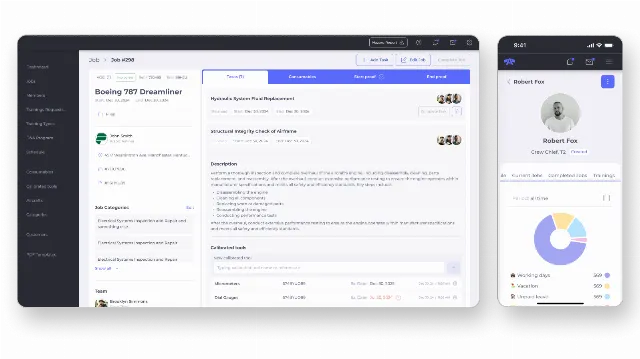
4. Owning the data and code. For an ERP the whole company depends on, it matters that nobody else changes the prices, limits and roadmap. Our ERP for a US aircraft service company was built over six months on Symfony/PHP, React and Mercure: clients, orders, service scheduling, staff shifts synced with Google Calendar and Apple Calendar, real-time warehouse inventory and regulatory compliance tracking. All staff use it, from technicians to the CEO.
Checklist: off-the-shelf or custom CRM?
Ask yourself these questions. The more "yes" answers, the closer you are to a custom CRM.
- Your post-sale process (production, service, delivery, subscriptions) does not fit the statuses of an off-the-shelf CRM.
- The team keeps parallel spreadsheets or chats every day because the CRM cannot do what is needed.
- You need integrations missing from the vendor's catalog, or with your own systems.
- You have more than 20-30 users, and three years of licenses already compare with the cost of a build.
- You are hitting plan limits on orders, leads or messages.
- Different roles need different screens and permissions, not one interface for everyone.
- It matters that the company owns the code and data and can hand the system to another team.
- You have a budget from $10,000 and a person who can make decisions about processes.
If only one or two are "yes", configure an off-the-shelf CRM. If five or more, it is worth pricing a custom system.
How much does a custom CRM cost with Lytvynov Production?
With us a smaller internal tool for one department starts at $10,000, and a full CRM/ERP for a mid-size company typically costs $40,000 to $90,000. A focused CRM for one team usually takes 8 to 12 weeks to a first release, a full ERP 4 to 6 months, in modules. Our core stack is PHP/Symfony on the backend and React on the frontend. We give a fixed quote after a short scoping call, and you can get a first range through our project estimate form. For how fixed milestones compare with a monthly team, read dedicated team vs fixed price.
If your business sells through a marketplace and is thinking about its own site, see our service for moving from Prom.ua to your own online store. For a comparison with HubSpot, read custom CRM vs HubSpot.
Next step
Tell us how your team works today: which CRM or spreadsheets, how many people, which integrations, and the three tasks that take the most time. On a short call we will tell you whether configuring an off-the-shelf CRM is enough or a custom system will really pay off, and what it would cost. Book a consultation.