En
 Fr
 De
 It
 Es
 Uk
How much does a custom ERP cost for a 10-60 person company?
With Lytvynov Production a full custom ERP for a mid-size company typically costs $40,000 to $90,000, and a first module for one department starts from $10,000. A typical US or UK agency quotes roughly 2.5 to 4 times more for the same scope. For a company of 10 to 60 people the usual path is 4 to 6 months of work, delivered module by module, with staff using the first module while the next one is built.
ERP here means the operational system a company runs on: orders and jobs, scheduling, staff and shifts, warehouse and stock, purchasing, compliance and the reports management reads every week. For companies of this size, a custom ERP rarely replaces accounting. It replaces the spreadsheets, chats and three or four disconnected tools that currently hold the process together.
What are typical custom ERP price ranges by scope?
Custom ERP cost scales with the number of modules, roles and integrations. The table shows our typical ranges for the build, including data migration and a pilot, next to what a typical US or UK agency quotes.
| ERP scope | Typical modules | Timeline | With Lytvynov Production | Typical US/UK agency |
|---|---|---|---|---|
| First module for one department | Orders or jobs, roles, notifications, import from spreadsheets | 6 to 10 weeks | from $10,000 | $25,000 to $60,000 |
| Core ERP for operations | Orders, scheduling, staff and shifts, documents, 2 to 4 integrations | 3 to 4 months | $10,000 to $40,000 | $40,000 to $160,000 |
| Full ERP for a mid-size company | All of the above plus warehouse, purchasing, compliance, finance hooks, management dashboards | 4 to 6 months | $40,000 to $90,000 | $100,000 to $360,000 |
| Multi-company or multi-platform system | Several legal entities, customer and partner portals, mobile apps | 6 months and more | $100,000 and up | $250,000 and up |
These are ranges by project type, not quotes. We give a fixed quote after a short scoping call and split it into milestones, so you know the total for each module before it starts.
Which modules should a custom ERP start with?
Start with the module where the most money or time leaks today, which for most service and distribution companies is order or job management. Everything else in an ERP hangs off orders: schedules, stock reservations, invoices and reports.
A typical sequence for a 10 to 60 person company:
- Orders or jobs: intake, statuses, assignment, documents, notifications. This is the module everyone touches.
- Scheduling and staff: who does what and when, shifts, crews, equipment, calendar sync.
- Warehouse and stock: levels in real time, reservations for orders, receiving, write-offs.
- Compliance and documents: certificates, inspections, deadlines, reminders before something expires.
- Finance hooks: quotes, invoices and payment status pushed to your accounting software.
- Dashboards: the weekly numbers for management, built last, once real data flows through the system.
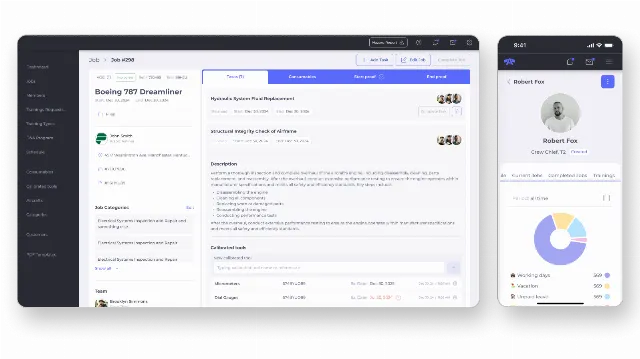
Our ERP for a US aircraft service company followed this logic over six months on Symfony/PHP, React, SQL and Mercure: client profiles and order processing, aircraft service scheduling, staff and shift management synced with Google and Apple calendars, real-time warehouse inventory and regulatory compliance monitoring, all in one platform used from the hangar floor to the CEO.
How do you scope a custom ERP so vendors can price it?
Scope an ERP by writing down workflows, roles, integrations and data, not features. A one-page list of "we need inventory, scheduling and reports" produces quotes that differ by five times, because every vendor imagines a different system.
Use this checklist for your scope document:
- Workflows in order: "a request arrives by email, a coordinator creates a job, a technician is assigned, parts are reserved, the job is closed with a signed report, an invoice is created." One paragraph per workflow.
- Roles: every group of users and what each can see, create, change and approve. Field staff, warehouse, office, managers and owners usually need five different views.
- Integrations: each external system, what data goes where, and how often. Accounting, calendars, email, payment providers, suppliers, government portals.
- Data to migrate: each spreadsheet or old database, number of rows, and an honest note on quality.
- Reports: the ten numbers management checks, with how they are calculated today.
- Rules: pricing formulas, approval thresholds, automatic status changes, deadlines.
- Volumes: orders per day, users at the same time, documents per month.
- Out of scope for release one: what you deliberately postpone.
If you do not have time to write this, a scoping phase of 1 to 2 weeks produces it with you. That document is useful even if you choose another vendor, because it makes quotes comparable.
What drives the cost of a custom ERP?
Roles, integrations, data migration and business rules drive most of the cost of a custom ERP. Screens are a small part of the budget.
| Cost driver | Lower cost | Higher cost |
|---|---|---|
| Roles and permissions | Two or three roles | Six or more roles with different approval rights |
| Integrations | Modern APIs with sandboxes | Legacy systems, file exchanges, government portals |
| Data migration | One clean spreadsheet per entity | Years of mixed spreadsheets and an old database |
| Business rules | Fixed statuses | Pricing formulas, approval chains, regulatory checks |
| Real-time needs | Refresh on demand | Live boards, stock and schedules for many users |
| Mobile and offline | Responsive web | Offline mode for field staff, native apps |
| Reporting | Fixed dashboards | Flexible report builder and exports |
| Audit and compliance | Basic change log | Full audit trail, retention rules, signed records |
The single most underestimated line is migration. An ERP is only useful once the real data is in it, and real data has duplicates, free-text dates and fields that changed meaning over the years. We plan migration as its own milestone with repeatable scripts and test imports your team checks before the switch.
What hidden costs come with a custom ERP?
The costs people forget are internal time, the parallel-run period and maintenance. None of them is large, but together they decide whether the project feels on budget.
- Your team's time: someone on your side owns priorities and answers questions every week. Plan 2 to 4 hours a week for that person, more during scoping and the pilot.
- Parallel run: for 1 to 4 weeks the old spreadsheets and the new module both exist. Staff do some work twice while trust builds.
- Training: short sessions per role and a written guide. A good interface keeps this small.
- Hosting: for this company size usually $50 to $400 a month.
- Maintenance: updates, security patches, monitoring and small changes, commonly budgeted at 15 to 20 percent of the build cost per year.
- Growth: once people trust the system they will ask for more. This is a good problem, and it is why we price modules separately.
Custom ERP or NetSuite, Odoo or SAP Business One?
Choose a packaged ERP when your processes are standard accounting, purchasing and inventory. Choose a custom ERP when your operations are what makes you different and a packaged product would need heavy customization to follow them.
| Factor | Packaged ERP | Custom ERP |
|---|---|---|
| Standard accounting and tax | Strong, built in | Keep your accounting tool and integrate |
| Specific operational workflows | Customization, partner consultants | Built around your process |
| Licenses | Per user, per module, yearly | None, you own the code |
| Time to first value | Weeks for standard modules, months with customization | 6 to 10 weeks for the first module |
| Changing a rule later | Consultant change request | Your developers or ours change the code |
| Vendor lock-in | High | Low, code and data are yours |
A common setup for a 10 to 60 person company is a hybrid: accounting stays in the tool the accountant already uses, and a custom operational ERP handles orders, scheduling, stock and compliance, pushing invoices and payments to accounting through an API.
How long does custom ERP development take?
A complete custom ERP for a 10 to 60 person company usually takes 4 to 6 months, delivered in modules:
- Scoping (1 to 2 weeks): workflows, roles, integrations, data and a fixed quote per module.
- First module (6 to 10 weeks): orders or jobs, with data imported and a pilot with one team.
- Further modules (4 to 8 weeks each): scheduling, warehouse, compliance, finance hooks and dashboards.
- Support and growth: a monthly plan, or a dedicated team if the roadmap keeps growing.
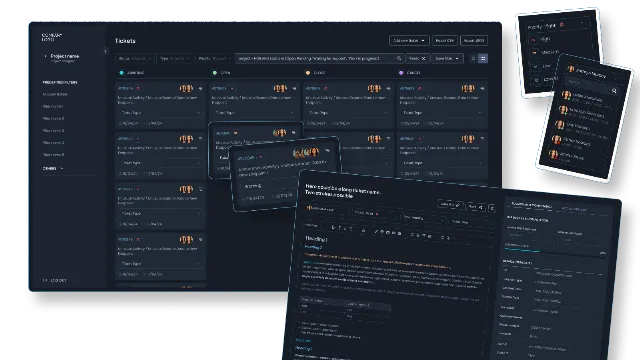
Weekly demos on a staging server keep surprises small. In our telecom support project in France, a ticket and task system with Keycloak roles and alarm-system integrations went from scope to daily use in three months.
Can you replace an old internal system with a custom ERP?
Yes, and it is usually done gradually. Many companies already run on an internal system that works but is hard to change, often an old PHP application or a heavily customized CRM. We start with a short audit of the code, data and hosting, then either modernize it step by step or build the new ERP module by module next to it and move users one workflow at a time. Our guide on modernizing a legacy PHP application explains how we decide between the two.
How we build custom ERPs
Internal business systems are the core of what we have built since 2020. Every ERP project starts with a written scope and a fixed quote per module, runs with weekly demos, keeps the code in your repositories from day one and ends with a system you own outright.
If your company is still deciding between a CRM and a full ERP, our guide to custom CRM development covers the smaller first step. To discuss your workflows and see which module should go first, visit our custom CRM and ERP development page or get a first range with the estimate form.