 En
En
 Fr
Fr
 De
De
 It
It
 Es
Es
 Uk
Uk
How much does an AI agent cost to build?
With Lytvynov Production, a custom AI agent starts from $10,000 for a single workflow and typically costs up to $30,000 for a business agent wired into several systems, while multi-agent or heavily regulated systems scale up to about $150,000. A typical US or UK agency quotes roughly 2.5 to 4 times more for the same scope. The number depends less on "AI" and more on how many systems the agent must read from and write to, how much damage a wrong action can cause, and how carefully accuracy has to be proven before launch.
An AI agent, in this guide, means software built around a large language model (OpenAI, Anthropic Claude or an open model) that does more than chat: it calls tools and APIs, looks up data, and takes actions such as creating a ticket, updating a CRM record or dispatching a job. That ability to act is what separates AI agent development cost from the cost of a simple chatbot. Every action needs an integration, permissions, logging and a plan for when the model gets it wrong.
What are typical AI agent cost ranges by complexity?
With us, the simplest useful agents start from $10,000, and most business agents with real integrations land between $10,000 and $30,000. The table below shows our typical ranges for a one-off build (development, evaluation and a pilot, not the monthly run cost) next to what a typical US or UK agency quotes for the same scope.
| Agent type | Typical scope | Timeline | With Lytvynov Production | Typical US/UK agency |
|---|---|---|---|---|
| Single-workflow agent | One job (for example, triage inbound emails), 1 to 3 tools, read-mostly | 4 to 8 weeks | from $10,000 (typically $10,000 to $15,000) | $25,000 to $60,000 |
| Multi-tool business agent | Several systems (CRM, helpdesk, database), writes data, human approval steps | 8 to 16 weeks | $10,000 to $30,000 | $25,000 to $120,000 |
| Customer-facing agent at scale | Public users, RAG over a knowledge base, handover to staff, analytics | 10 to 20 weeks | $15,000 to $50,000 | $40,000 to $200,000 |
| Multi-agent or regulated system | Several cooperating agents, fine-tuned models, strict audit and data rules | 4 to 9 months | $50,000 to $100,000 | $125,000 to $400,000+ |
Treat these as orientation, not a quote. Two agents that sound identical in a sales call can differ by a factor of three once integrations, edge cases and compliance are listed. At Lytvynov Production we give a fixed quote after a short scoping call, because that is where the real scope becomes visible.
Should you build or buy an AI agent?
Buy when a vendor already sells the workflow you need and your data lives in systems that vendor supports; build when the agent must act inside your own product or follow rules no vendor knows. Many companies end up with both: an off-the-shelf agent for generic tasks and a custom agent for the process that differentiates them.
| Factor | Buy (SaaS agent) | Build (custom agent) |
|---|---|---|
| Time to first result | Days to a few weeks | 4 to 16 weeks |
| Upfront cost | Low, mostly setup | From $10,000 with us, most business agents $10,000 to $30,000 (2.5 to 4 times that at a US/UK agency) |
| Ongoing cost | Per seat, per conversation or per resolution, grows with usage | Tokens, hosting and maintenance, grows more slowly with usage |
| Fit to your process | Limited to vendor features and connectors | Exactly your rules, systems and data |
| Data control | Data passes through the vendor | You choose models, hosting and retention |
| Vendor lock-in | High | Lower, especially with model-agnostic design |
The honest test is volume multiplied by specificity. A small support team answering common questions on a popular helpdesk will rarely beat a vendor product on cost. A company that wants an agent to quote, schedule or dispatch work inside its own back office usually cannot buy that at all. For customer support specifically, our guide on AI agents for customer service compares vendor tools and custom builds in detail.
What drives the cost of AI agent development?
Integrations, risk and evaluation drive most of the cost; the prompt itself is a small part. When we scope an agent, these are the items that move the estimate the most.
- Number and quality of integrations. Each system the agent touches needs authentication, error handling and tests. A clean REST API may take days; a legacy system without an API can take weeks.
- Read versus write actions. An agent that only reads and summarizes is far cheaper than one that changes records, sends messages or spends money. Write actions need permission checks, confirmation steps and audit logs.
- Knowledge retrieval (RAG). If the agent must answer from your documents, you pay for ingestion, chunking, a vector store such as pgvector or Qdrant, and retrieval tuning. Our RAG development page explains that layer.
- Evaluation and guardrails. A serious agent needs a test set of real cases, automatic scoring and regression checks before every prompt or model change. This work is often skipped in cheap quotes and is the main reason agents fail in production.
- Human in the loop. Approval queues, escalation rules and an interface for staff to review the agent's work add scope but lower risk.
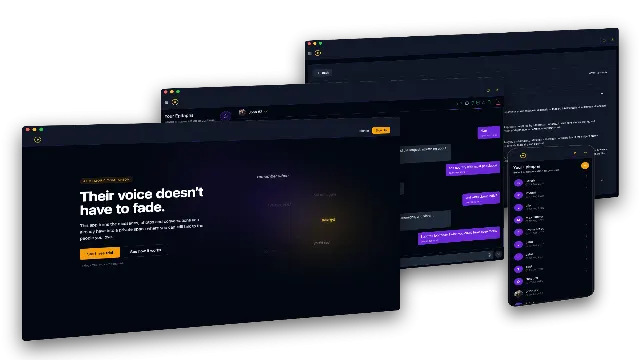
- Model strategy. Using hosted APIs from OpenAI or Anthropic is the cheapest start. Fine-tuning or hosting open models adds GPU infrastructure and MLOps. In our AI Grief Companion project, LoRA training on an open model and a RAG memory layer were justified by the product, but most business agents do not need that.
- Compliance and data rules. Encryption, data residency, retention and deletion requirements add design and testing time.
How much does it cost to run an AI agent each month?
Most business agents cost a few hundred to several thousand dollars a month to run, split between model tokens, hosting and monitoring. Low-volume internal agents can run for under $300 a month; customer-facing agents with heavy traffic can exceed $5,000.
| Monthly cost line | What it covers | Typical range (market, 2026) |
|---|---|---|
| LLM tokens | Input and output tokens for every model call | $50 to $5,000+ |
| Hosting | API server, workers, queues, database | $50 to $800 |
| Vector database / search | Managed or self-hosted retrieval store | $0 to $500 |
| Monitoring and tracing | Logs, traces, evaluation runs, alerting | $0 to $500 |
| Maintenance | Prompt updates, model upgrades, integration fixes | Often 15 to 25% of build cost per year |
Token costs are the line that surprises people. One user request is rarely one model call: an agent may plan, call two tools, read results and write an answer, which can mean four to eight calls. Each call resends instructions and context, so input tokens usually dominate the bill.
How do you estimate LLM token costs for an agent?
Multiply tasks per month by model calls per task by tokens per call, then apply the price per million tokens of the models you use. Doing this on paper before development prevents most budget surprises.
Here is an illustrative calculation with assumed numbers, not a quote. An agent handles 1,000 tasks a day. Each task takes five model calls averaging 4,000 tokens, so 20,000 tokens per task, 20 million per day and about 600 million per month. At an assumed blended price of $2 per million tokens, the bill is about $1,200 a month. If the same agent uses a frontier model for every step at a much higher price, the bill can multiply several times; if simple steps go to a small model, it can drop sharply.
The practical levers are well known:
- Model routing: send classification and extraction to small, cheap models and keep large models for reasoning and final answers.
- Prompt caching: OpenAI and Anthropic both offer discounted pricing for repeated context, which helps agents with long system prompts.
- Shorter context: retrieve three relevant passages instead of pasting a whole manual.
- Hard limits: cap steps per task and tokens per user so a loop cannot burn the budget.
Our integration guide for ChatGPT and Claude covers these cost controls step by step.
Where do AI agent budgets usually go wrong?
Budgets usually go wrong in three places: underestimated integrations, missing evaluation, and no owner after launch. All three are cheaper to plan for than to fix later.
Integrations are underestimated because demos use mocked data. The first time the agent meets a real CRM with inconsistent fields, duplicate records and rate limits, a week of work appears. We handle this by connecting to real sandbox accounts in the first sprint. In our flower subscription CRM project, every integration had a sandbox implementation behind the same interface, so the whole flow could be tested end to end before production credentials existed.
Evaluation is skipped because it produces no visible feature. Without a test set, nobody can say whether a new prompt or model made the agent better or worse, and teams stop improving it out of fear. A few dozen well-chosen real cases, scored automatically, is enough to start.
Ownership is forgotten because the project is treated as finished at launch. Models change, connected APIs change and users find new edge cases. Somebody needs to review failed conversations, add them to the test set and ship fixes.
Is an autonomous agent more expensive than a guided one?
Yes. The more freedom an agent has to choose actions on its own, the more you spend on guardrails, testing and monitoring. A guided agent that follows a defined workflow and asks a human to approve risky steps is cheaper to build and easier to trust.
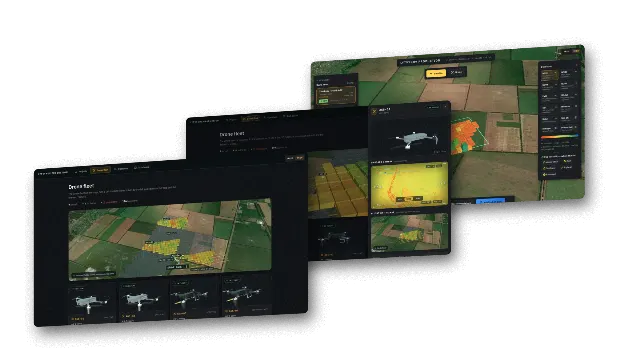
Full autonomy makes sense where actions are reversible and the rules are clear. In our drone swarm R&D project, the fleet picks up tasks from a queue as soon as an aircraft frees up, without a dispatcher. That works because the task rules are explicit and the operator sees every assignment on one map. For money, customer communication or legal commitments, we default to human approval and loosen it only after the agent's error rate is measured.
Can you start small and grow the agent later?
Yes, and that is usually the cheapest path. Start with one workflow, read-only or with approval on every action, measure accuracy for a few weeks, then add tools and autonomy where the numbers support it.
A staged plan might look like this:
- Scoping (1 to 2 weeks): map the workflow, list systems and permissions, collect 30 to 100 real examples for evaluation.
- Pilot agent (3 to 6 weeks): one workflow, a few tools, human approval, logging from day one.
- Production hardening (2 to 6 weeks): error handling, cost limits, monitoring, access control.
- Expansion: new tools and workflows, each with its own evaluation cases.
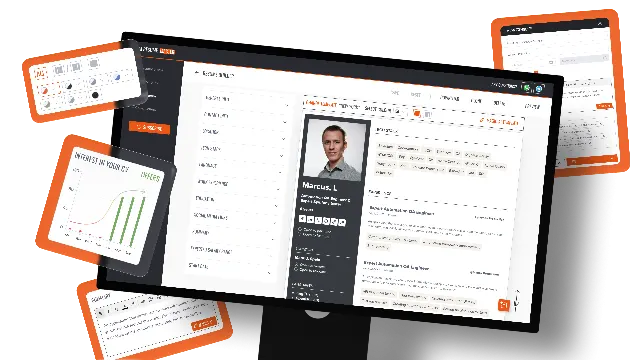
This mirrors how we built AI Resume Master, our own AI SaaS: the LLM features shipped within a three-month build and were extended as real usage showed where users needed help.
How we work on AI agent projects
AI agents start from $10,000 with us, and larger agents scale up with integrations, autonomy and compliance. We give a fixed quote after a short scoping call: we map your workflow, estimate token and hosting costs on your real volumes, and name the risks. The build then runs in fixed-scope milestones. Our senior engineers build with AI coding agents internally, which is part of how we keep timelines short, and we build MCP servers and agent tooling for our own products, so we know the operational side, not only the demo.
If you want to know what your agent would cost to build and run, see our AI agent development service or book a scoping call and bring one workflow you would like to automate.