 En
En
 Fr
Fr
 De
De
 It
It
 Es
Es
 Uk
Uk
What do MVP development services include?
MVP development services include everything between an idea and a product real users can sign up for and use: scoping, UX and UI design, back end, web or mobile front end, integrations, hosting and launch. The goal of an MVP is not a small version of the final product. The goal is the smallest product that proves or disproves your riskiest assumption, usually "people will use this and pay for it".
A typical MVP engagement with Lytvynov Production covers:
- Discovery and scope: user roles, core flows, what is in and what is explicitly out.
- UX and UI design: clickable prototype in Figma, reviewed with you before code.
- Build: back end (usually PHP/Symfony), web front end (React or Vue), mobile apps (React Native or Flutter) when mobile is essential.
- AI features: LLM-based generation, search or assistants through the OpenAI or Anthropic Claude APIs, when AI is part of the core value.
- Launch: CI/CD, Docker-based hosting, analytics, error monitoring and app store submission.
How do we build an MVP in 8 to 12 weeks?
We build an MVP in 8 to 12 weeks by fixing the scope early, designing before coding, and demoing working software every week. Here is the plan we typically follow for a web MVP with one mobile app or a responsive web app:
| Week | Focus | What you get at the end of the week |
|---|---|---|
| 1 | Discovery | User roles, core flows, in-scope and out-of-scope list, risks, fixed quote for the build |
| 2-3 | UX and UI design | Clickable prototype of every core screen, design system basics, approved by you |
| 3 | Architecture | Data model, stack decision, repositories and environments in your accounts |
| 4-5 | Core flows, part 1 | Sign-up, main entity CRUD, the first end-to-end user flow on a staging server |
| 6-7 | Core flows, part 2 | Remaining must-have flows, payments or key integration, admin basics |
| 8 | AI feature or main integration | The feature that makes the product distinct, tested with real inputs |
| 9-10 | Polish and mobile | Mobile layouts or app builds, empty states, emails, analytics events |
| 11 | Stabilization | Bug fixing, load checks, security review, content and legal pages |
| 12 | Launch | Production release, app store submission if needed, monitoring, handover notes |
Smaller MVPs with one platform and a few flows compress to 6 to 8 weeks by merging design into the first build weeks. We use AI coding agents internally, with senior engineers reviewing every change, which is a large part of why this schedule holds.
How do you cut MVP scope without killing the product?
Cutting MVP scope means keeping the one workflow that proves value and replacing everything else with the simplest thing that works. Most MVPs that miss their launch date do so because of features that do not test the core assumption: complex roles, custom dashboards, settings pages, native apps where a responsive web app would do.
Scope-cutting rules we apply in discovery:
- One user journey end to end beats five half-finished ones. If a user cannot go from sign-up to the "aha" moment, nothing else matters.
- Manual behind the curtain. Onboarding, approvals, refunds and reports can be done by your team in an admin panel for the first months.
- Buy, do not build, for authentication, payments (Stripe), email, maps and analytics.
- Web before native. Build native apps only when you need push notifications, camera, offline use or app store presence from day one.
- One pricing plan. Plan tiers and coupons can wait until someone pays.
- Admin via a framework. A generated admin (for example EasyAdmin in Symfony) instead of a custom back office.
- AI with a fallback. If the AI feature fails, the user can still complete the task manually.
Every cut item goes on a written "later" list with a rough estimate, so nothing is lost and you can decide with numbers after launch.
What does an AI MVP need that a regular MVP does not?
An AI MVP needs three extra things: a way to test output quality, a cost model per user, and a fallback when the model is wrong. Without them, the demo looks good and the first real users find the edge cases.
In practice we add a small evaluation set of real inputs in week 1, log prompts and outputs from the first day on staging, set a spend limit per user, and keep prompts editable without a release. When the product answers questions from your own documents, we use retrieval rather than fine-tuning (see RAG development). For LLM features inside an existing product rather than a new one, see AI integration services.
Which MVPs have we built?
We have built MVPs for our own products and for clients, usually in around three months from start to launch.
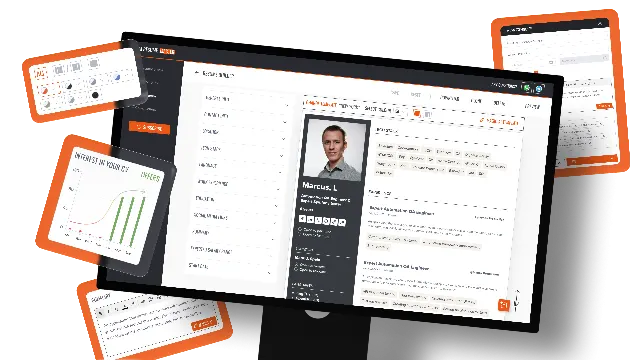
- AI Resume Master is our own AI resume builder, built in about three months. It uses LLMs to write and improve resume content and cover letters, supports LinkedIn import and PDF export, and reached 50,000 monthly active users.
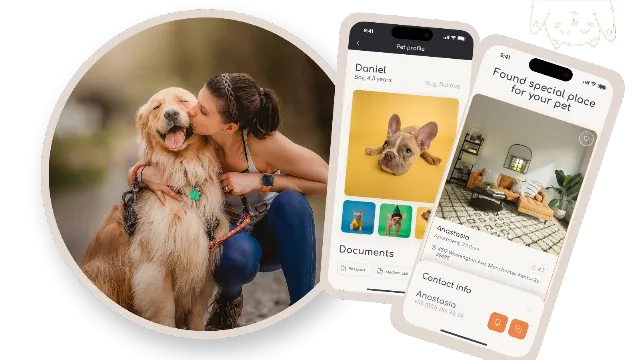
- Kodcy is a pet-boarding marketplace developed in three months with iOS and Android apps, a map view of nearby hosts, real-time chat and flexible search, plus a landing page and launch campaign.
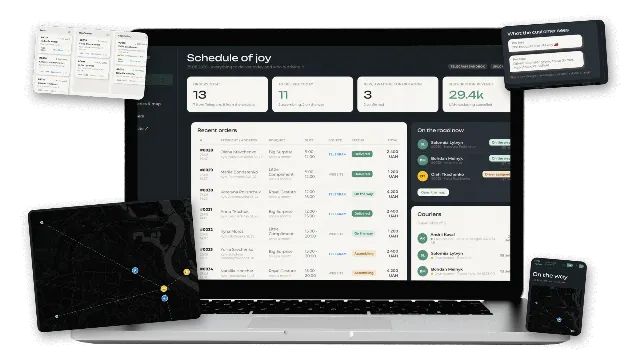
- Flower subscription service digitized a flower studio's ordering: an order API, a Telegram bot, a CRM with courier dispatch through Uklon Delivery, and live tracking. Every integration has a sandbox implementation, so the product was demonstrable end to end from day one.
How much does MVP development cost?
MVP development cost is driven by platforms, user roles, integrations and AI features, not by the number of screens. A single-platform MVP with two to four core flows and no integrations fits in 6 to 8 weeks; web plus mobile with payments and one or two integrations takes 10 to 14 weeks; an AI-first product, marketplace or regulated-data product can take 12 to 20 weeks.
We give a fixed quote for the build after a short scoping call and the discovery week. Most MVPs land at $10,000 to $20,000 with us. For a detailed breakdown by feature, see our guide to MVP development cost, and for the full step-by-step method, the MVP development process.
What happens after launch?
After launch the MVP turns into a product, and the priorities change from "ship" to "learn". We usually plan two to four weeks of post-launch support to fix what real users find, then agree on a version two roadmap based on data rather than the original wish list. If the MVP is the first version of a subscription business, the next steps look like SaaS development: billing, teams, roles and an admin that scales.
Everything we build lives in your repositories and cloud accounts, with documentation and a handover session, so you can continue with us as a dedicated team or with your own hires.
When is an MVP not the right first step?
An MVP is not the right first step when the riskiest question can be answered without software. If you are unsure whether anyone has the problem, ten customer interviews and a landing page with a waitlist are cheaper than any build. If the question is whether a workflow is possible at all, a clickable Figma prototype tested with five target users often answers it in two weeks. And if you already have paying customers on a spreadsheet or a no-code tool, the next step may be a focused rebuild of the part that breaks, not a new product. We say this in discovery when it applies, because an MVP built to answer the wrong question wastes the budget of the one that follows.
Next step
Send us a short description of the product, who it is for and what you want the MVP to prove. We start with a short discovery week that ends with a clickable scope, a week-by-week plan and a fixed quote. Book an MVP scoping call.