 En
En
 Fr
Fr
 De
De
 It
It
 Es
Es
 Uk
Uk
What AI integration services actually cover
AI integration services add large language model features to software that already exists: your SaaS, internal tool, mobile app or customer portal. The product keeps its users, database and business logic; the AI integration adds a new capability on top, such as drafting text, answering questions over your documents, extracting fields from files or classifying incoming requests.
This is different from building an AI product from scratch. An integration has constraints a greenfield project does not: an existing data model, existing permissions, existing users who will notice if something gets slower or less reliable. Most of the engineering effort in a ChatGPT integration or Claude API integration goes into those constraints, not into the prompt. The model call itself is often a dozen lines of code. The work around it (data access, security, evaluation, cost control, failure handling) is what decides whether the feature survives contact with real users.
Which AI features can we add to your product?
Most requests we see fall into six patterns. Knowing which pattern you need tells you most of the architecture and a good part of the cost before anyone writes code.
| Feature pattern | Example | Typical technique | Accuracy risk |
|---|---|---|---|
| Generate or rewrite text | Draft a proposal, rewrite a product description | Prompting with templates and your style rules | Low to medium |
| Summarize | Summarize a support thread or a long contract | Prompting, chunking for long inputs | Medium |
| Extract structured data | Pull fields from invoices, CVs or emails | Structured output with schema validation | Medium |
| Classify and route | Tag tickets, detect intent, score leads | Prompting or a small fine-tuned model | Low to medium |
| Answer over your data | Q&A over docs, policies, product catalog | RAG (retrieval-augmented generation) | High, needs evaluation |
| Take actions | Create a ticket, update a record, send a message | Tool calling with permissions | High, needs guardrails |
The last two rows usually grow into their own projects. Question answering over company knowledge is covered on our RAG development page, and assistants that take actions are covered under AI agent development.
How we integrate AI into an existing app safely
A safe OpenAI integration or Claude API integration keeps the model behind your own server and treats every output as untrusted input. That single principle drives most of the design below.
A dedicated AI layer in your back end. The browser or mobile app never calls OpenAI or Anthropic directly. It calls your API, which checks the user's permissions, builds the prompt from data the user is allowed to see, calls the model and validates the result. API keys, prompts and rate limits stay on the server. In a Symfony application this is typically a service with a provider interface; in other stacks the shape is the same.
Provider abstraction. We put OpenAI, Claude and, where needed, an open model behind one interface. Switching or mixing providers becomes a configuration change, and you can route simple requests to a cheaper model and hard ones to a stronger model.
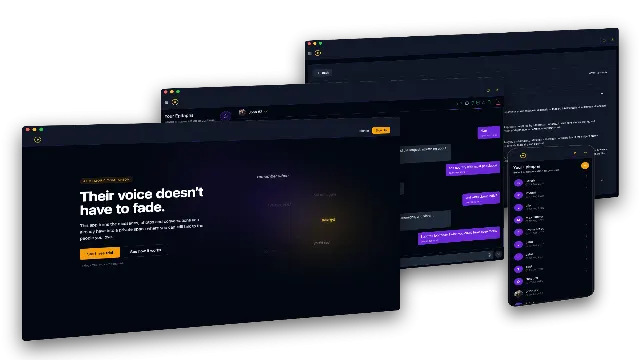
Prompts as versioned data. Prompts change far more often than code. Storing them with a version history, as we did in the AI Grief Companion platform, lets the team tune tone and instructions without a release and roll back when a change makes things worse.
Streaming and fallbacks. Long generations stream to the user so the interface does not freeze. Timeouts, retries and a fallback model handle provider outages, which do happen.
Prompting, RAG or fine-tuning?
Start with prompting, add retrieval when answers must reflect your own data, and fine-tune only when you need a specific style or behavior that prompting cannot hold. Most business integrations never need fine-tuning.
| Approach | When it fits | Effort | Keeps up with new data |
|---|---|---|---|
| Prompting | Generation, rewriting, classification with clear rules | Low | Yes, via prompt context |
| RAG | Answers must come from your documents or records | Medium | Yes, re-index new content |
| Fine-tuning (for example LoRA) | Consistent voice or format, narrow repetitive task, smaller cheaper model | High | No, needs retraining |
We have shipped all three. AI Resume Master uses prompting to generate and improve resume content. The AI Grief Companion combines LoRA fine-tuning on an open model with RAG memory, because it had to reproduce one specific person's voice, which prompting alone could not do.
Guardrails: privacy, hallucinations and cost per request
Guardrails are the part of generative AI integration that buyers rarely ask about and later care about most. We scope them from day one.
- Data privacy. Only the fields a feature needs are sent to the model. Personal data is masked where possible. For sensitive products we encrypt at rest and at ingest; the AI Grief Companion encrypts every message with per-message AES-256-GCM under a KMS envelope key. Where data cannot leave your infrastructure, an open model hosted on your servers is an option.
- Hallucinations. Factual answers are grounded in retrieved sources and cite them. Structured outputs are validated against a schema and rejected if they do not match.
- Evaluation. We build a fixed test set of real inputs with expected results and run it on every prompt or model change. Without it, you cannot tell whether a change made the feature better or worse.
- Cost per request. Every call is logged with token counts. Caching, shorter prompts and model routing keep cost predictable, and hard limits stop runaway usage.
- Prompt injection. Content from users or documents is treated as data, never as instructions, and actions triggered by the model are checked against the user's real permissions.
Process and timeline for an AI integration
A first AI feature in an existing product typically takes 4 to 8 weeks from kickoff to production. The timeline depends more on data access and the state of the codebase than on the model.
- Scoping (1 to 2 weeks). We review the codebase and data, agree on one measurable use case, collect 30 to 100 real examples for evaluation and test two or three models against them. You get a fixed quote and an architecture note.
- Prototype behind a feature flag (1 to 2 weeks). A working version on real data, visible only to your team, with logging and cost tracking already in place.
- Hardening (1 to 3 weeks). Guardrails, error handling, permissions, streaming UI, evaluation runs in CI, load and cost checks.
- Rollout (1 week). Gradual release to a share of users, monitoring of quality and cost, prompt adjustments based on real usage.
We run our own delivery with AI coding agents under senior engineers, which shortens the build phases. It does not shorten the evaluation, because that depends on real data and real users.
What affects the cost of AI integration
We give a fixed quote after a short scoping call. The main cost drivers are the number of distinct features, how accurate answers must be (and therefore how much evaluation is needed), the condition of your data, security and compliance requirements, and whether the model must run on your own infrastructure. A single prompting feature is the smallest scope; RAG question answering over company knowledge or an action-taking assistant needs far more evaluation and integration work. Monthly model usage is estimated separately. Our guide on integrating ChatGPT or Claude into your product walks through these decisions in more detail.
AI features for an existing product start from $10,000 with us; our AI app development cost guide shows how larger scopes are priced.
Why teams choose us for AI integration
We build AI features into products we run ourselves, so we carry the consequences of our architecture choices.
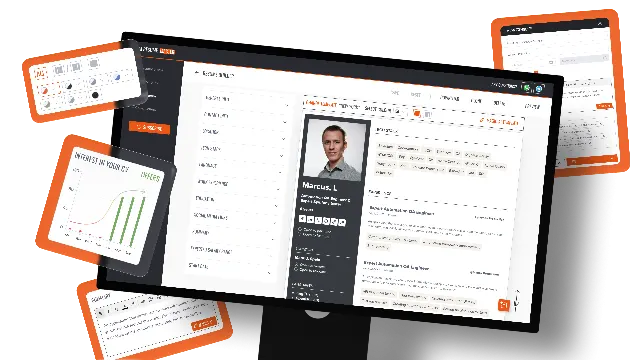
- Shipped LLM features at scale. AI Resume Master, our own product, was built in about three months and generates, rewrites and improves resume content and cover letters with large language models. It reached 50,000 monthly active users.
- Deep AI stacks when needed. For a US grief-tech startup we built ingestion of ten chat-export formats, LoRA fine-tuning on Qwen2.5-7B, RAG memory, a fact graph in Neo4j and encryption at ingest.
- An existing-product mindset. Our main back-end stack is PHP and Symfony, with React, Vue or Angular on the front end, which is what many products that need AI integration already run on.
- Senior engineers with AI tooling. We use AI coding agents in our own delivery and build MCP servers for our internal tools, so we know where these models are reliable and where they are not.
Rated 5.0 on Upwork with 100% Job Success. If you are comparing vendors, our checklist on how to choose an AI development company lists the questions we would ask ourselves.
Next step
Tell us which feature you want and what data it needs. In a 30-minute call we will say whether prompting, RAG or something else fits, flag the main risks and propose a short scoping phase that ends with a fixed quote. Contact us to book the call.