




What we build
-
Architecture
Sized to the product you have today, with Lambda and API Gateway where paying per call beats a server running all day.
-
Databases and storage
RDS with PostgreSQL for relational data, S3 for files and backups, DynamoDB only where a key-value store fits better.
-
Security basics
IAM roles with narrow permissions, encryption with KMS, secrets kept out of code and databases in private networks.
-
CI/CD and monitoring
Every change built, tested and deployed to staging and production, with CloudWatch logs, metrics and alarms.
-
Cost control
Budgets and alerts, a monthly review of the bill and right-sizing once real usage is clear.
-
Moving to AWS
A product moved from a single VPS or another host, with a rehearsed cutover and a written rollback step.
What do our AWS development services include?
AWS development with us means building a product and running it on Amazon Web Services as one job. The same senior team writes the application, designs the infrastructure it runs on, sets up deployments and stays responsible for how it behaves in production. We are a product development company, not an AWS reseller or consultancy, so AWS is where our products live rather than the thing we sell.
A typical AWS engagement covers:
- Architecture sized to the product today, with a clear path for the next stage of load, not for an imagined one.
- Storage and databases: S3 for files and backups, RDS with PostgreSQL for relational data, DynamoDB where a key-value store fits better.
- Serverless pieces with Lambda and API Gateway for event handlers, webhooks, scheduled jobs and small APIs that do not need a server running all day.
- Security basics: IAM roles with narrow permissions, encryption with KMS, secrets kept out of code, private networks for databases.
- CI/CD that builds, tests and deploys every change to staging and production.
- Monitoring with CloudWatch logs, metrics and alarms, plus error tracking in the application.
- Cost control: a monthly review of the bill, budgets and alerts, and right-sizing as real usage becomes clear.
- Moving a product to AWS from a single VPS or another host, with a tested cutover plan.
Which products have we built and run on AWS?
Three published cases show the range, from a classic web platform to an AI product with GPU work behind it.
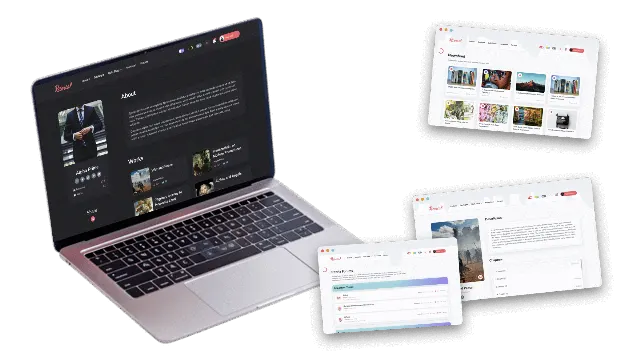
- Ritoria, a serialized-fiction platform for writers in the Middle East, built on PHP, Symfony and PostgreSQL. It ran in production on AWS for two and a half years, on EC2, RDS, S3 and SES, with real authors, readers and payouts through Stripe, PayPal and Braintree. Over that time the product went through 292 commits and 120 database migrations, which is what continuous evolution on a stable AWS setup looks like.
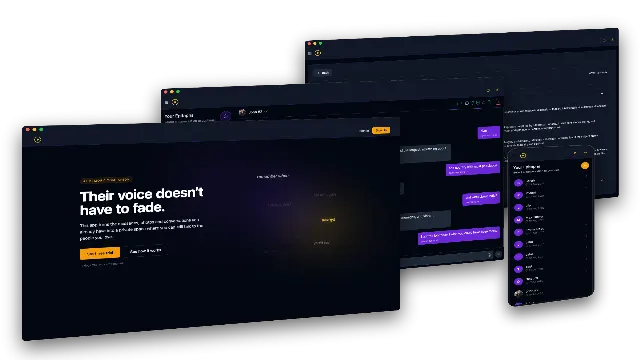
- AI Grief Companion for a US startup. Every chat message is encrypted at ingest with per-message AES-256-GCM under an AWS KMS envelope key, training datasets are built as JSONL on S3, and trained LoRA adapters land in S3 for the inference service to load per request. The back end runs Node.js and PostgreSQL, the AI platform runs Python, FastAPI and Celery.
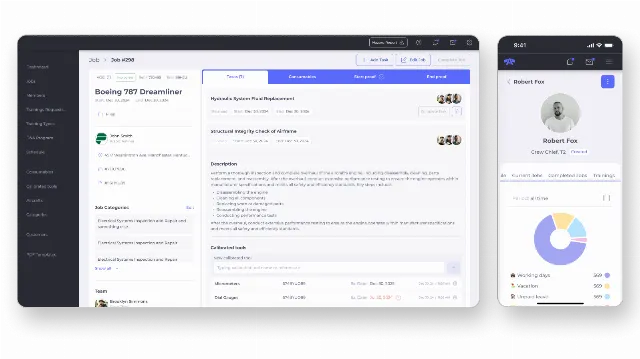
- Custom ERP for a US aircraft service company, built over six months on Symfony and React, with AWS, Kubernetes and CI/CD in the stack. It covers clients, orders, service scheduling, staff shifts, warehouse inventory and compliance tracking, and became the company's core operational platform.
Our own product, AI Resume Master, also runs with AWS in its stack next to PHP, Symfony, React and Python.
Case studies
 AI Grief Companion: Chat History Ingestion, LoRA Persona Training & RAG Memory
Case study: AI grief companion for a US startup, with chat history ingestion, LoRA persona fine-tuning and RAG memory that keeps a loved one's voice. View case study
 Custom ERP system for US aircraft service company
Case study: custom ERP for a US aircraft service company on Symfony and React, covering orders, service scheduling, staff shifts and live inventory. View case study
How do we design an AWS architecture for a product?
We design for the product you have, then write down what changes at the next stage of growth. Most web and SaaS products need fewer AWS services than the console suggests, and every extra service is something to secure, monitor and pay for.
Our defaults for a typical web or SaaS product:
- Application in containers built with Docker, so the same image runs on a laptop, in staging and in production. More on this on our DevOps, Docker and Kubernetes page.
- RDS with PostgreSQL as the main database, with automated backups, point-in-time recovery and the database kept in a private network.
- S3 for files, uploads, exports and backups, with lifecycle rules so old data moves to cheaper storage or expires.
- Lambda and API Gateway for webhooks, scheduled tasks and event handlers, where paying per call is cheaper than keeping a server busy.
- DynamoDB only when the access pattern is a simple key lookup at high volume, not as a default replacement for PostgreSQL.
- CloudWatch for logs, metrics and alarms, with log retention set so logs do not grow forever.
- Separate staging and production, ideally in separate accounts, so a test cannot touch customer data.
- Infrastructure as code in your repository, so the setup can be reviewed, repeated and handed over.
| Product situation | What we usually set up | Why |
|---|---|---|
| New SaaS, first paying customers | Containers on a small compute setup, RDS PostgreSQL, S3, CloudWatch | Managed backups and storage without running a cluster |
| Webhooks, imports, scheduled jobs | Lambda with API Gateway or scheduled triggers | Pay per call, nothing idle |
| AI product with long-running jobs | Workers on queues, S3 for datasets and model artifacts, KMS for sensitive data | Jobs run outside web requests, data stays encrypted |
| Sensitive personal data | KMS encryption, narrow IAM roles, private database network | Access is limited and auditable |
| Growing load across many services | Kubernetes, only when the numbers justify it | Orchestration costs time and money to run |
How do you move a product from a single VPS to AWS?
Moving one product from a VPS to AWS is a planned project with a short, rehearsed cutover, not a weekend of copying files. The order of work is the same for every product.
- Inventory: what runs on the server today, including cron jobs, queues, mail, file uploads, environment variables and anything someone installed by hand years ago.
- Containerize the application with Docker, so it no longer depends on the state of one machine.
- Build the AWS environment in code: network, database, storage, compute, monitoring and CI/CD.
- Copy data to RDS and S3 and keep it in sync until the switch.
- Rehearse the cutover on staging, with a measured duration and a written rollback step.
- Switch DNS in a low-traffic window, watch errors and performance, and keep the old server ready for a rollback until the new setup proves itself.
- Switch off the old server only when nothing depends on it.
Before any of this, we check whether the move is worth it. If your product runs well on one server and the risks are covered by backups and monitoring, we will say that the VPS is fine for now.
How do you keep AWS costs under control?
AWS bills grow quietly. Nobody decides to spend more; an instance stays oversized after a launch, a staging environment runs all month, logs are never deleted, and a database is sized for a peak that never came. Cost control is a routine, not a one-time project.
What we do:
- Budgets and alerts in the account, so a jump in spend reaches a person within a day, not at the end of the month.
- Tags on every resource by environment and purpose, so the bill shows what each part of the product costs.
- Right-sizing after a few weeks of real usage data, not on launch day guesses.
- Lifecycle rules for S3 and retention limits for CloudWatch logs.
- Serverless where it fits, so rarely used functions do not keep a server running.
- A monthly bill review as part of ongoing support, with changes proposed in plain language and made in small steps.
For an AI product, model and GPU costs often matter more than AWS itself. We track token spend and training runs next to infrastructure costs, so you see the whole running cost of the product.
Can you take over an existing product on AWS?
Yes. Taking over a running product, often built by another team, is a normal start for us. We begin with a review of the code, the AWS account and the deployment process: who has access, what is in code and what was clicked by hand, where backups go and whether anyone has tested a restore, what the alarms cover and what the bill pays for. You receive a written list of risks and quick fixes, ordered by impact.
If you are buying or investing in a company, the same review can be part of technical due diligence. If you need a team to keep building after the review, we can continue as a dedicated development team.
Which application stacks do you run on AWS?
We run the stacks we build with. Our core back end is PHP with Symfony for products with complex business rules, roles and admin panels. We use Node.js for products written fully in JavaScript, and Python for AI services, data pipelines and model training. Front ends are React, Next.js and React Native. For a full SaaS product, AWS hosting is one part of the build alongside accounts, billing, roles and admin tools.
What AWS work do we not take on?
We are not an AWS partner and do not hold AWS competencies, so we do not resell AWS, negotiate enterprise discounts or run programs that require partner status. We also do not take on large enterprise migrations of many systems or data-center exits. Our work is one product, or a small family of products, built and run well. If your need is bigger than that, we will say so on the first call.
How much does AWS development cost?
The cost depends on whether we build the product from scratch, move an existing product to AWS or take over and improve a running setup. Minimum project size is $10,000. AWS usage is billed to your account by AWS and comes on top of development work. We give a fixed quote for the first milestone after a short scoping call.
How we work on AWS projects
We start with a short call about the product, the current hosting and what is not working. For existing products, the first milestone is usually a review with a written report and a plan. New builds start with scoping and a fixed quote. Work happens in your repositories and your AWS account, in milestones with weekly demos. Senior engineers review every change, and AI coding agents handle routine work such as tests and infrastructure code updates.
Tell us about your product on our contact page, or describe the scope in our project estimate form.
How we work
-
Short call
We talk about the product, the current hosting and what is not working.
-
Review or scoping
An existing product gets a review with a written report and a plan. A new build starts with scoping.
-
Fixed quote
You get a fixed quote for the first milestone before the work starts.
-
Weekly demos
Work happens in your repositories and your AWS account, in milestones with a demo every week.
-
Senior review
Senior engineers review every change. AI coding agents handle routine work such as tests and infrastructure code.
Two ways to work with us
Fixed-price project
A defined scope with a fixed quote agreed before work starts and weekly demos. A good fit for a new product or a clear piece of work.
Get an estimateDedicated team
Senior engineers who work only on your product month after month, under your priorities and in your repositories.
About the dedicated team