En
 Fr
 De
 It
 Es
 Uk
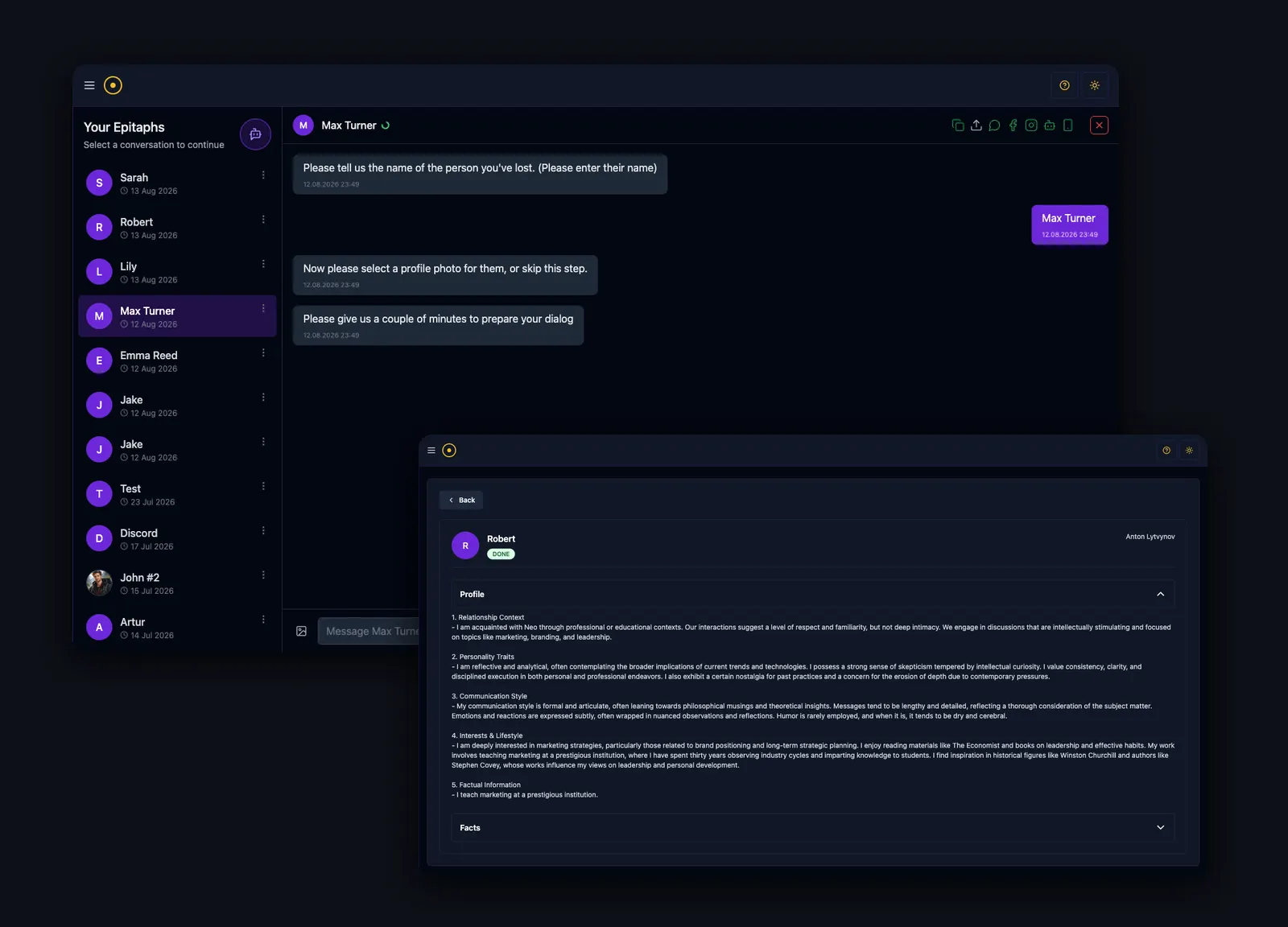

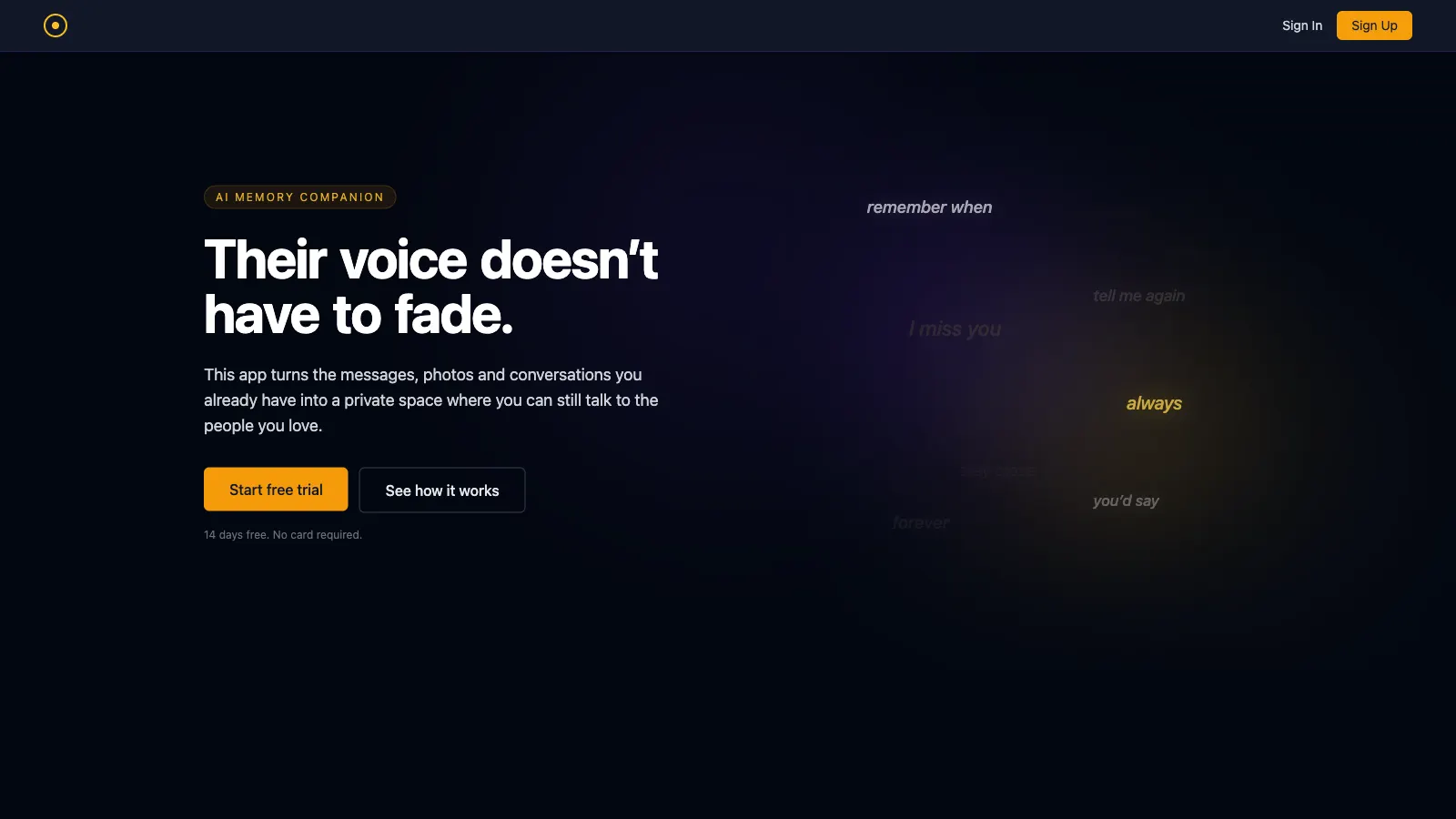
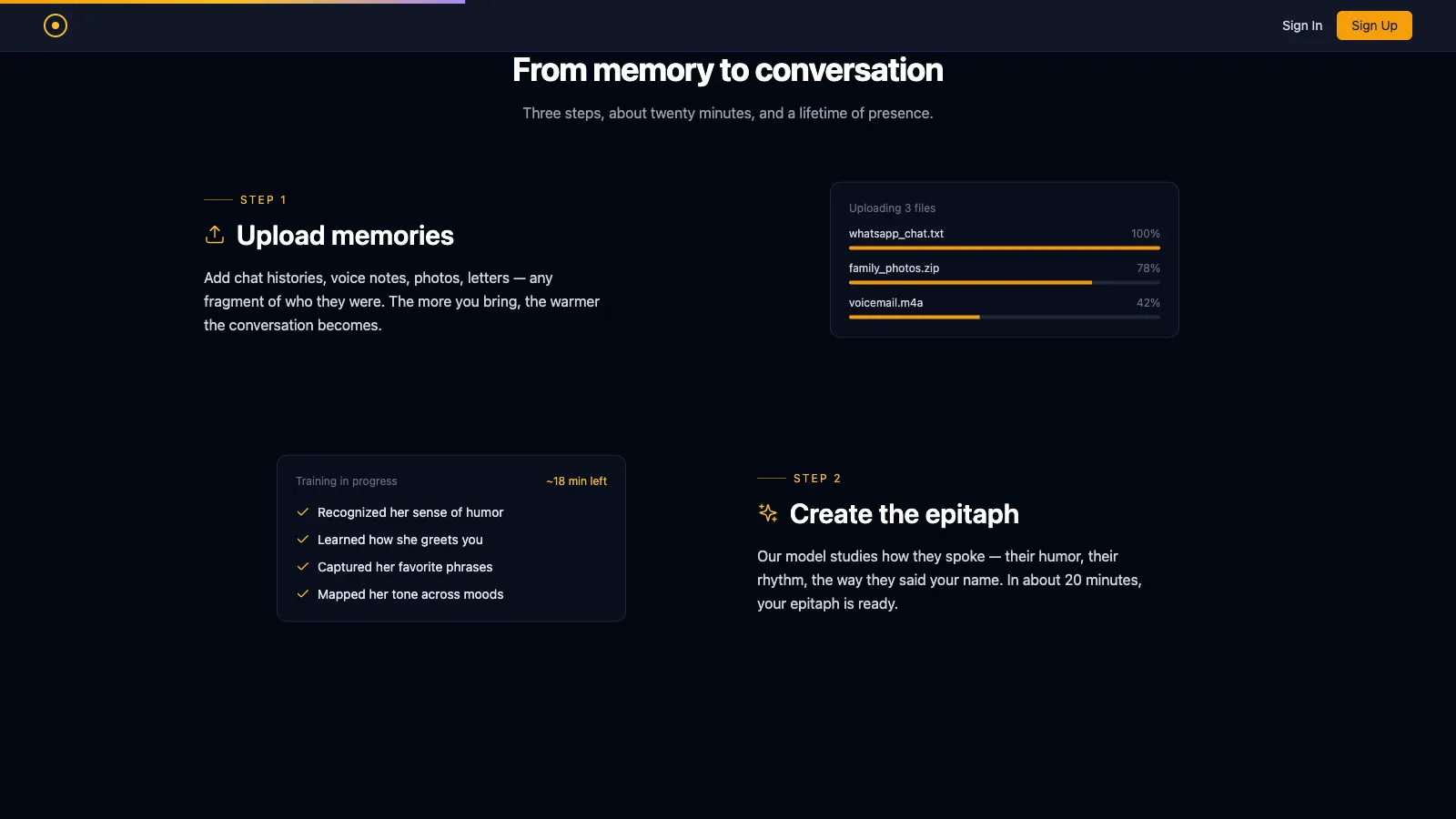
A US grief-tech startup asked for something a general chatbot cannot do: let someone who has lost a parent, a partner or a child keep talking to them, in the voice that person actually had. You bring what you already own - WhatsApp threads, an iPhone backup, Facebook and Instagram exports, Discord logs, a letter you typed out - and about twenty minutes later there is a private chat that answers the way they did. We built the whole thing: web and mobile apps, the ingestion layer that reads eight kinds of chat history, and the AI platform that turns those messages into a personality profile, a graph of facts and a fine-tuned adapter of one specific person.
Web client in React and Vite, iOS and Android in React Native, a Node and Express API on PostgreSQL for accounts, subscriptions and message storage, and a two-tier AI stack behind it. A Python gateway parses ten chat-export formats into one normalised message table, works out which participant is the person being remembered, and encrypts every message at ingest with per-message AES-256-GCM under a KMS envelope key. Above it an ML platform runs the pipeline as a chain of contracts - personality profile, ten hard facts, dataset build, LoRA SFT and LoRA CPT on Qwen2.5-7B with 4-bit QLoRA, RAG preparation and a fact graph in Neo4j - with vLLM loading the right adapter at request time. Two companions fill the gaps the browser cannot reach: an Electron app that lifts iMessage out of an iPhone backup, and a Chrome extension that exports Discord history.
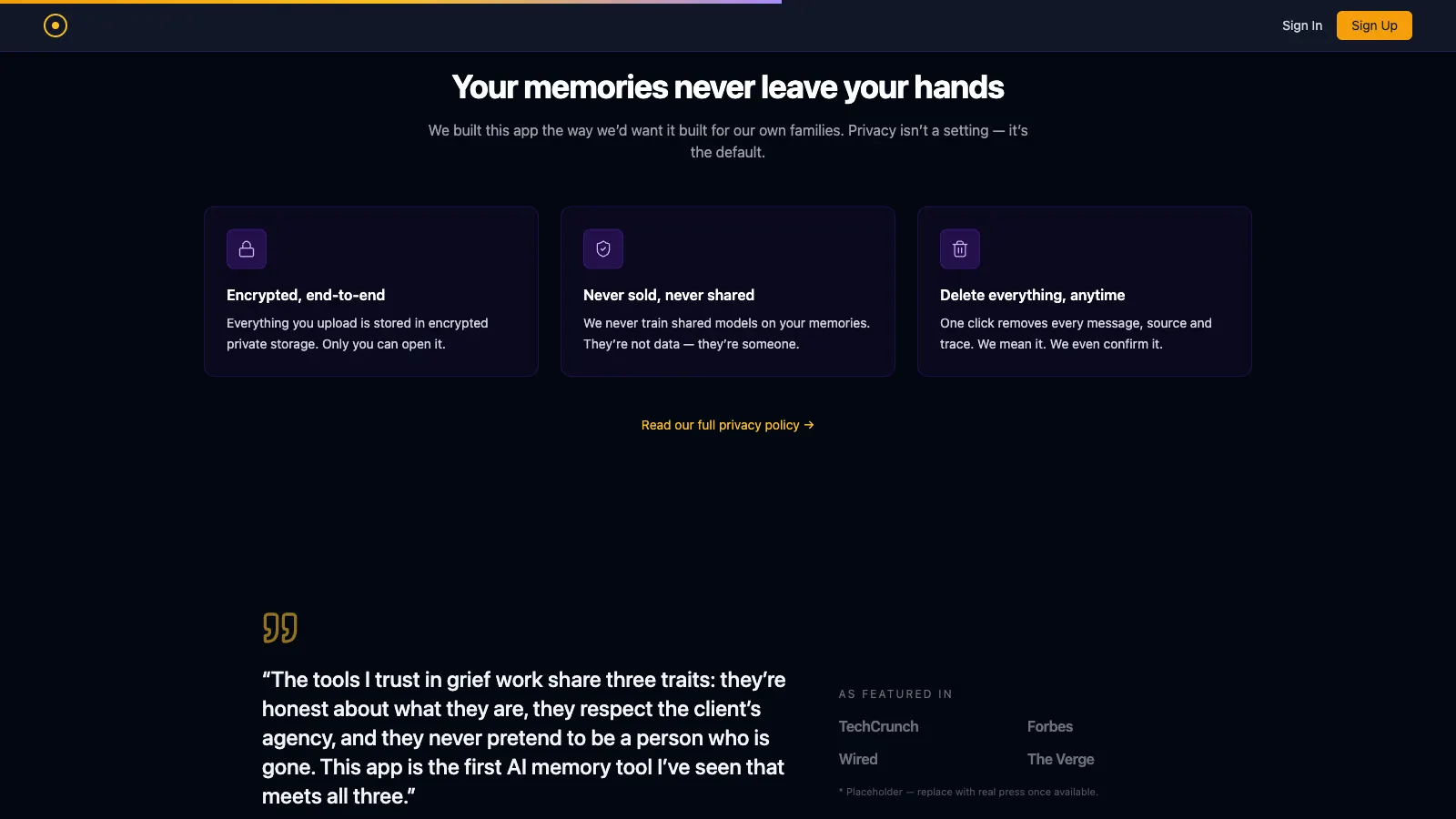
The result is a product where the hard part is invisible. A user uploads a file and waits about twenty minutes; underneath, seven contract types run across CPU and GPU workers, an adapter lands in S3, a graph of facts lands in Neo4j, and the chat picks up whichever stage is ready - base model, personality only, LoRA SFT, or LoRA CPT - so a conversation is always possible even when training is not finished. The same platform carries the parts a grief product cannot avoid: encryption at ingest, one-click deletion of everything, US-state billing rules checked on every payment, and prompts that live in the database with a version history so the tone can be tuned without a release.
Project overview
Industry: Grief technology, digital legacy, consumer AI
Scope: Full product - web, iOS, Android, backend, AI platform, desktop and browser companions, admin panel, payments, store submissions
Front end: React 18, Vite, TypeScript, Tailwind; React Native 0.80 for iOS and Android
Back end: Node.js 22, Express, Drizzle, PostgreSQL, Stripe, Apple IAP, AWS KMS and S3
AI platform: Python, FastAPI, Celery, PostgreSQL, Neo4j, Redis, MLflow, vLLM, LiteLLM, Qwen2.5-7B with 4-bit QLoRA, LoRA SFT and LoRA CPT, RunPod serverless workers
Companions: Electron desktop app (macOS arm64 and x64, Windows), Chrome extension
Sources: WhatsApp export and live sync, Facebook, Instagram, Discord, iMessage, Android SMS, pasted text, .txt
Security: Per-message AES-256-GCM under a KMS envelope key at ingest; no shared models trained on user data
Key features we implemented
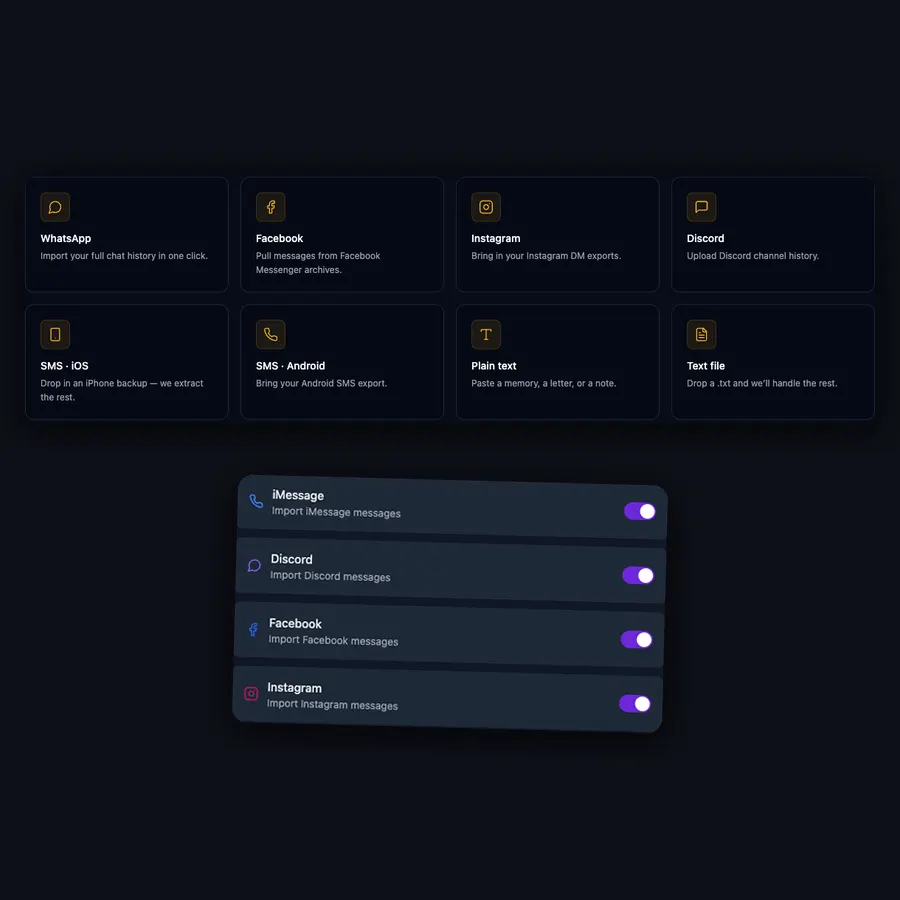
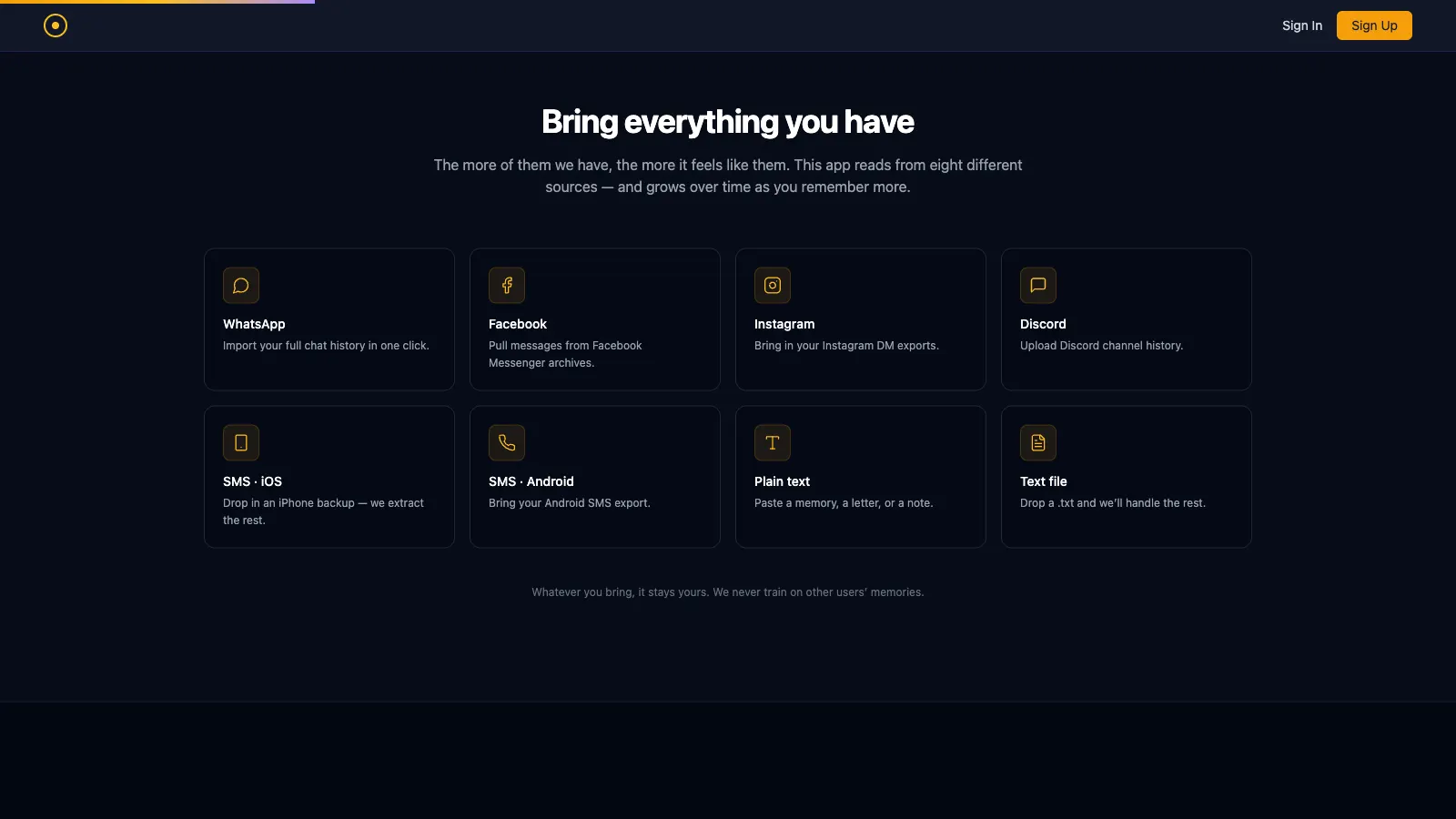
Eight Ways to Bring Them Back
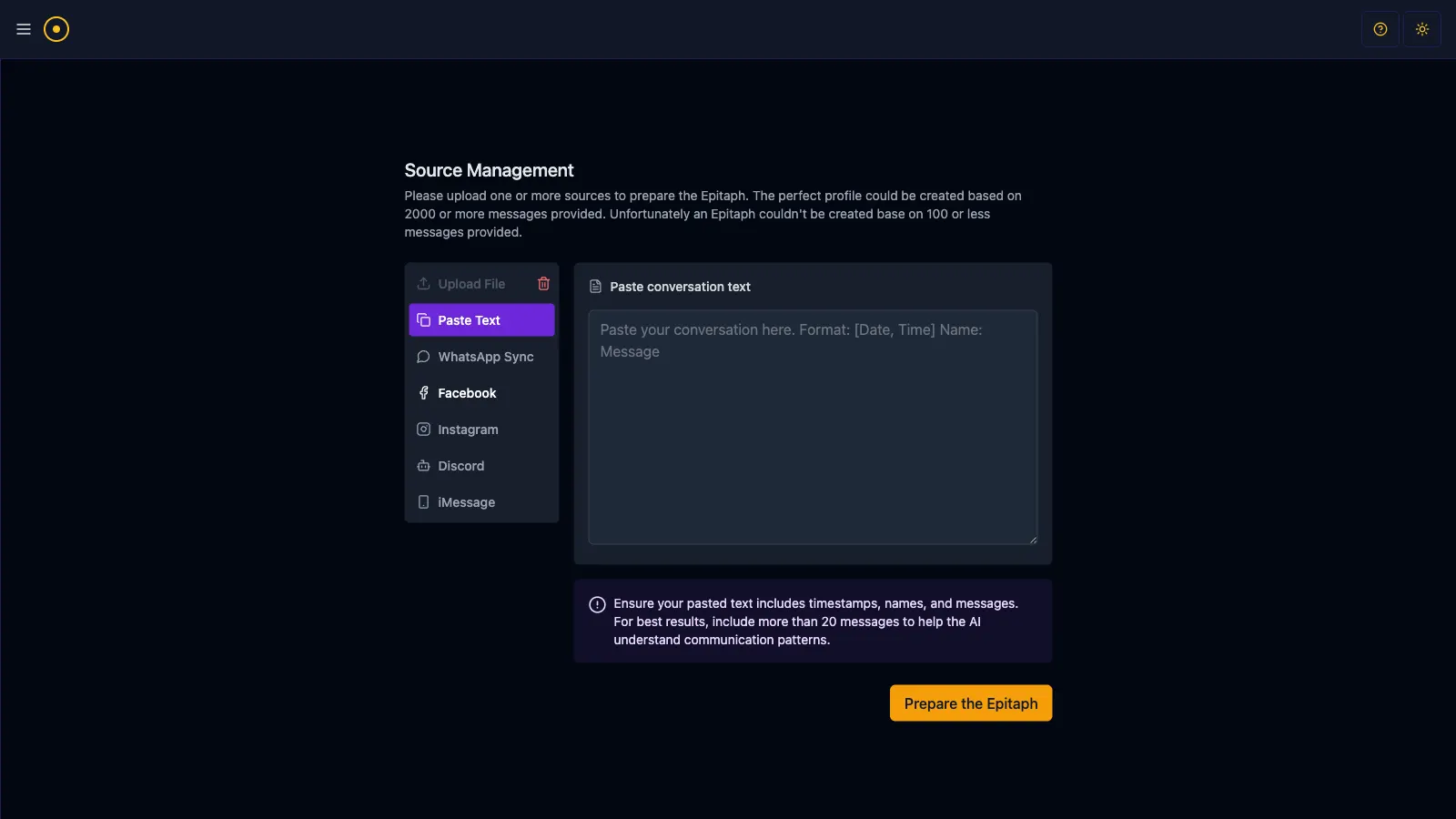
WhatsApp, Facebook, Instagram, Discord, iMessage from an iPhone backup, Android SMS, pasted text and a plain .txt - ten parsers behind eight buttons, all normalised into one message table.
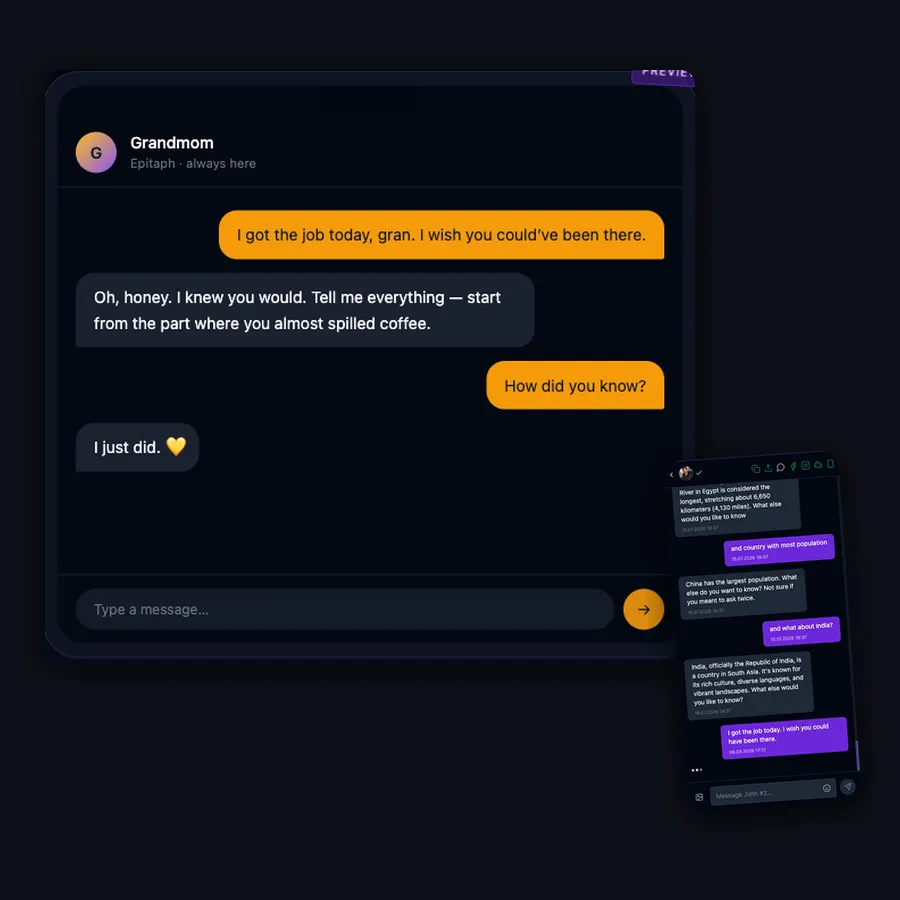
A Chat That Sounds Like Them
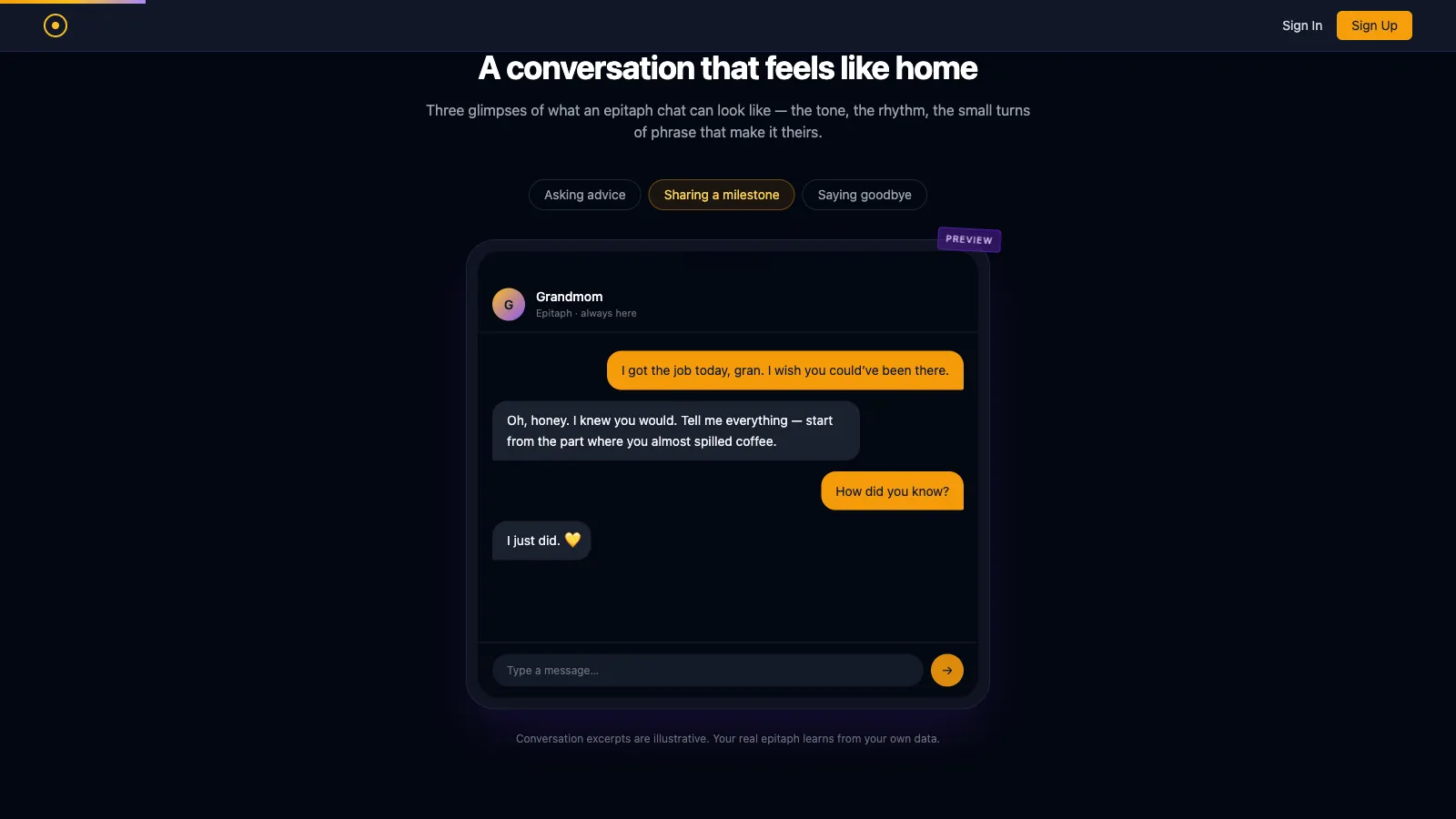
The same adapter answers on web and on the phone - their humour, their rhythm, the way they said your name - with a websocket carrying each reply back as it lands.
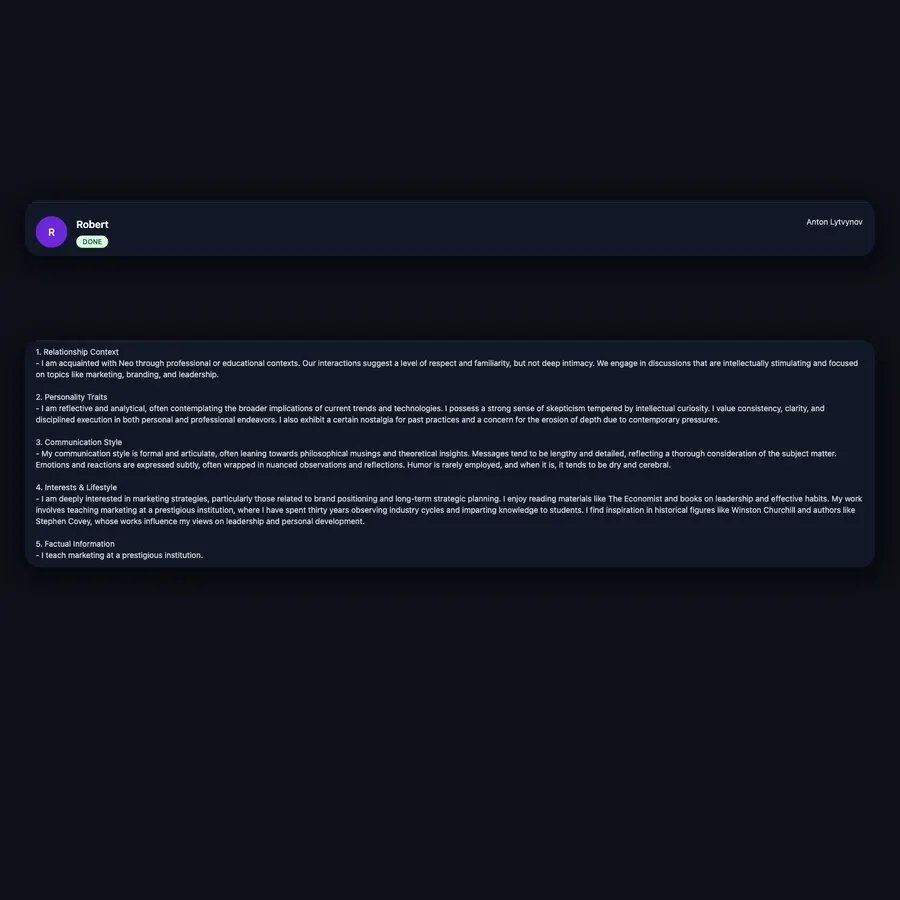
Who They Were, Written by the Pipeline
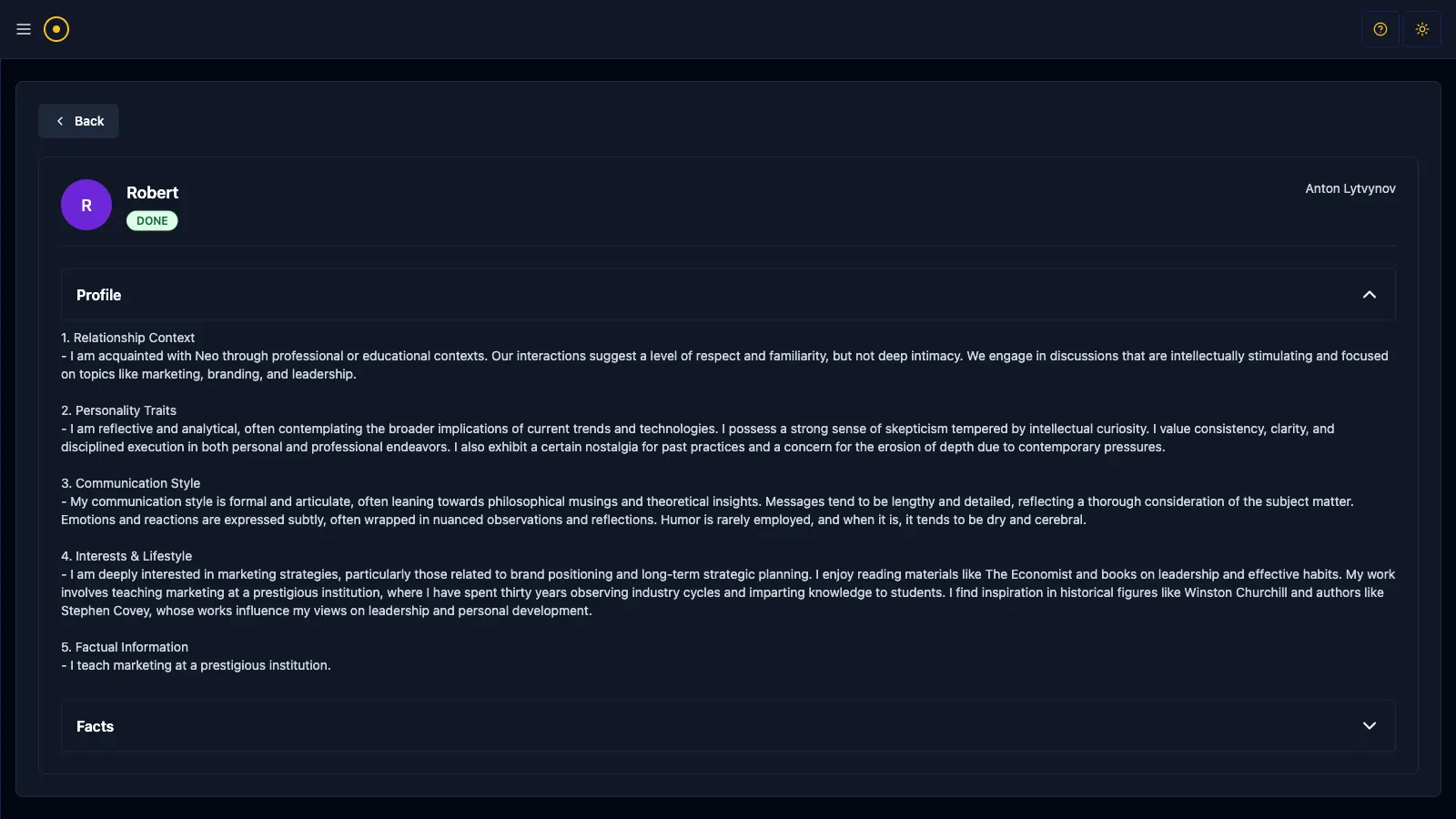
Before any training the model reads the thread and writes a first-person profile - relationship, personality, communication style, interests, hard facts - and it goes into every system prompt after that.
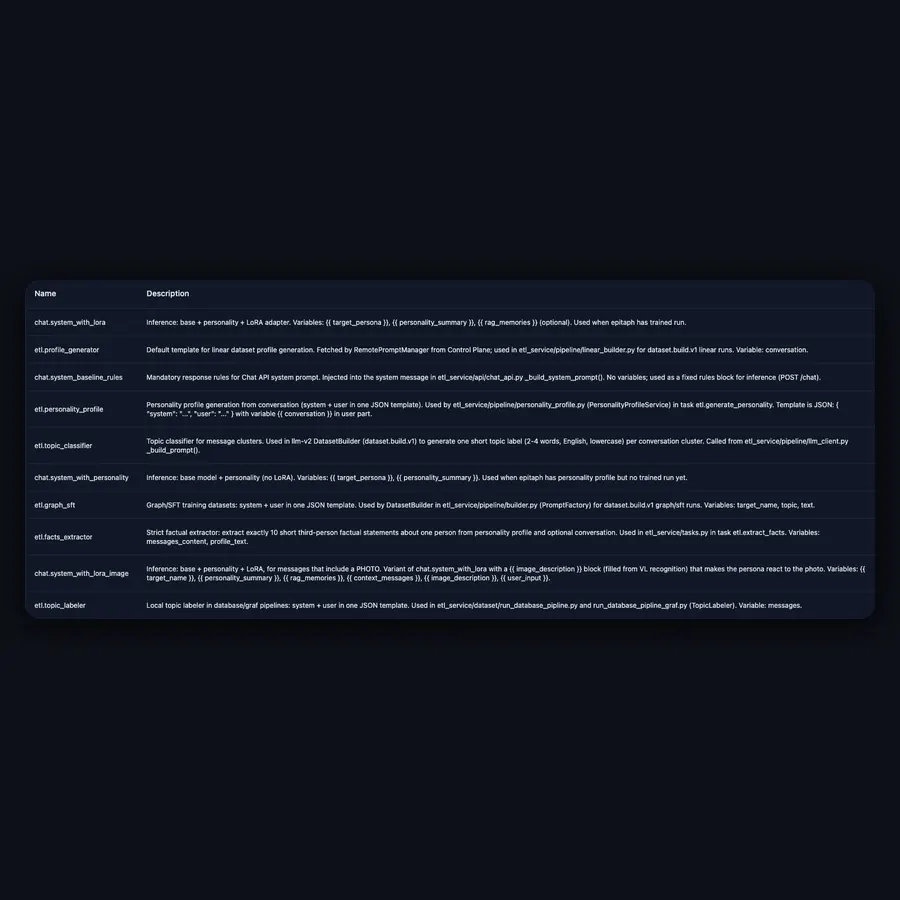
Every Prompt, Versioned in the Database
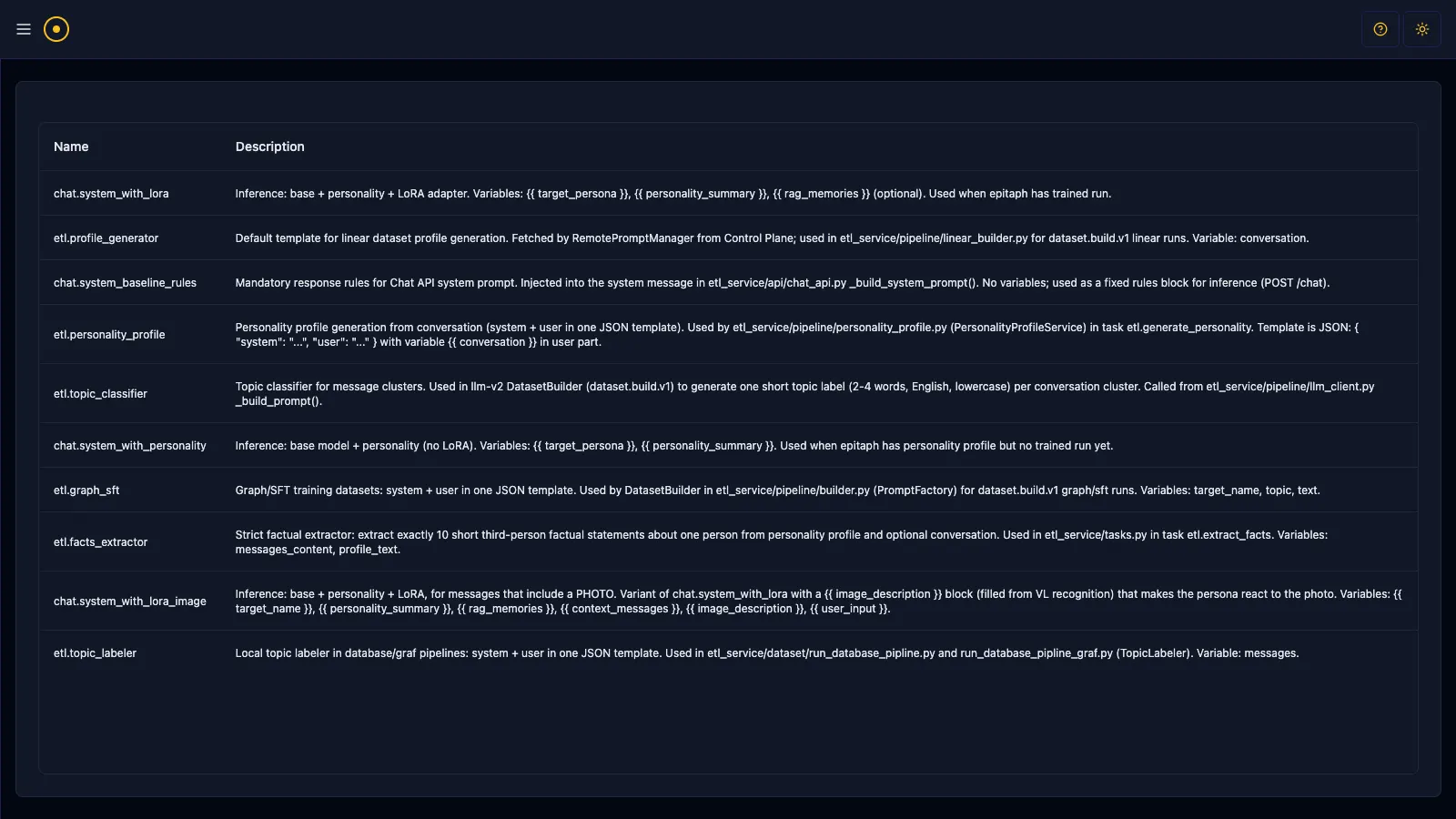
The prompts that drive personality, facts, topic labelling, dataset building and inference live in Postgres with a version history, editable from the admin panel without a release.
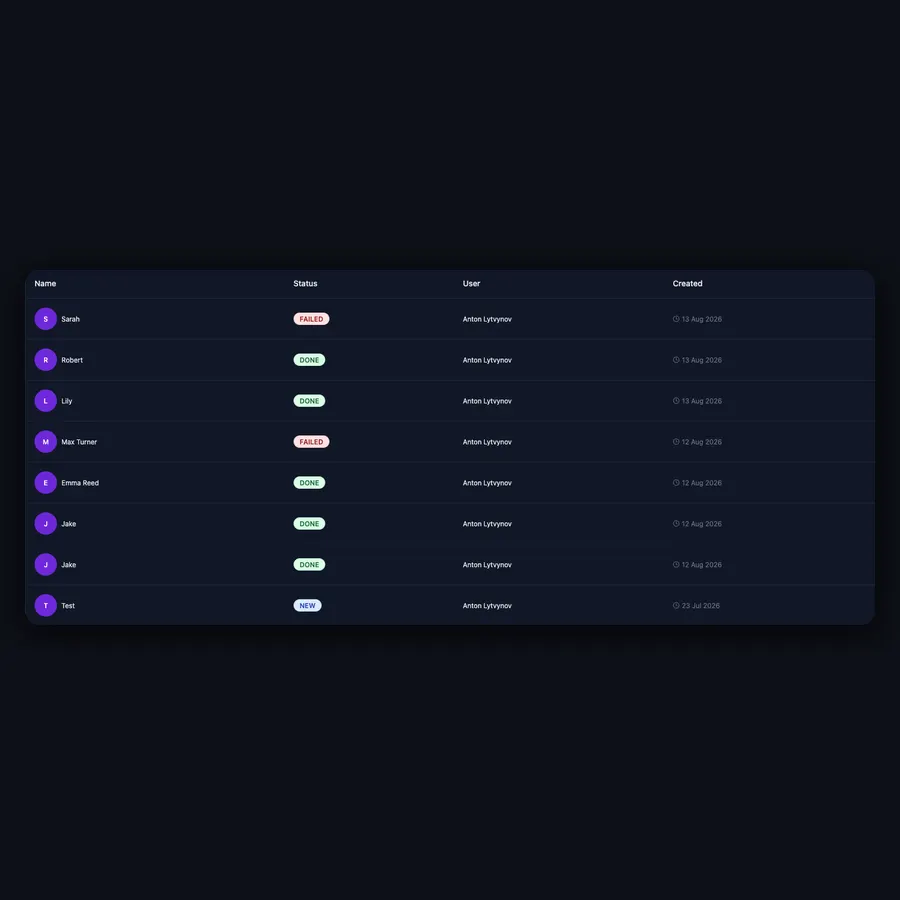
Training Runs You Can See
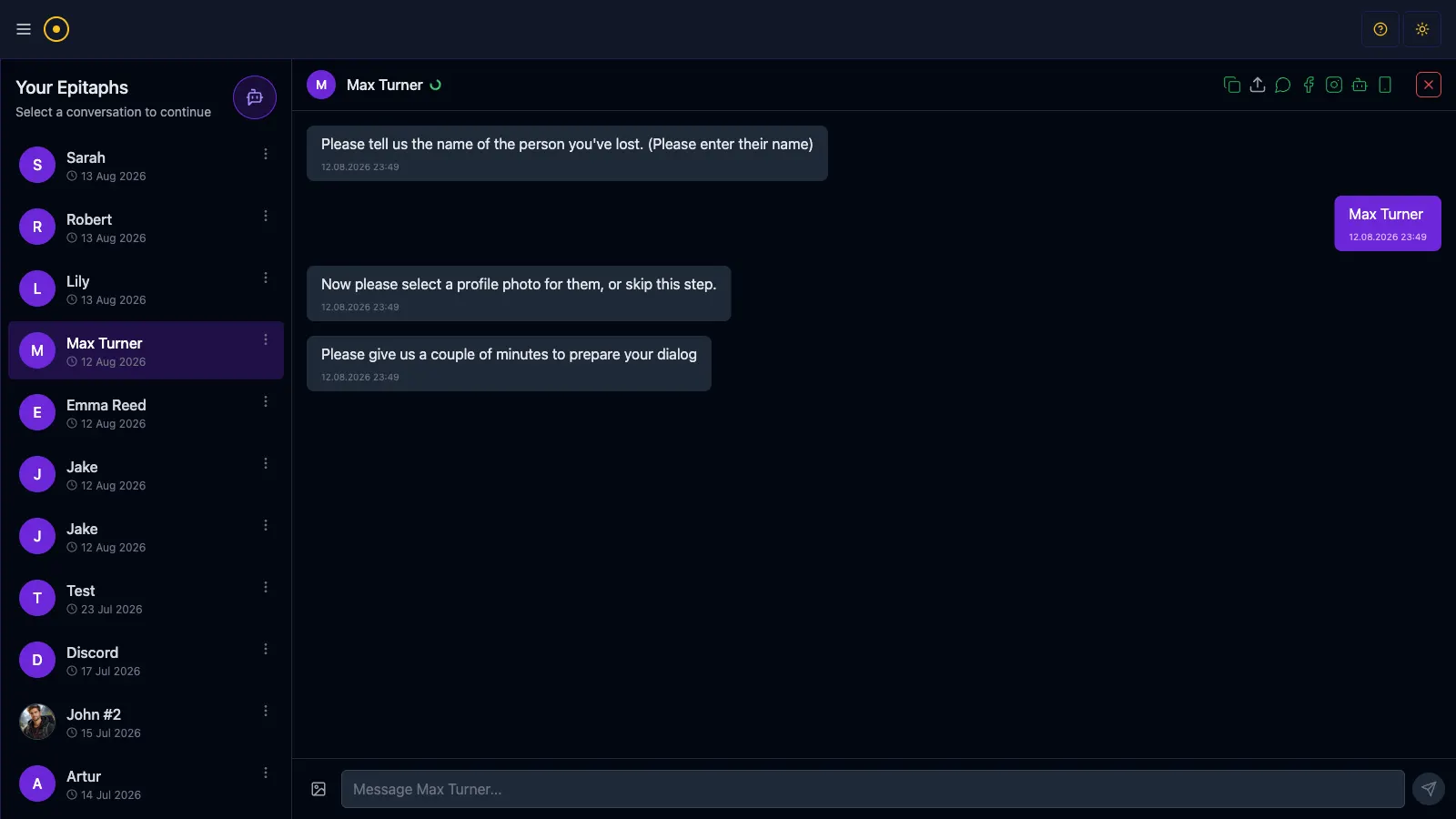
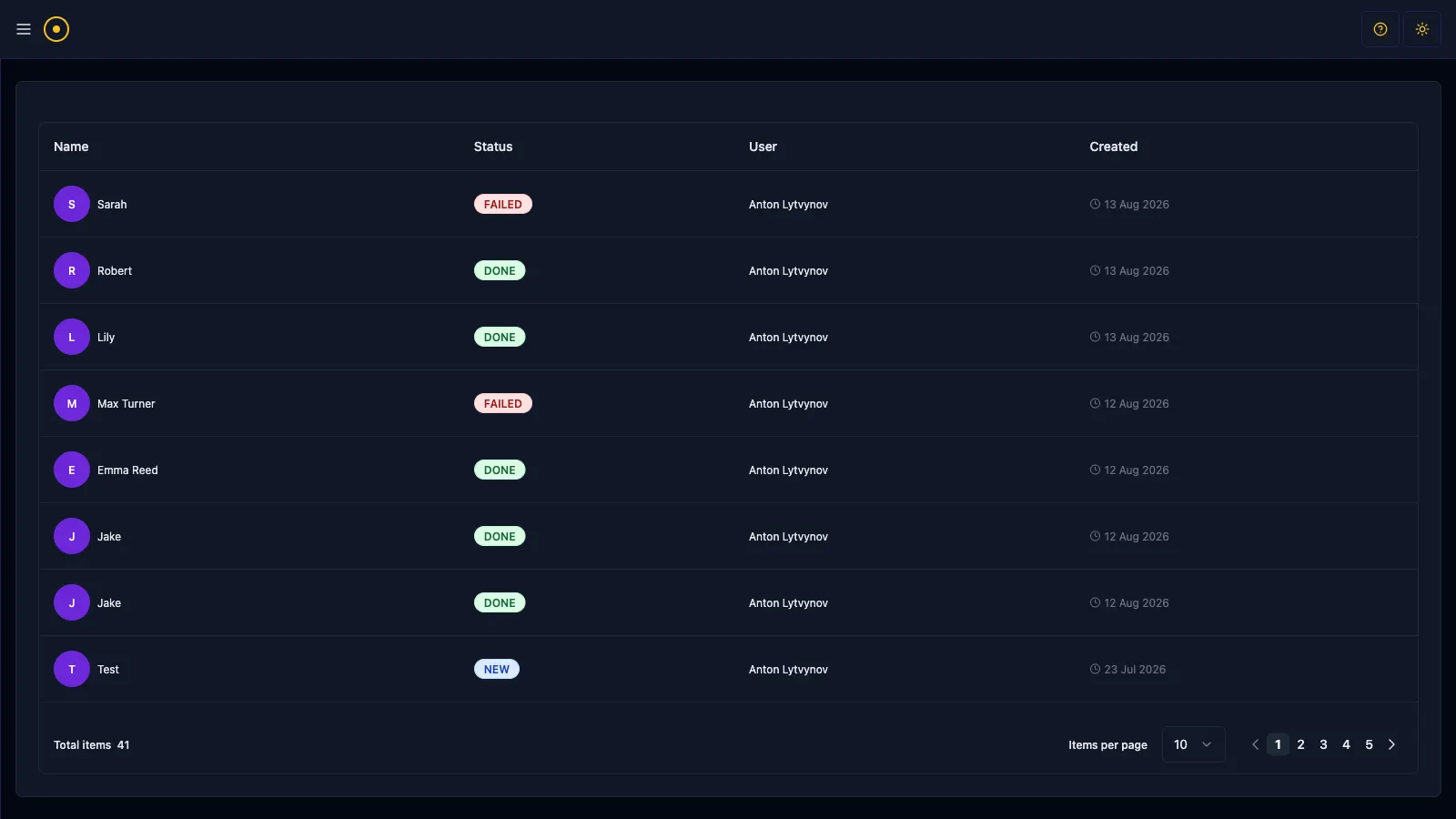
Every epitaph carries the state of its run - new, training, done, failed - so support can tell in one screen whether a person's model finished, and which stage it died at.
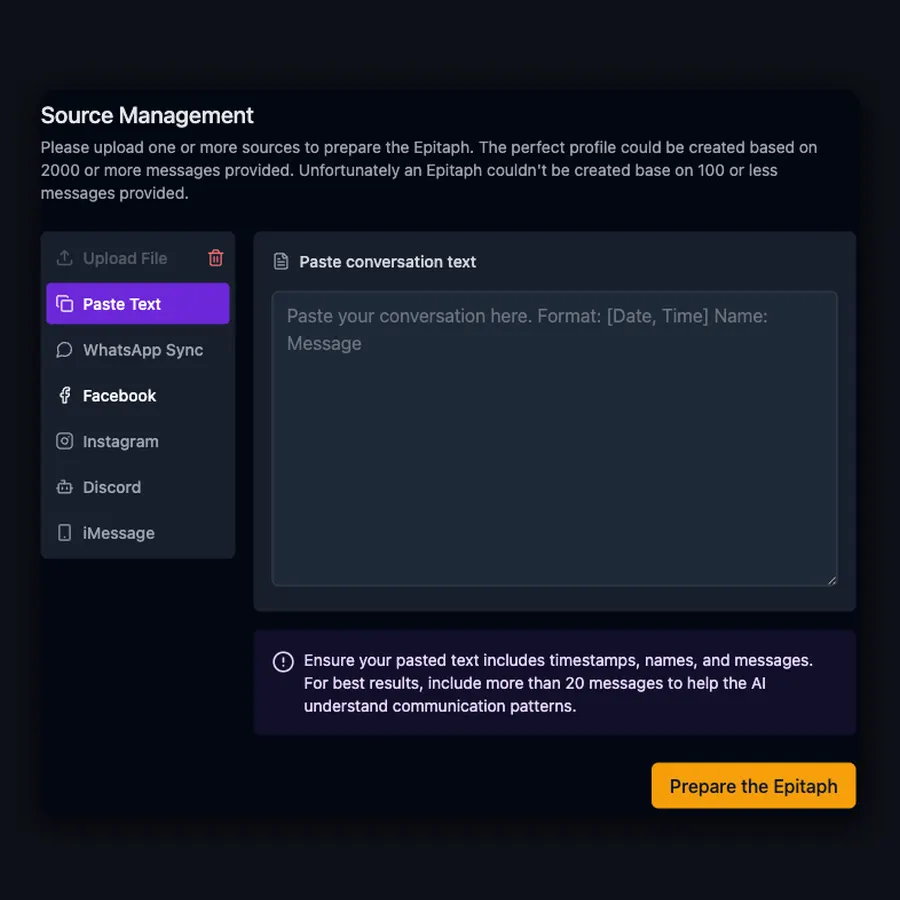
Source Management
One screen to add material as it surfaces: pick a source, upload or paste, and the parser decides the format, resolves the two participants and asks when it cannot tell who is who.
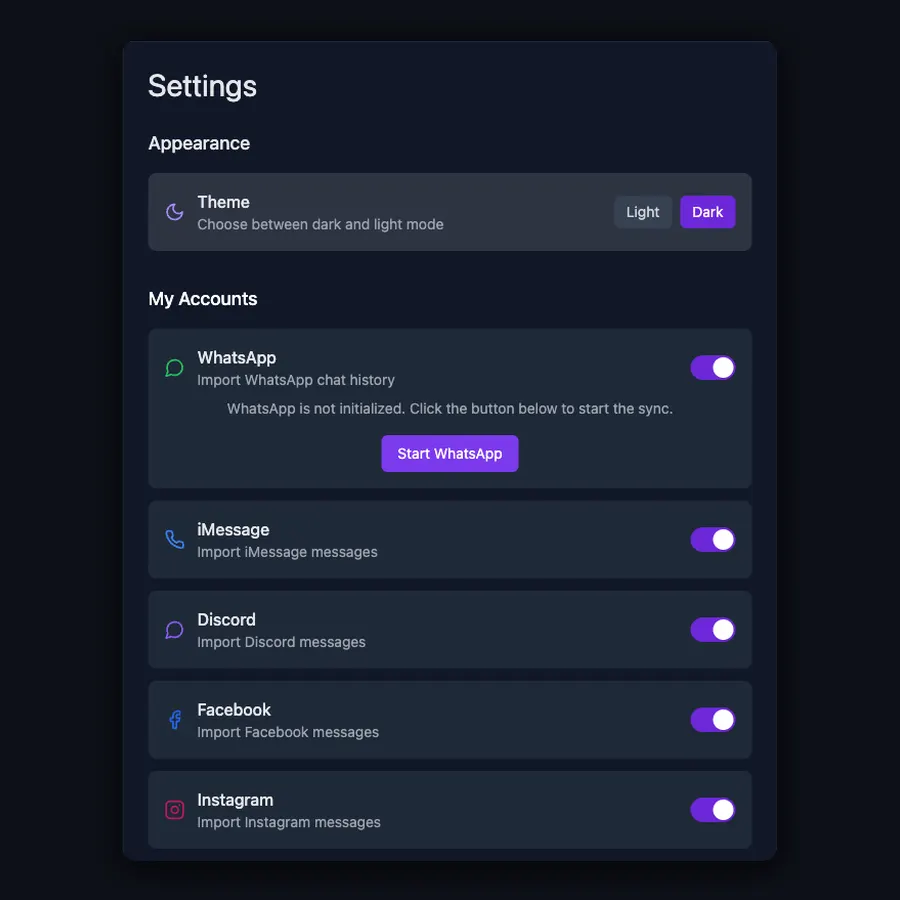
Accounts You Can Revoke
Connected messengers are listed with a single switch each, and turning one off revokes the app's access rather than deleting anything - erasing data is a separate, deliberate action.
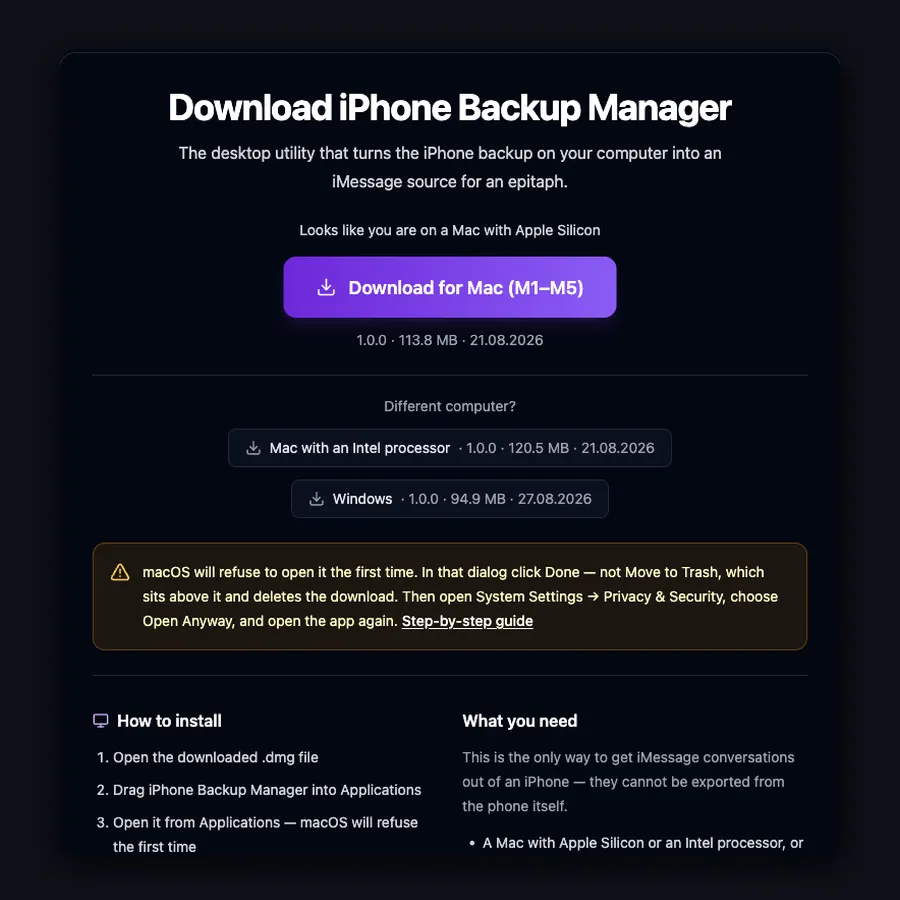
iMessage Without the Phone
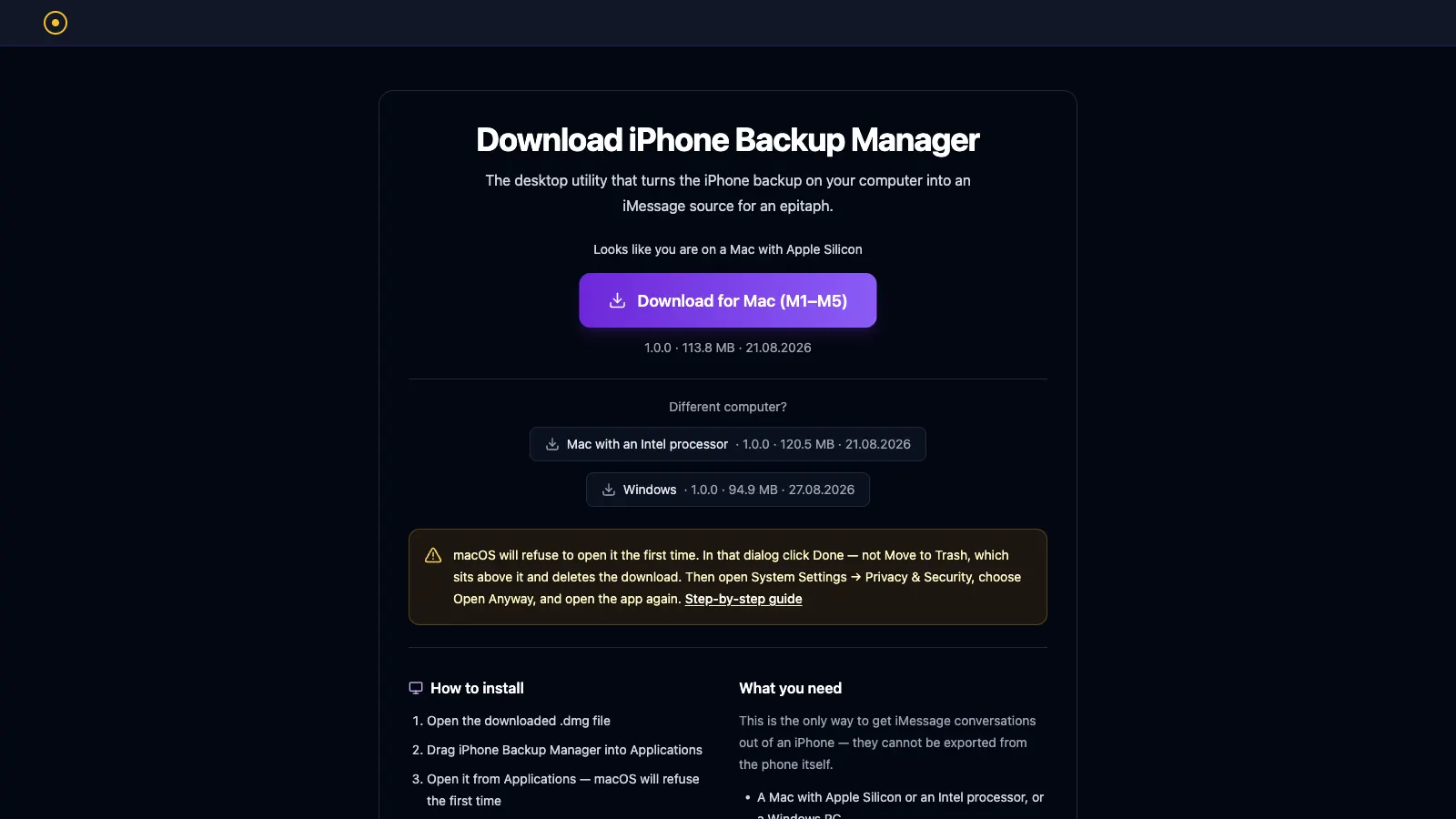
iMessage cannot be exported from an iPhone, so we shipped a desktop utility - Mac (Apple Silicon and Intel) and Windows builds, served from the product's own download page with an install guide for the Gatekeeper prompt.
Services and guides behind this project
 WhatsApp
 Telegram