En
 Fr
 De
 It
 Es
 Uk
How do you choose a custom software development company?
Choose a custom software development company by asking three to five shortlisted vendors the same twelve questions and comparing their written answers side by side. The questions cover shipped work you can open, the people who will actually build your project, how scope and changes are priced, who owns the code, how quality is checked, and what happens after launch. Then start with one milestone before you commit to the full budget.
We have been on the vendor side of this conversation since 2020, mostly with CTOs and founders of companies of 10 to 60 people in the US, UK and EU. The projects that went well had one thing in common: a written scope both sides understood before the first invoice. The checklist below is built around getting to that point and finding out early who can deliver it.
The 12 questions to ask before you sign
Send these questions in writing. A vendor who answers clearly in writing will usually communicate clearly during the project.
1. Can we open a product you built that is similar to ours?
A good answer is a link to software that is live today, with a short explanation of what the vendor built and what the client built. Screenshots and case-study PDFs are weaker evidence than a product you can click through. If the closest example is under NDA, a good vendor can still show it on a call or describe the architecture in detail.
2. Who exactly will work on our project?
Ask for names, roles, seniority and how much of their time is yours. The person on the sales call is often not the person writing your code. A good answer names a lead engineer you can speak with before signing.
3. What will you build in the first two weeks, and what will we see at the end of them?
Strong vendors answer with something concrete: a written scope, clickable screens, a deployed skeleton with login, or a working integration with one of your systems. A weak answer is "requirements gathering" with no output.
4. How do you turn our idea into a written scope?
Look for a scoping phase with a document listing users, roles, workflows, integrations, data to migrate and what is out of scope. That document is what makes a fixed price possible. Our guide on fixed price vs time and materials explains which contract model fits which kind of scope.
5. How are changes priced after we sign?
Every project changes. A good vendor has a simple rule: small changes are absorbed, larger ones are estimated in writing before work starts, and you can swap a feature for another of similar size without a new contract.
6. Where do the code, hosting and credentials live?
The right answer is your repositories, your cloud accounts and your password manager, from the first week. Be careful with any vendor that keeps the code in its own repository until the final payment.
7. How do you test and deploy?
Ask what is covered by automated tests, how a release reaches production, and how long a rollback takes. A good answer mentions tests on the critical paths, a staging server for demos and an automated deployment, not manual file uploads.
8. How will we follow progress?
Weekly demos on a staging server and a task board you can see beat monthly status reports. Ask how often you will see working software and who you talk to when something is late.
9. What happens when you are late or something breaks?
You want to hear about early warnings, a named person who tells you, and a plan. Vendors that have never been late either have not shipped much or are not telling you the truth.
10. Who supports the software after launch, and at what cost?
Ask for the monthly support terms: response times, what is included, and how new features are priced. A common planning figure is 15 to 20 percent of the build cost per year for maintenance.
11. Can another team take over the code later?
A confident vendor says yes and explains what you get: documentation, deployment setup, access to every service. That answer protects you even if you never use it.
12. Which projects would you turn down?
A vendor that can name projects outside its strengths is easier to trust inside them. If the answer is "we do everything", ask follow-up questions about the technologies in your project.
How do you compare vendors side by side?
Score every vendor on the same criteria and weight what matters for your project. A simple table works better than impressions from calls.
| Criterion | Weight | What a 5 out of 5 looks like |
|---|---|---|
| Shipped work you can open | 20% | A live product of similar complexity, with a clear split of who built what |
| People and seniority | 20% | Named lead engineer you have spoken with, senior people on the core work |
| Scope and estimate quality | 15% | Written scope with assumptions, roles, integrations and exclusions |
| Price and payment terms | 15% | Fixed price per milestone, payments tied to delivered software |
| Ownership and access | 10% | Your repositories and accounts from week one, IP assigned to you |
| Engineering practice | 10% | Automated tests, staging, automated deploys, monitoring |
| Communication and time zone | 10% | Weekly demos, written updates, overlap with your working day |
Score each criterion from 1 to 5, multiply by the weight, and add up. When two vendors are close, choose the one whose first milestone gives you more working software.
What does a custom software development company charge?
Prices vary more by scope and location than by company quality. With Lytvynov Production custom software starts from $10,000 (our minimum project size), a website or simple web app typically costs $10,000 to $15,000, most MVPs land at $10,000 to $20,000, and a full CRM/ERP for a mid-size company costs $40,000 to $90,000. A typical US or UK agency quotes roughly 2.5 to 4 times more for the same scope.
When quotes differ a lot, the vendors are almost always pricing different scopes. Ask each one to list what is included, especially integrations, data migration, testing, deployment and support, before comparing totals. Our guide to custom software development cost has ranges by project type and the factors that move them.
What are the red flags when hiring a software development company?
These signals should end the conversation or at least pause it:
- A precise price on the first call, before anyone asked about your users, roles and integrations.
- No names: "our team" without a lead engineer you can speak with.
- Code kept in the vendor's repositories until the final payment.
- No product that is live today and similar in complexity to yours.
- Every question answered with a promise instead of an example.
- Pressure to sign a large contract without a first milestone or scoping phase.
- A portfolio full of big logos with no explanation of what the vendor actually built.
Local agency, nearshore or offshore?
Choose by overlap, seniority and process, not by country alone. A local agency gives you the same time zone at the highest price. Nearshore and offshore teams in Eastern Europe, Latin America or Asia cost less, and the good ones compensate with written communication, weekly demos and shared working hours.
Ukrainian teams share the full working day with the UK and EU and the morning with the US East Coast. Our guide on outsourcing software development to Ukraine covers rates, risks and how to set up a contract. If your project includes AI features, also read how to choose an AI development company, which adds questions on evaluation, data privacy and model costs.
What should the first milestone look like?
The first milestone should be small enough to judge the vendor and useful enough to keep if you part ways. Good options are a scoping phase that ends with a written scope and a fixed quote, or a first release of one workflow that real users can try.
A first milestone tells you more than any reference call: how the vendor asks questions, how they handle a disagreement, how often you see working software, and whether the code lands in your repositories as promised. If any of that goes wrong at the small scale, it will be worse at the large one.
How we answer these questions
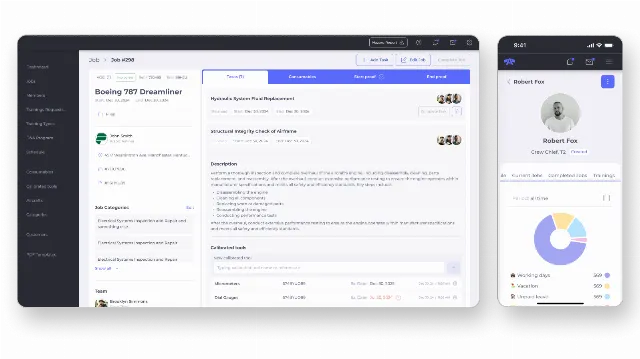
We are a custom software development company founded in 2020, building internal systems, SaaS products, MVPs and AI features for companies in the US, UK and EU. Our work includes an ERP for a US aircraft service company used by all staff, a ticket CRM for a telecom support company in France, and our own AI SaaS with 50,000 monthly active users.
Senior engineers lead every project, the code lives in your repositories from the first week, and you get a fixed quote after a short scoping call. You can read more about the team on our about page, see what we build on the custom software development page, and send us the twelve questions above. We will answer them in writing.