 En
En
 Fr
Fr
 De
De
 It
It
 Es
Es
 Uk
Uk
What is the MVP development process?
The MVP development process is the sequence of steps that turns a product idea into a working first version real users can use: discovery, scope cutting, design, build sprints, QA and launch. Done well, the process takes 8 to 14 weeks and ends with a product you can learn from, not a demo.
The goal of an MVP is learning with the least spend. That means every step in the process exists to remove risk early: discovery removes the risk of building the wrong thing, design removes the risk of confusing users, weekly demos remove the risk of surprises at the end. If you are still estimating budget, read our companion guide on MVP development cost first.
How long does it take to build an MVP?
Most MVPs take 8 to 14 weeks from kickoff to launch when built by an experienced team with a clear scope. Simpler web products can ship in 6 to 10 weeks; marketplaces and web plus mobile products usually need 12 to 20.
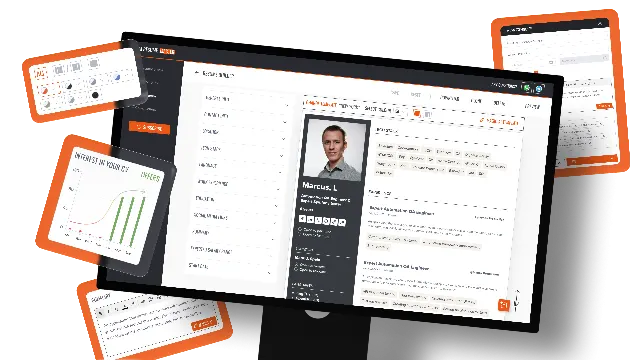
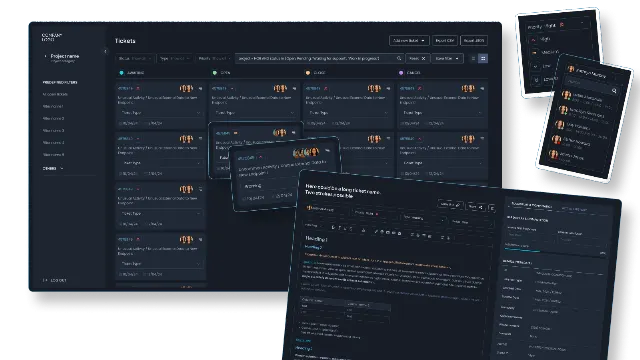
Real examples from our own work: AI Resume Master, an AI resume builder with LLM content generation, LinkedIn import and PDF export, was built in about three months. A Jira-inspired task management system for a telecom support division in France, with Keycloak authentication, roles and third-party alarm integration, was designed and implemented in about three months as well. Timelines like these depend on a scope that is agreed early and held steady.
What does a week-by-week MVP plan look like?
A 12-week MVP plan usually spends the first three weeks on discovery and design, seven weeks on build sprints and the last two on QA and launch. The table below shows a typical plan for a web MVP with one AI feature. Shorter or longer projects compress or stretch the build phase, not discovery.
| Week | Phase | Main activities | Output you receive |
|---|---|---|---|
| 1 | Discovery | Goals, users, core workflow, competitors, constraints | Problem statement, success metrics |
| 2 | Scoping | User stories, must-have vs later, integrations list, risks | Prioritized backlog, fixed-scope estimate |
| 3 | UX and architecture | User flows, wireframes, data model, stack choice | Clickable wireframes, architecture outline |
| 4 | UI design and setup | Key screens in Figma, repository, CI/CD, environments | Design system basics, staging environment |
| 5-6 | Build sprint 1-2 | Auth, accounts, core data model, main workflow skeleton | First working demo on staging |
| 7-8 | Build sprint 3-4 | Core workflow complete, payments, first integrations | Usable end-to-end flow |
| 9 | Build sprint 5 | AI feature, prompts, output validation, usage limits | AI feature on staging with test set |
| 10 | Build sprint 6 | Admin basics, notifications, edge cases, analytics events | Feature-complete release candidate |
| 11 | QA and hardening | Regression testing, security checks, performance, fixes | Tested release candidate |
| 12 | Launch | Production deploy, monitoring, docs, handover | Live product, runbook, backlog for v2 |
Each week ends with a demo on the staging environment. You see working software every week, not slides.
Step 1: How do you run discovery for an MVP?
Discovery is one to three weeks of structured work to define who the MVP is for, what single job it must do, and how you will know it worked. The output is a written scope that both sides can price and hold.
A good discovery phase answers these questions in writing:
- Who is the first user, and what are they doing today instead?
- What is the one workflow that must work end to end?
- What does success look like in numbers after launch (sign-ups, paid accounts, completed tasks)?
- Which integrations are required on day one, and who owns the credentials?
- What data is sensitive, and what rules apply to it?
- What is the budget ceiling and the launch date that matters?
Discovery should produce documents you own and could hand to any team.
Step 2: How do you cut MVP scope without losing the point?
Cut MVP scope by keeping only what is needed for the core workflow and moving everything else to a clearly written "later" list. Founders accept cuts more easily when the cut features are recorded rather than forgotten.
Useful rules for scope cutting:
- One role first. If the product has buyers and sellers, ask which side you can serve manually at the start.
- One platform first. A responsive web app usually beats two native apps for a first release.
- Manual before automatic. Onboarding, refunds and reporting can be manual for the first customers.
- Buy, do not build, the commodity parts. Authentication, payments, email and file storage have good hosted options.
- One AI feature, measured. Pick the AI capability that delivers the core value and build an evaluation set for it, instead of adding AI everywhere.
Step 3: What happens during MVP design?
MVP design turns the agreed workflow into user flows, wireframes and a small set of polished key screens. The aim is clarity, not a complete design system; most MVP interfaces can use a component library with brand colors and typography.
Designers should test the core flow with a few target users on clickable wireframes before development starts. A confusing step found in week 3 costs an afternoon; the same problem found after launch costs a sprint. For AI features, design also covers how the product shows generated content, lets users edit it, and handles slow or failed responses.
Step 4: How are MVP build sprints organized?
MVP build sprints are usually one or two weeks long, each ending with a working demo on staging and a short review of what moves next. The backlog from scoping is the contract; changes are allowed, but each change is traded against something of similar size.
Practices that keep build sprints on track:
- Staging from week one. Every merged feature is deployed to a shared environment automatically through CI/CD.
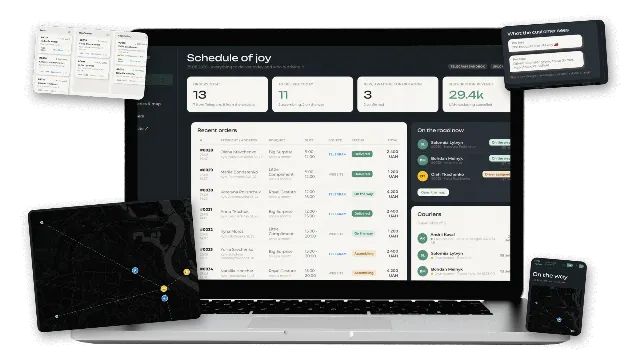
- Integrations behind interfaces. Each external service gets a sandbox implementation so work does not wait for production credentials. We used this approach for a flower subscription service, where Telegram ordering and Uklon Delivery dispatch ran in sandbox mode until the client connected real accounts.
- Automated tests on the core workflow. Not full coverage, but the paths that make money.
- Weekly written status. What shipped, what is next, what is blocked, and any scope trade-offs.
At Lytvynov Production, senior engineers run each sprint and use AI coding agents internally to handle routine code, tests and refactoring. That shortens build sprints, but it does not replace code review or architecture decisions, which stay with people.
Step 5: How do you test and launch an MVP?
Testing and launch take one to two weeks: regression testing of the core flows, basic security and performance checks, production deployment, monitoring and a handover. A launch checklist prevents the most common day-one failures.
A practical MVP launch checklist:
- Error tracking and uptime monitoring are active in production.
- Backups are configured and a restore has been tested once.
- Payments work with real cards in live mode, including refunds.
- Transactional emails reach inboxes, not spam.
- AI features have usage limits per user and spend alerts on the API account.
- Legal pages (privacy policy, terms) are published.
- You have admin access, repository access and all credentials in your own accounts.
Who is on an MVP development team?
A typical MVP development team has four to six people: a product or project lead, a UX/UI designer, back-end and front-end developers, and QA, with a senior engineer owning architecture and DevOps. Not every role is full time for the whole project; design is heavy early and QA is heavy late.
| Role | Main responsibility in the MVP | Busiest phase |
|---|---|---|
| Product or project lead | Scope, priorities, weekly demos, trade-off decisions | Discovery and every sprint review |
| UX/UI designer | User flows, wireframes, key screens, usability checks | Weeks 2-4 |
| Senior engineer / architect | Data model, stack, integrations, code review, CI/CD | Weeks 3-6 and launch |
| Back-end and front-end developers | Build sprints, integrations, tests | Weeks 5-10 |
| QA engineer | Test plan, regression testing, release checks | Weeks 9-12 |
| Founder or product owner (your side) | Decisions, user access, feedback on demos | Throughout |
The role most often underestimated is the one on your side. An MVP moves at the speed of decisions, so the product owner should reserve a few hours every week for demos, answering questions and approving scope trade-offs. When the client's product owner disappears for two weeks, the build either stops or continues on guesses, and guesses cost rework later.
What are the most common MVP process mistakes?
The most common MVP process mistake is skipping discovery and starting to code from a pitch deck, which leads to rework in weeks 6 to 10. Other frequent mistakes:
- Adding features mid-sprint without removing others. The launch date slips a week at a time.
- Building native iOS and Android first. Twice the release work before any learning.
- No success metric. After launch nobody can say whether the MVP worked.
- Vendor-owned accounts. The code, domain or cloud account belongs to the agency rather than to you.
- AI without evaluation. An LLM feature that looked great in demos fails on real user input because nobody tested it on a representative set.
If you are comparing agencies to run this process, our checklist for choosing an AI development company lists the questions to ask.
How we run the MVP process at Lytvynov Production
We run MVPs exactly as described above: a fixed quote after a short scoping call, fixed-scope milestones (most MVPs cost $10,000 to $20,000 with us, about 2.5 to 4 times less than a typical US or UK agency quote), weekly demos on staging, and a launch with everything in your accounts. Our main stack is PHP/Symfony on the back end, React or Vue on the front end, React Native or Flutter for mobile, and OpenAI or Claude APIs for AI features. For subscription products, see our SaaS development service.
To start, send us a short description of your product: who it is for, the one workflow that matters, and your target launch date. We will reply with how we would scope it. More details are on our MVP development service page.