 Uk
Uk
 En
En
 Fr
Fr
 De
De
 It
It
 Es
Es
What does React Native app development include?
React Native app development covers designing, building and releasing iOS and Android apps from one TypeScript codebase that renders native interface components. With us it also includes the back end, the admin panel and the React web app when the product has one, so the same team owns the API, the data and every screen.
A typical React Native engagement covers:
- UX and UI design for iOS and Android, following each platform's conventions where it matters.
- The app itself: navigation, forms, lists, chat, maps, camera, file uploads and offline behavior.
- Accounts and payments: sign-up, social login, subscriptions with Stripe, and Apple and Google in-app purchases.
- Push notifications, deep links and analytics.
- The back end: Symfony or Node.js API, database, admin panel and integrations.
- Releases: signing, build pipelines, store listings and submission to App Store and Google Play.
- AI features when the product needs them: chat, generation and assistants on the OpenAI or Claude APIs.
When is React Native the right choice?
React Native is the right choice when you need both iOS and Android, your budget does not cover two native teams, and especially when you also have a React web app or a JavaScript team. One codebase covers both platforms, and types and business logic can be shared with the web.
| Your situation | What we recommend | Why |
|---|---|---|
| React web app plus mobile apps | React Native | Shared types and logic with the web, one team |
| Mobile-first product, design consistency on every device | Flutter or React Native | Both fit; Flutter renders every pixel itself |
| Users only read content and fill forms on the phone | Responsive web app | Cheaper; add native apps later |
| Heavy 3D, advanced audio or video, newest OS features | Native Swift and Kotlin | Full platform access without bridges |
| Internal tool for field staff | React Native or Flutter | Camera, offline and push without two codebases |
If you are still choosing between cross-platform frameworks, see our Flutter development page for the other side of the comparison.
Which React Native apps have we built?
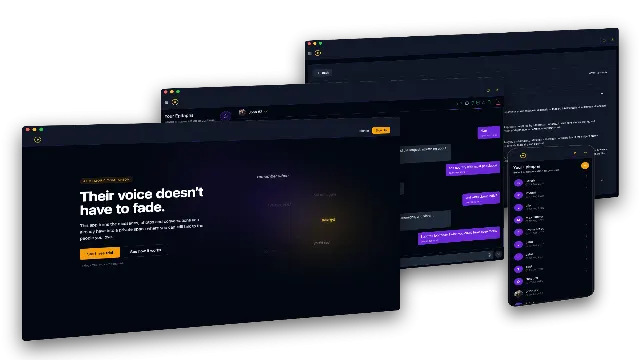
Our clearest published React Native example is the AI Grief Companion for a US startup. We built the whole product: a web client in React and Vite, iOS and Android apps in React Native, a Node.js and Express API on PostgreSQL, and an AI platform behind it that ingests chat history from ten export formats, trains a persona model with LoRA and answers with RAG memory.
On the mobile side that meant a chat where each reply arrives over a websocket as it is generated, subscriptions through Stripe and Apple in-app purchases with A/B price groups, a billing-address check against a per-state allow list on every payment, and iOS and Android builds submitted to both stores. The same adapter answers on web and on the phone, so users get the same conversation wherever they open it.
How do we build React Native apps that pass review and stay fast?
A React Native app passes review and stays fast when store rules and performance are planned from the first sprint. Most delays in mobile projects come from late surprises: a rejected in-app purchase flow, missing account deletion, or a list that stutters on older Android phones.
Our defaults:
- TypeScript everywhere, with API types generated from the back end and shared with the web app.
- Store rules early: in-app purchase flows, account deletion, privacy labels and permissions copy designed before the build, not after a rejection.
- Performance on real devices, including mid-range Android phones, with long lists, images and animations profiled before release.
- Over-the-air updates for JavaScript fixes where the stores allow it, and a clear process for native releases.
- Crash and error monitoring from the first internal build.
- Automated builds and signing in CI, so any engineer can produce a release.
- Native modules only where needed, kept small and documented.
We use AI coding agents for routine work such as scaffolding, tests and refactors, with senior engineers reviewing every change.
What back end does a React Native app need?
Almost every React Native app needs a back end for accounts, data, payments and notifications. We build it in the same team: PHP/Symfony when the product has complex business rules, roles and a large back office, or Node.js when the product is JavaScript end to end or streams AI answers. Both expose a typed API to the app and the web client.
Keeping mobile and back end in one team removes the most common source of delay in app projects: the app waiting for endpoints, or building against an API that changes under it. See Node.js development and React development for the other parts of the stack.
Can you take over an existing React Native app?
Yes. Many apps reach us after the first agency or freelancer has moved on, with an outdated React Native version, crashes nobody can reproduce and a release process only one person understood. We start with a code review: React Native and library versions, native modules, build and signing setup, crash reports, test coverage and store status. You get a written list of risks ranked by impact.
Then we stabilize before adding features: move signing and builds into CI under your accounts, add crash monitoring, fix the crashes that affect the most users, and upgrade React Native in steps where the version gap is large. We avoid rewrites; if a part of the app blocks the roadmap, we replace it screen by screen while the app stays in the stores. If you need ongoing capacity after that, see our dedicated development team model.
How much does React Native app development cost?
React Native cost depends on scope, platforms, integrations and the back end far more than on the framework. As orientation, with us:
| Project type | Typical timeline | Typical cost with us |
|---|---|---|
| React Native MVP | 8 to 14 weeks | $10,000 to $50,000 (most $10,000 to $20,000) |
| Web app plus iOS and Android | 12 to 20 weeks | $20,000 to $50,000 |
| Full online business: web and mobile apps, admin, payments, integrations | 12 to 20 weeks | $35,000 to $70,000 |
| Complex AI product with custom models | 4 to 9 months | $60,000 to $150,000 |
Apple's developer program costs $99 per year and Google Play $25 once. For more on cost drivers see React development cost and AI app development cost. If you are at the idea stage, our MVP development service covers how we cut scope before the build.
How we work on React Native projects
We start with a short scoping call about the product, the users and which platforms they use. From that we agree the screens, the back end, the integrations and the first milestone with a fixed quote. The build runs in milestones with a weekly demo and test builds on your phones, in your repositories and developer accounts. After launch we continue with releases and support, or hand over to your team with documentation.
Tell us about your app on our contact page, or describe the scope in our project estimate form.