 Uk
Uk
 En
En
 Fr
Fr
 De
De
 It
It
 Es
Es
What does a PHP development company do?
A PHP development company builds, upgrades and maintains web applications written in PHP: customer-facing products, APIs, admin panels and internal business systems. At Lytvynov Production, PHP is not one language among many; it is our core back-end stack, with Symfony as the default framework for products expected to live for years.
What we deliver for PHP clients:
- New PHP products and APIs on Symfony with modern PHP 8, strict types, static analysis and automated tests from the first week.
- Legacy PHP modernization: framework-less PHP, old Symfony or Laravel versions, and custom CMS code moved to a maintainable structure without stopping the business.
- PHP version upgrades from PHP 5 and 7 to supported PHP 8 releases.
- Performance work: slow pages, database query problems, heavy imports and high server bills.
- AI features in existing PHP apps: OpenAI and Claude integration, RAG over your data and AI agents.
- Maintenance and support with monitoring, security updates and a predictable release process.
For framework-specific detail see our Symfony development and Laravel development pages.
Why do companies still choose PHP?
Companies choose PHP because it is cheap to run, fast to build with, and has mature frameworks with long support cycles. Modern PHP 8 has typed properties, enums, readonly classes, attributes and a JIT compiler, and tools such as PHPStan and Rector catch many errors before code runs. For a buyer, the practical benefits are a large hiring market and hosting that costs little at the start.
PHP fits products with complex business rules, many user roles and back-office workflows: SaaS platforms, marketplaces, ERPs and CRMs, booking and subscription systems. Our custom ERP for a US aircraft service company and the Ritoria self-publishing platform both run on PHP with Symfony. Where a product needs machine learning or heavy data processing, we add a Python service beside the PHP core instead of moving everything to a new language.
How do you modernize a legacy PHP application?
Legacy PHP modernization works best as a gradual migration, not a rewrite. The old application keeps serving users while new code grows around it, and each old module is switched off only when its replacement is live.
Our usual approach:
- Audit (1 to 2 weeks): PHP version, libraries and their maintenance status, database schema, security issues, hosting and deployment.
- Safety net: error monitoring, backups and smoke tests on the flows that make money, such as sign-up, checkout and billing.
- Supported PHP first: move the existing code to a supported PHP 8 version so security fixes flow again.
- A modern application alongside: a new Symfony application shares the database and routing, and new features are built there.
- Module by module: old pages and endpoints move over one at a time behind the same URLs, with tests before each switch.
- Retire the legacy code when nothing depends on it any more.
This keeps the business running and spreads the cost across releases. You can stop after any step and still have a better system than before.
How do you upgrade PHP 7 to PHP 8?
A PHP 7 to PHP 8 upgrade means fixing code that relies on behavior PHP 8 changed or removed, replacing libraries that do not support PHP 8, and testing the result under the new version before production. PHP 7.x, 8.0 and 8.1 no longer receive security fixes, and PHP 8.2 is in its last year of security support, so many applications need to move now.
The steps we follow: run static analysis against the target PHP version to list every incompatibility; update or replace libraries, which usually sets the pace; apply automated refactoring for the mechanical changes such as deprecated functions and signature changes; review the rest by hand, especially string and number comparisons and error handling; then run the application under the new version in staging and release in stages with monitoring. For a typical business application this takes 3 to 12 weeks. If the app runs on an old Symfony version, the framework upgrade goes in the same plan; see Symfony development.
How do you add AI features to an existing PHP app?
AI features in a PHP app are built as normal services and background jobs that call the OpenAI or Anthropic Claude APIs, so they follow your existing permissions, logging and tests. Answers stream to the browser, prompts and results are stored for review, and per-user limits keep token costs predictable.
Typical AI work in PHP products:
- Generation: drafts, summaries, descriptions and replies with a human review step where it matters.
- RAG: answers grounded in your documents or database, with access checks. See RAG development.
- AI agents that act through your existing PHP business logic, with approval for anything involving money or customer communication.
- Python services for custom models or heavy data processing, called by the PHP application through an API.
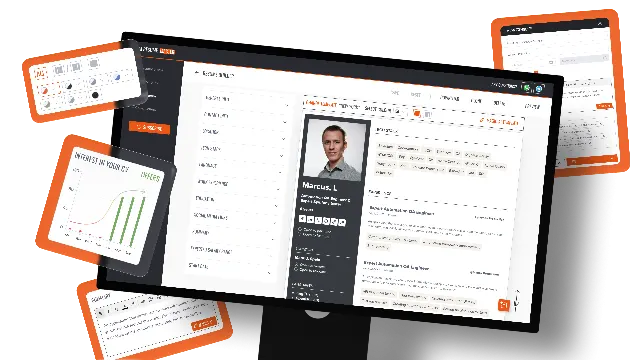
Our own product AI Resume Master follows this pattern: PHP and Symfony for the product, React for the interface, Python and LLMs for resume and cover letter generation, LinkedIn import and PDF export. It was built in about three months and reached 50,000 monthly active users. More on the approach is on our AI integration page.
Which PHP projects have we built?
Our PHP work ranges from consumer platforms to B2B data products. A few published examples:
- Ritoria: a Symfony self-publishing platform with 54 domain entities, three payment providers and an EasyAdmin back office of 38 sections, which ran in production on AWS for two and a half years.
- Sports events calendar for a UK-based sports tech company: PHP and Python, with a custom parsing engine that aggregates and normalizes fixtures from hundreds of calendars and feeds, plus APIs and embeddable widgets for B2B clients.
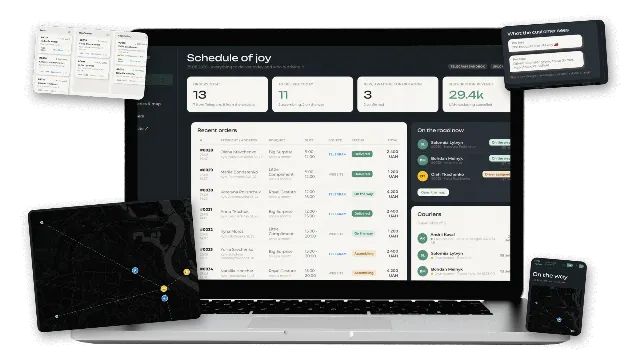
- Flower subscription service for a Kyiv studio: an order API, a Telegram bot that takes orders in an eight-step chat, and a CRM that dispatches couriers through the Uklon Delivery API.
- AI Resume Master: our own AI SaaS on PHP, Symfony, React and Python.
How much does PHP development cost?
PHP development cost depends on scope, integrations and the state of existing code. As orientation, with us a PHP web application typically costs $10,000 to $15,000, an MVP $10,000 to $50,000 with most at $10,000 to $20,000, and an AI feature in an existing app starts at $10,000. Legacy modernization and upgrades get a fixed quote after the audit, because the work depends on what the audit finds. A US agency typically quotes 2 to 4 times more for the same scope; see outsourcing software development to Ukraine for how the comparison works.
How we work on PHP projects
We start with a short call and, for existing applications, an audit that ends with a written report and a plan. New builds start with scoping and a fixed quote for the first milestone. Delivery runs in milestones with weekly demos, in your repositories and cloud accounts, or as a dedicated development team on a monthly budget. Senior engineers review every change, and AI coding agents handle routine work such as tests, migrations and refactors.
Tell us about your PHP application on our contact page, or describe the scope in our project estimate form.