 Fr
Fr
 En
En
 De
De
 It
It
 Es
Es
 Uk
Uk
Qu'est-ce qu'une équipe de développement dédiée ?
Une équipe de développement dédiée est un groupe d'ingénieurs qui travaillent uniquement sur votre produit, à temps plein, selon vos priorités, tandis que le prestataire gère le recrutement, l'emploi, l'équipement et les remplacements. L'équipe fonctionne comme une équipe produit interne : elle porte un backlog, livre dans vos environnements et participe à votre planification. Ce que vous n'assumez pas : le délai de recrutement, l'administration de la paie et le risque d'un poste vide lorsque quelqu'un part.
Le modèle de l'équipe dédiée convient aux produits qui évoluent sans cesse : un SaaS après sa première version, une plateforme interne dont de plus en plus de services dépendent, un système ancien qui a besoin d'une modernisation continue. Il convient moins lorsque le périmètre est figé et la ligne d'arrivée claire ; dans ce cas, un engagement au forfait est plus net. Pour un premier projet IA à périmètre fixe, notre AI Sprint en est un exemple.
Quels rôles peut inclure une équipe de développement dédiée ?
Une équipe dédiée se construit autour du produit, pas à partir d'un forfait standard. La plupart des équipes démarrent avec deux à cinq personnes et grandissent une fois que le backlog l'a justifié. Voici les rôles que nous fournissons, et quand chacun vaut son coût :
| Rôle | Ce que couvre le rôle | Quand vous en avez besoin |
|---|---|---|
| Tech lead / back-end senior (PHP/Symfony) | Architecture, revue de code, conception d'API, décisions techniques | Toujours, un par équipe |
| Ingénieur back-end | Fonctionnalités, intégrations, évolutions du modèle de données, tâches de fond | La plupart des produits |
| Ingénieur front-end (React, Vue ou Angular) | Application web, back-offices, mise en œuvre du design system | Tout produit avec une interface web |
| Ingénieur mobile (React Native ou Flutter) | Applications iOS et Android, notifications push, publications sur les stores | Quand le mobile fait partie du produit |
| Ingénieur IA | Fonctionnalités LLM, recherche documentaire (RAG), évaluation, intégration de modèles, serveurs MCP | Quand des fonctionnalités IA sont dans la feuille de route |
| Ingénieur QA | Plans de test, tests de régression, couverture de tests automatisés | À partir de trois développeurs, ou dans les domaines réglementés |
| DevOps (temps partiel) | Docker, pipelines CI/CD, hébergement, supervision, sauvegardes | Généralement partagé, quelques jours par mois |
| Designer (temps partiel) | Parcours UX, design d'interface dans Figma, maintien du design system | Quand de nouvelles fonctionnalités changent l'expérience utilisateur |
Symfony est notre principale stack back-end : c'est sur une équipe à dominante Symfony que nous sommes les plus solides. Pour cette stack en particulier, y compris les mises à niveau d'applications anciennes, voir développement Symfony.
Comment se passent les 30 premiers jours ?
Une équipe dédiée met environ un mois à atteindre son rythme de croisière, et la première semaine donne le ton. Nous suivons la même séquence pour chaque nouvelle équipe :
- Jours 1 à 3 : accès et contexte. Comptes dans vos dépôts, votre outil de suivi, votre cloud et vos outils de communication. Présentation du produit avec vous et, s'il y en a une, votre équipe actuelle.
- Jours 3 à 7 : revue de la base de code. Le tech lead cartographie l'architecture, fait tourner le projet en local et rédige une courte note sur les risques, la couverture de tests et la dette technique.
- Semaine 2 : première mise en production. Une petite modification réelle part en production via votre pipeline, ce qui prouve que tout le chemin du ticket au déploiement fonctionne.
- Semaines 2 à 4 : premier cycle de sprint. Planification, points quotidiens asynchrones, démo en fin de sprint et rétrospective sur ce qu'il faut changer dans le processus.
- Jour 30 : bilan avec vous. Ce qui a été livré, ce qui a ralenti l'équipe, et si la composition de l'équipe convient pour le trimestre suivant.
Lorsque l'équipe reprend le travail d'un autre prestataire ou d'une équipe interne, nous demandons une période de chevauchement avec les développeurs précédents. Quelques jours de présentations en binôme évitent des semaines de rétro-ingénierie.
Comment saurez-vous ce que fait l'équipe ?
Vous savez ce que fait une équipe dédiée grâce à des éléments concrets, pas grâce à des réunions de suivi : l'outil de suivi, les pull requests, la démo et un court rapport écrit. Chaque semaine, vous recevez une démo du logiciel qui fonctionne sur un environnement de recette et un résumé écrit de ce qui a été livré, de ce qui est en cours, de ce qui est bloqué et des décisions attendues de vous. La planification des sprints se fait avec vous ou votre product owner, et chaque ticket renvoie au code qui le met en œuvre.
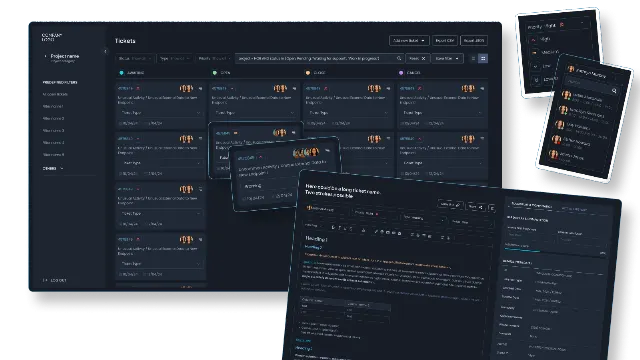
Notre propre travail tourne sur un tableau de projet interne que nous avons construit à cet effet, avec des agents de codage IA qui travaillent sous la supervision d'ingénieurs seniors et chaque modification relue par une personne avant d'être fusionnée. Si vous utilisez déjà Jira, Linear ou un autre outil, l'équipe travaille dans le vôtre ; les habitudes de reporting restent les mêmes.
À qui appartient le code, et que se passe-t-il si quelqu'un part ?
Tout ce que construit l'équipe dédiée vous appartient, et l'organisation doit le rendre vrai en pratique, pas seulement dans le contrat. Le contrat vous transfère toute la propriété intellectuelle au paiement et inclut des clauses de confidentialité et de non-sollicitation. En pratique, les dépôts, comptes cloud, domaines, comptes de stores et comptes des fournisseurs d'IA sont ouverts au nom de votre entreprise, et l'équipe y est invitée comme membre.
Les gens partent, et la question est de savoir ce que cela vous coûte. Notre approche : vous êtes prévenu tôt, nous proposons un remplaçant soumis à votre accord, et l'ingénieur sortant et l'ingénieur entrant travaillent ensemble sur de vrais tickets. Une revue de code par au moins deux personnes, un tech lead qui connaît tout le système et de courtes notes d'architecture dans le dépôt font qu'aucune personne n'est la seule à comprendre une partie critique.
Comment une équipe dédiée se compare-t-elle aux autres façons de développer ?
Une équipe dédiée se situe entre le recrutement en interne et l'achat d'un projet à périmètre fixe. Chaque option arbitre différemment le contrôle, la vitesse et le coût :
| Recrutement interne | Équipe dédiée | Projet au forfait | Freelances | |
|---|---|---|---|---|
| Délai de démarrage | 2 à 4 mois par recrutement | 2 à 8 semaines | 2 à 4 semaines après le cadrage | Quelques jours |
| Contrôle des priorités | Total | Total, semaine après semaine | Limité au périmètre convenu | Par personne |
| Gestion d'un périmètre qui change | Oui | Oui | Uniquement par avenants | Oui, avec un effort de coordination |
| Risque de départ | Le vôtre | Celui du prestataire | Celui du prestataire | Le vôtre |
| Idéal pour | Équipe cœur à long terme | Produit qui évolue, 6 mois et plus | Développement bien défini avec une ligne d'arrivée | Petites tâches isolées |
Quels produits au long cours avons-nous construits ?
Nos missions les plus longues ressemblent à un travail d'équipe dédiée : un groupe stable, un produit, une livraison continue.
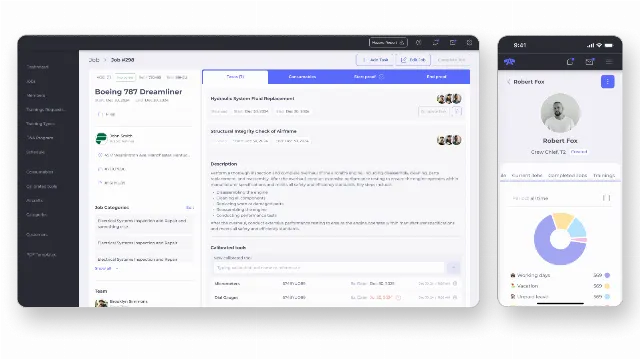
- ERP sur mesure pour une société américaine de services aéronautiques : six mois de développement en Symfony/PHP, React, SQL et Mercure, réunissant la gestion des clients et des commandes, la planification des interventions, les plannings du personnel avec intégration de calendriers, l'inventaire de l'entrepôt et la conformité réglementaire dans un seul système, utilisé des équipes au sol jusqu'au CEO.
- Ritoria : une plateforme Symfony avec 54 entités métier, trois prestataires de paiement et des interfaces en anglais et en arabe, en production sur AWS pendant deux ans et demi avec 292 commits et 120 migrations de base de données d'évolution continue.
- Système de gestion des tâches pour une équipe de support télécom en France : un outil interne de ticketing avec intégration d'alarmes tierces, contrôle d'accès par rôle via Keycloak et notifications automatiques, construit en trois mois.
Combien coûte une équipe de développement dédiée ?
Une équipe dédiée est facturée au mois, selon le nombre d'ingénieurs, leur séniorité, la stack et le nombre de rôles à temps partiel (QA, DevOps, design) dont le produit a besoin. Une agence américaine ou une équipe interne aux États-Unis coûte typiquement 2 à 4 fois plus pour la même capacité, et une équipe de trois ou quatre personnes en Ukraine revient souvent au prix d'un ou deux recrutements internes aux États-Unis une fois les charges, le recrutement et le temps de management comptés.
Nous chiffrons le coût mensuel de l'équipe après un court appel de planification. Notre guide sur l'externalisation du développement logiciel en Ukraine détaille les coûts cachés, les contrats et la continuité. Si votre périmètre convient plutôt à un projet au forfait, la plupart des MVP coûtent de 10 000 à 20 000 USD chez nous.
Comment constituer une équipe dédiée avec nous
Commencez par un appel de 30 minutes sur votre produit, votre équipe actuelle et les six prochains mois de feuille de route. Nous proposons une composition d'équipe, une date de démarrage et un coût mensuel, puis menons une courte phase de cadrage pour convenir du premier backlog et des accès. L'équipe démarre dans vos dépôts, et sa taille évolue avec la feuille de route. Notre équipe a plus de 15 ans d'expérience et est notée 5.0 sur Upwork avec 100 % de Job Success. Réservez un appel de planification.