 Fr
Fr
 En
En
 De
De
 It
It
 Es
Es
 Uk
Uk
Que construit le développement d'IA générative ?
Le développement d'IA générative construit des produits où le contenu ou le raisonnement généré est le produit lui-même, pas une fonctionnalité annexe. L'utilisateur vient chercher un brouillon, un document, une réponse, un plan ou une conversation, et la qualité de cette sortie décide s'il reste et s'il paie. Cette page traite de ce type de produit. Si vous voulez ajouter une fonctionnalité IA à une application existante, l'intégration IA est un meilleur point de départ.
Les produits qu'on nous demande le plus souvent se répartissent en cinq familles :
| Type de produit | Ce que reçoit l'utilisateur | Technique principale habituelle | Principal risque qualité |
|---|---|---|---|
| Copilote dans un processus | Brouillons, suggestions et étapes suivantes pendant une tâche | Prompts avec le contexte de l'application, parfois appels d'outils | Des suggestions qui ignorent le contexte visible par l'utilisateur |
| Génération de documents | Contrats, rapports, propositions, CV à partir de données structurées | Modèles de documents et génération section par section, contrôles de schéma | Faits manquants ou inventés |
| Outil de rédaction IA | Réécrire, développer, raccourcir, changer de ton | Prompts avec règles de style et exemples | Un texte générique qui ressemble à tous les autres outils |
| Assistant de connaissances | Réponses tirées des documents de l'entreprise ou du produit | Recherche documentaire (RAG) avec citations | Des réponses assurées sans source |
| Personnalité ou compagnon | Une conversation dans une voix constante | Fine-tuning (LoRA) et mémoire par recherche documentaire | Dérive de la voix et erreurs factuelles sur la personne |
Comment est architecturé un produit d'IA générative ?
Un produit d'IA générative est un pipeline, pas un simple appel de modèle. Le pipeline collecte l'entrée, ajoute le bon contexte, appelle le modèle, vérifie la sortie et conserve tout ce qu'il faut pour s'améliorer ensuite. Chaque étape relève de l'ingénierie logicielle classique, c'est pourquoi le développement d'IA générative ressemble plus à du travail back-end qu'à de la recherche.
Les étapes que nous construisons dans presque chaque projet :
- Saisie de l'entrée. Formulaires, imports ou chat, avec validation pour que le modèle reçoive une entrée propre et structurée.
- Assemblage du contexte. Modèles de documents, données utilisateur, documents retrouvés et exemples, dans un budget de tokens.
- Appel au modèle derrière une abstraction. Une couche fournisseur pour pouvoir remplacer OpenAI, Claude ou un modèle ouvert auto-hébergé selon la tâche.
- Contrôle des sorties. Validation par schéma JSON pour les sorties structurées, règles de longueur et de format, et une seconde passe pour les contenus à risque.
- Stockage et versionnage. Les prompts vivent en base de données avec un historique de versions, pour changer le ton et les instructions sans mise en production.
- Retours et évaluation. Modifications des utilisateurs, notes et un jeu de test fixe exécuté à chaque changement de prompt ou de modèle.
Pour AI Resume Master, notre propre produit, ce pipeline génère, réécrit et améliore le contenu de chaque section du CV et crée des lettres de motivation adaptées à partir du CV lui-même. Les utilisateurs obtiennent un CV complet en 3 à 5 minutes. Nous avons construit le produit en trois mois environ, et il a atteint 50 000 utilisateurs actifs mensuels.
Prompts, recherche documentaire ou fine-tuning : de quoi votre produit a-t-il besoin ?
La plupart des produits d'IA générative ont besoin de prompts et de recherche documentaire ; une minorité a aussi besoin de fine-tuning. Le choix dépend de la nature du problème : un manque de connaissances, que la recherche documentaire résout, ou un manque de comportement, que le fine-tuning peut résoudre.
| Approche | Résout | Coût de construction | Coût de modification | Quand l'utiliser |
|---|---|---|---|---|
| Prompts avec modèles | Format, ton, consignes de la tâche | Faible | Quelques minutes | Toujours en premier |
| Recherche documentaire (RAG) | Accès à vos documents et à vos faits | Moyen | Réindexer les données | Les réponses doivent venir de votre contenu |
| Fine-tuning (par exemple LoRA) | Voix constante, tâche étroite sur un petit modèle | Moyen à élevé | Réentraîner l'adaptateur | Les prompts ne tiennent pas le comportement, ou vous auto-hébergez |
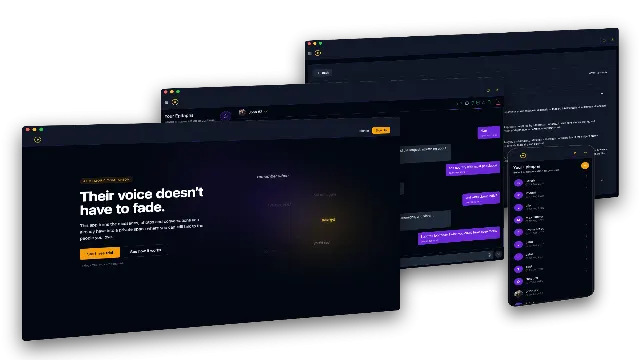
L'AI Grief Companion que nous avons construit pour une startup américaine montre quand les trois vont ensemble. Le produit permet à un utilisateur d'importer l'historique de ses conversations avec un proche disparu, puis de parler à un compagnon qui reprend sa voix. Nous analysons dix formats d'export de conversations, construisons un profil de personnalité et un graphe de faits dans Neo4j, et entraînons des adaptateurs LoRA sur Qwen2.5-7B en QLoRA 4 bits, que vLLM charge au moment de la requête. La recherche documentaire apporte les faits, l'adaptateur apporte la voix, et le chat s'appuie sur l'étape déjà prête : une conversation est possible une vingtaine de minutes après l'import et s'améliore à mesure que l'entraînement avance. Pour les produits centrés sur la recherche documentaire, voir développement RAG.
Comment contrôlons-nous la qualité des sorties ?
La qualité des sorties d'une IA générative se contrôle en la mesurant, pas en écrivant une fois un meilleur prompt. Avant toute mise en production, nous constituons un jeu d'évaluation : des entrées réelles ou réalistes, avec les propriétés attendues d'une bonne sortie. Chaque modification de prompt, de modèle ou de réglage de recherche est testée sur ce jeu.
Ce que nous vérifions dépend du produit. Pour la génération de documents : toutes les sections obligatoires présentes, aucun fait absent de l'entrée, format correct. Pour les outils de rédaction : consignes respectées, longueur respectée, ton conforme au style demandé. Pour les assistants : la réponse cite une source, et dit "je ne sais pas" lorsque la source manque. Certains contrôles sont du code, d'autres utilisent un second modèle comme correcteur, et un échantillon est toujours relu par une personne. En production, nous journalisons les entrées et les sorties (données personnelles masquées si nécessaire), suivons les modifications et les régénérations des utilisateurs comme signaux de qualité, et examinons chaque semaine les pires cas pendant les premiers mois.
Et la sécurité, la confidentialité et les contenus sensibles ?
Les produits d'IA générative qui traitent des contenus personnels ou émotionnels doivent intégrer la sécurité dans la couche de données et dans la conception des conversations, pas seulement dans un filtre de contenu. Dans l'AI Grief Companion, chaque message est chiffré à l'ingestion en AES-256-GCM par message sous une clé d'enveloppe KMS, les utilisateurs peuvent tout supprimer en un clic, et la conception des conversations oriente vers une aide professionnelle lorsque l'échange le demande.
Pour les produits professionnels, les questions sont plus ordinaires mais tout aussi importantes : quels champs atteignent une API tierce, où les données sont traitées, combien de temps les journaux sont conservés et qui peut les lire. Nous documentons le flux de données pour votre revue de sécurité et utilisons le masquage ou des modèles auto-hébergés lorsque la réponse l'exige.
Combien coûte le développement d'IA générative ?
Le coût dépend du type de produit, du besoin de fine-tuning ou d'auto-hébergement, et de la quantité de produit à construire autour (comptes, facturation, applications mobiles). En ordre de grandeur, une fonctionnalité générative dans un produit existant demande 4 à 8 semaines, un nouveau MVP d'IA générative sur des modèles hébergés 8 à 14 semaines, et un produit avec fine-tuning, modèles auto-hébergés ou applications mobiles 4 à 8 mois. Le coût de fonctionnement mensuel est à part : tokens ou hébergement GPU, base vectorielle, stockage et supervision.
Nous remettons un devis ferme après un court appel de cadrage. Une fonctionnalité d'IA générative dans un produit existant démarre à 10 000 USD chez nous, et notre guide du coût de développement d'une application IA détaille les coûts de construction et de fonctionnement.
Pourquoi les équipes nous choisissent pour leur IA générative
Les entreprises d'IA générative sont faciles à trouver ; celles qui ont livré des produits génératifs à de vrais utilisateurs et les ont maintenus en fonctionnement le sont moins. Nous avons construit de l'IA générative à la fois comme prestataire et comme propriétaire de produit : nous avons payé les factures de tokens, traité les plaintes d'utilisateurs sur de mauvaises sorties et réécrit des prompts sous trafic réel. Notre stack back-end principale est PHP/Symfony, avec React ou Vue pour le web, React Native ou Flutter pour le mobile, et Python lorsque l'entraînement ou le service des modèles l'exige. Des ingénieurs seniors pilotent chaque projet, et nous utilisons des agents de codage IA dans notre propre processus de livraison pour aller plus vite. Lorsque l'idée de produit est encore en formation, nous commençons généralement par une phase de découverte en développement de produits IA plutôt que de lancer directement le développement.
Prochaine étape
Envoyez-nous une courte description de ce que votre produit doit générer, pour qui et à partir de quelle entrée. Nous commençons par une courte phase de cadrage qui se termine par un prompt ou un prototype testé sur vos vrais exemples, une estimation du coût par génération et un devis ferme pour le développement. Réservez un appel de cadrage IA générative.