 Uk
Uk
 En
En
 Fr
Fr
 De
De
 It
It
 Es
Es
How do you choose an AI development company?
Choose an AI development company by verifying shipped AI work, testing how the team evaluates model output, checking its approach to data privacy and running costs, and confirming it is also a strong regular software team. Marketing pages all look alike in 2026; these four checks separate teams that ship from teams that demo.
Most AI features fail for ordinary reasons: poor data, no evaluation, unclear ownership, runaway API bills, or a weak product around the model. A good AI development partner spends as much effort on those as on the model itself. The checklist below is written for CTOs, product owners and non-technical founders at companies of roughly 10 to 200 people deciding who should build their first or next AI feature.
What should you verify before talking to an AI development company?
Before the first call, verify that the company has AI products you can actually open or detailed case studies with architecture, not just logos. Five minutes on their portfolio usually tells you whether AI is a core skill or a new label on an old service.
Look for:
- Case studies with technical detail. Which models, which retrieval approach, which vector store, how outputs are checked.
- Products with real users. A launched product exposes a team to failure modes that prototypes never meet.
- Regular engineering depth. Back end, front end, mobile, DevOps. AI features live inside normal software.
- Public ratings. Marketplace ratings and review platforms are imperfect but hard to fake at scale.
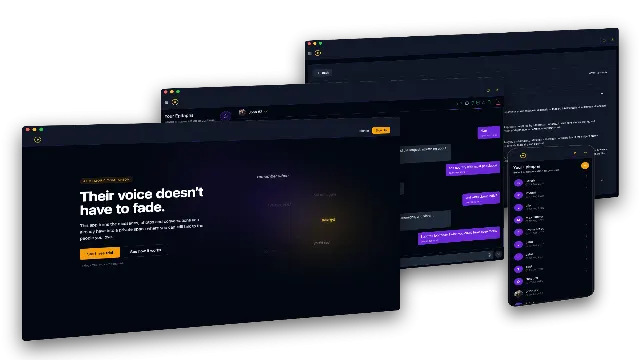
As an example of the detail to look for, our AI Grief Companion case study describes parsers for ten chat-export formats, per-message encryption at ingest, LoRA fine-tuning on Qwen2.5-7B, a fact graph in Neo4j and vLLM serving the right adapter per request. You should expect that level of specificity from any AI vendor you shortlist.
What questions should you ask an AI development company?
Ask questions that force specific answers about architecture, quality, data, cost and ownership. A capable team answers them with trade-offs and examples; a weak team answers with adjectives.
Architecture
- When would you use retrieval (RAG) instead of fine-tuning, and which do you recommend for us?
- Which models would you start with (OpenAI, Claude, open models) and how hard is it to switch later?
- Which vector database would you use (pgvector, Qdrant or another) and why?
Quality and safety
- How will you measure whether the AI output is good enough to launch?
- How do you reduce hallucinations, and what does the product do when the model is unsure?
- How do you protect against prompt injection, especially if the AI can call tools or APIs?
Data and privacy
- Where is our data sent and stored? Is it used to train anyone's models?
- How are personal data and secrets removed or encrypted?
Cost and operations
- What will this feature cost per month to run at our expected usage?
- How do you cap spend per user and monitor API costs?
Ownership
- Who owns the code, prompts, datasets, evaluation sets and any trained models?
- Will everything run in our cloud and API accounts?
How do you score AI development companies side by side?
Score each shortlisted AI development company on the same criteria with weights that reflect your risk. A simple scorecard stops the decision from being driven by whoever gave the most polished presentation.
| Criterion | Weight | What a strong answer looks like | Score 1-5 |
|---|---|---|---|
| Shipped AI work | 20% | Live products or detailed case studies with architecture and results | |
| Evaluation method | 15% | Test sets, measurable acceptance criteria, regression checks on prompt changes | |
| Data privacy and security | 15% | Clear data flow, no training on your data, encryption, access control | |
| Core software engineering | 15% | Back end, front end, DevOps, testing; AI treated as one part of the product | |
| Cost awareness | 10% | Estimate of monthly run cost, usage limits, caching, model choice by task | |
| Communication and overlap | 10% | Named senior contact, written updates, enough working-hours overlap | |
| Ownership and exit terms | 10% | Code and accounts in your name, IP assignment, handover documentation | |
| Commercial model | 5% | Fixed quote after a short scoping call, then fixed milestones or a clear team rate |
Multiply each score by its weight and compare totals, but read the notes as well. A team that scores 5 on everything except data privacy may still be the wrong choice for a health or finance product.
What are the red flags when hiring an AI development company?
The biggest red flag is a firm price and timeline for a complex AI system before anyone has looked at your data. Other warning signs predict trouble just as reliably:
- Accuracy promises without a test set. "95 percent accurate" means nothing until you know accurate on what.
- Fine-tuning as the default answer. Most business AI features start better with a hosted model, good prompts and retrieval.
- No mention of running costs. The API bill is part of the product's economics from day one.
- Everything in the vendor's accounts. API keys, cloud accounts and repositories should belong to you.
- Demo-only portfolio. Prototypes on clean sample data do not prove the team can handle real, messy input.
- Juniors behind a senior sales team. Ask who will write and review the code, and meet them.
- No human-in-the-loop design for agents. An AI agent that sends emails, moves money or edits records needs approval steps and logs.
How should an AI development engagement be structured?
A healthy AI engagement starts with a short scoping call, a fixed quote and often a small proof of concept as the first milestone, then moves to fixed-scope milestones or a dedicated team once the approach is proven. This structure limits risk on both sides because the hardest questions (data quality, model choice, acceptable accuracy) are answered early.
A typical structure:
- Scoping, one to three weeks. Use cases, data audit, architecture choice, evaluation criteria, cost estimate.
- Proof of concept, two to four weeks (optional). The core AI capability tested on your real data.
- Build, six to twelve weeks. The feature inside your product, with guardrails, monitoring and usage limits.
- Launch and tuning. Real-user monitoring, prompt and retrieval improvements, cost review.
For a new product, the same logic applies to the whole MVP. Our MVP development process guide shows the week-by-week version.
How can you test an AI company's evaluation approach before signing?
Test an AI company's evaluation approach by giving it 20 to 50 real examples from your business and asking how it would decide whether the AI feature handles them well enough. A strong team turns that request into a written test set with expected outcomes; a weak team offers to "fine-tune until it works".
A practical way to run this test during the sales process:
- Share a small, anonymized sample. Real support tickets, documents or records, including a few messy and edge cases.
- Ask for acceptance criteria. What counts as a correct answer, a partially correct one and a failure, and what success rate is realistic.
- Ask how prompt changes are checked. Every prompt or model change should be re-run against the same test set before release.
- Ask about monitoring in production. Logging of inputs and outputs (with personal data handled properly), user feedback buttons and periodic review.
- Ask about fallbacks. What the product shows when the model is unsure, slow or unavailable, and when a human takes over.
The answers also reveal how the company thinks about responsibility. Evaluation is the part of AI work that protects your users and your brand, and it is the part most often left out of cheap quotes. If a vendor cannot explain it in plain language, it is unlikely to deliver it.
Does it matter how the AI company itself uses AI?
Yes: a company that uses AI tooling in its own delivery usually understands the practical limits of models better than one that only sells AI. Ask how the team uses AI internally and what stays with people.
At Lytvynov Production we run our own engineering process with AI coding agents based on Claude Code, supervised by senior engineers who own architecture and code review. We also build MCP servers and agent tooling for our own products, such as our internal project board and site CMS. That day-to-day use is where we learn where agents help, where they fail, and which guardrails matter. Our AI agent development service applies the same lessons to client systems.
Should the AI company be onshore or offshore?
The location of an AI development company matters less than time zone overlap, communication quality and contract terms. Many US and UK companies hire teams in Central and Eastern Europe or Latin America to get senior engineers at lower rates.
If you are considering a nearshore or offshore partner, check working-hours overlap, the governing law of the contract, IP assignment and data processing terms, and the team's continuity plan. We cover these in detail, including war-time continuity questions, in our guide to outsourcing software development to Ukraine.
How we work with companies choosing an AI partner
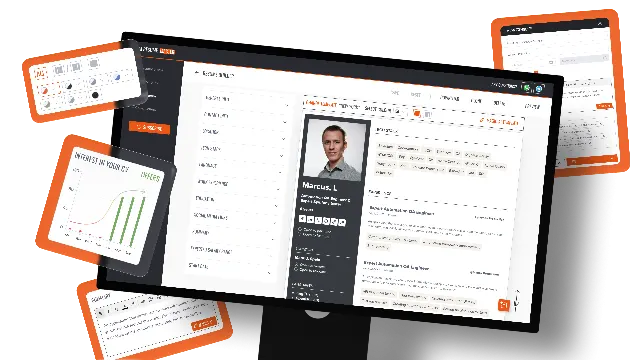
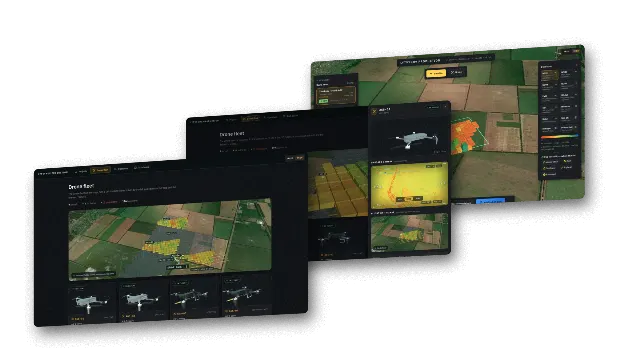
Lytvynov Production is a web, mobile and AI development agency from Ukraine working with startups and B2B companies in the US and Europe. We build with OpenAI and Claude APIs, RAG, LLM fine-tuning and MCP servers, on top of a PHP/Symfony, React and React Native stack. Our own products include AI Resume Master, which reached 50,000 monthly active users, and an autonomous drone swarm prototype for precision farming built in-house as R&D.
Use the scorecard above on us as well as on other vendors. Book a scoping call and ask us every question in this checklist. For adding AI to an existing product, see our AI integration service; for knowledge-grounded assistants, see RAG development.