 Fr
Fr
 En
En
 De
De
 It
It
 Es
Es
 Uk
Uk
How much does it cost to build an AI chatbot?
With Lytvynov Production, AI chatbot development cost in 2026 typically ranges from $10,000 for a custom FAQ bot to about $50,000 for an enterprise chatbot connected to several systems. A typical US or UK agency quotes roughly 2.5 to 4 times more for the same scope. Off-the-shelf chatbot platforms can cost less upfront, and for some companies they are the right answer. For a custom build, we give a fixed quote after a short scoping call.
An AI chatbot, in this guide, is a conversational interface built on a large language model (OpenAI, Anthropic Claude or an open model) that answers questions in natural language. The cost of an AI chatbot depends on three things: where its answers come from (general knowledge, your documents, or live data from your systems), how many channels it runs on (website, app, Telegram, WhatsApp, Slack), and what happens when it cannot help. A chatbot that also takes actions, such as refunds or bookings, moves into agent territory, which our AI agent development cost guide covers.
What does an AI chatbot cost by complexity?
With us, most custom AI chatbots for businesses land between $10,000 and $20,000, and enterprise builds go up to about $50,000. The table shows our typical ranges for a one-off build (development, evaluation and a pilot, not the monthly run cost) next to what a typical US or UK agency quotes for the same scope.
| Chatbot type | Typical scope | Timeline | With Lytvynov Production | Typical US/UK agency |
|---|---|---|---|---|
| Platform chatbot, configured | Vendor chatbot trained on your help center, standard widget | Days to 2 weeks | Setup fee plus subscription | Setup fee plus subscription |
| FAQ or documentation chatbot | RAG over your documents, one channel, handover by email or ticket | 4-8 weeks | from $10,000 (typically $10,000 - $15,000) | $25,000 - $60,000 |
| Support chatbot with live data | Order or account lookups via your API, helpdesk handover, analytics | 8-14 weeks | $10,000 - $20,000 | $25,000 - $80,000 |
| Enterprise AI chatbot | Role-based access, several data sources and channels, audit logs, SSO | 3-6 months | $20,000 - $50,000 | $50,000 - $200,000 |
| Chatbot as the product | Consumer chat app, memory, personalization, subscriptions, mobile apps | 4-9 months | $50,000 - $100,000 | $125,000 - $400,000+ |
The last row is a different category: when the chatbot is the product itself, the budget includes a full application around it. Our AI chatbot development service describes how we scope the first three types for companies.
Should you buy a chatbot platform or build a custom chatbot?
Buy a chatbot platform when your questions are answered in a public help center and your support already runs on a helpdesk the vendor supports. Build a custom chatbot when answers depend on your own systems, your data cannot leave your control, or the chatbot is part of your product.
| Factor | Buy (chatbot platform) | Build (custom chatbot) |
|---|---|---|
| Time to launch | Days to a few weeks | 4-14 weeks for most business chatbots |
| Upfront cost | Low, mostly configuration | From $10,000, most business chatbots $10,000 - $20,000 with us (2.5 to 4 times that at a US/UK agency) |
| Ongoing cost | Per seat, per conversation or per resolution | Tokens, hosting and maintenance |
| Data sources | Help center and supported connectors | Any document, database or internal API |
| Behavior and tone | Vendor settings | Fully defined by you, versioned and tested |
| Channels | Vendor-supported channels | Web, app, Telegram, WhatsApp, Slack or internal tools |
| Data control | Conversations pass through the vendor | You choose models, hosting and retention |
Usage-based vendor pricing is the line to model carefully. Some platforms charge per resolved conversation, often around a dollar each, which is cheap at low volume and expensive at high volume. A custom chatbot has a higher upfront cost but its monthly cost is mostly tokens and hosting. Our guide on AI agents for customer service compares vendor tools such as Intercom Fin and Zendesk AI with custom builds in detail.
What drives the cost of a custom AI chatbot?
Data sources, accuracy requirements and handover drive most of the cost of a custom chatbot. The conversation interface itself is the cheapest part.
- Knowledge sources. A chatbot that answers from 50 help articles is simple. One that answers from thousands of PDFs, a product database and a ticket history needs ingestion pipelines, chunking rules, a vector store such as pgvector or Qdrant, and permission filters. Our RAG implementation guide explains this layer.
- Live data lookups. Answering "where is my order?" requires authenticated calls to your API, which means identity checks and error handling.
- Accuracy and evaluation. A test set of real questions with expected answers, scored automatically, is what separates a demo from a production chatbot.
- Human handover. Passing the conversation to staff with full context, inside the helpdesk or CRM they already use.
- Channels. Each channel (website widget, mobile app, Telegram, WhatsApp, Slack) has its own message formats, limits and approval rules.
- Languages. Every language adds evaluation cases and sometimes separate content.
- Compliance. Personal data, health or financial information bring encryption, retention and deletion requirements.
What does an AI chatbot cost to run each month?
A business chatbot typically costs a few hundred to a few thousand dollars a month to run, and the model bill grows with conversation volume and length. Long conversations cost more per message, because each new reply resends the conversation history and retrieved context to the model.
| Monthly cost line | What it covers | Typical range (market, 2026) |
|---|---|---|
| Model usage (tokens) | Every reply, including history and retrieved passages | $30 - $5,000+ |
| Hosting | Chat API, workers, database | $50 - $500 |
| Vector database | Retrieval over your content | $0 - $500 |
| Channel fees | Paid messaging channels such as WhatsApp Business | Varies by volume and country |
| Monitoring and analytics | Logs, conversation review, alerts | $0 - $300 |
| Maintenance | Content updates, prompt changes, new evaluation cases | Often 15 to 25 percent of build cost per year |
Here is an illustrative calculation with assumed numbers, not a quote. A support chatbot handles 500 conversations a day, 6 messages each. Each reply sends about 4,000 tokens (instructions, history and retrieved passages), so a conversation uses about 24,000 tokens, or roughly 360 million tokens a month. At an assumed blended price of $2 per million tokens, the model bill is about $720 a month. Trimming history, retrieving fewer passages and caching the system prompt reduce it further.
How do you keep chatbot running costs under control?
Chatbot running costs stay predictable when limits and measurements are designed in from the first release. The main levers are shorter context, cheaper models for simple turns and hard limits per user.
- Summarize long conversations instead of resending every message.
- Retrieve a few relevant passages rather than whole documents.
- Route simple turns (greetings, clarifications, classification) to a small model.
- Use prompt caching offered by OpenAI and Anthropic for repeated instructions.
- Cap messages per user and per day so abuse or a loop cannot run up the bill.
- Log cost per conversation so you see which topics are expensive.
Why does a chatbot as a product cost more?
A chatbot that is itself the product costs more because it needs everything a consumer app needs, plus memory, personalization and safety rules around sensitive topics. The chat window is a small part of the work.
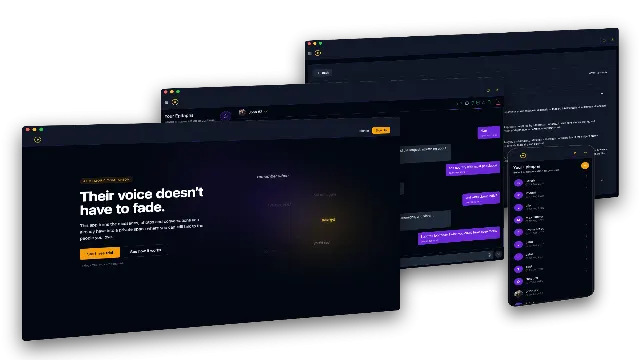
Our AI Grief Companion project is an example. A US grief-tech startup wanted a private chat that answers in the voice of a person the user has lost. The build included web, iOS and Android apps, an ingestion layer that parses ten chat-export formats, encryption of every message at ingest, LoRA training on an open model, RAG memory, a fact graph in Neo4j, and prompts stored in the database with version history. The chat also falls back to whichever stage is ready (base model, personality only or trained adapter), so a conversation is always possible while training runs. That scope is far from a support widget, which is why products built around fine-tuning and RAG memory sit in the top row of the table above.
Does a chatbot always need an LLM?
No. If users follow a fixed sequence of steps, a scripted conversational flow is cheaper, faster and more predictable than an LLM chatbot. Large language models earn their cost when users ask open questions in their own words.
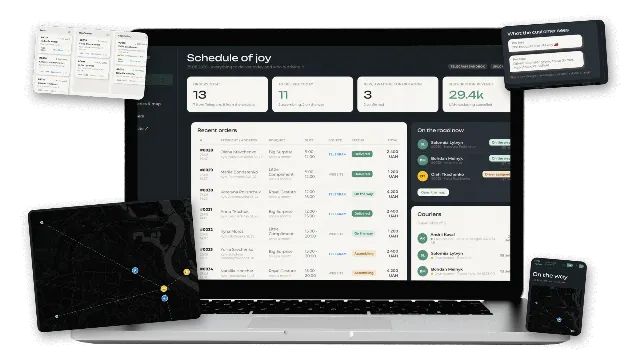
In our flower subscription service project, a Telegram bot takes a bouquet order in an eight-step chat: bouquet, frequency, recipient, phone, address, time slot and confirmation. The bot remembers where each chat is, so a customer can pause and return, and it sends status updates through delivery. A structured flow like this has no token bill and no risk of invented answers. Many good chatbots combine the two: scripted flows for transactions, an LLM for open questions.
How can you reduce AI chatbot development cost?
The most effective way to reduce AI chatbot development cost is to launch on one channel with one knowledge source and a clear handover path, then expand based on real conversations.
- Start with your top questions. Support logs usually show that a small set of topics covers most volume.
- Pick one channel first, usually the website or the app.
- Hand over early. A fast, polite handover to a person is cheaper than teaching the bot every edge case.
- Build the evaluation set before the bot. It keeps the project focused on accuracy instead of features.
- Keep the model swappable, so you can move to a cheaper model tier when it passes your tests.
How we build and price AI chatbots at Lytvynov Production
Lytvynov Production builds chatbots grounded in company data with OpenAI or Claude APIs, RAG over your documents, live lookups through your APIs and handover to people. Senior engineers lead delivery, and we use AI coding agents internally to speed up routine work.
Custom chatbots start from $10,000 with us, and larger builds scale with data sources, channels and integrations. We give a fixed quote after a short scoping call: we review your content and support logs, estimate the monthly model bill on your real volumes, and agree how accuracy will be measured. The build then runs in milestones. For more on our approach, see RAG development, or contact us with the questions your chatbot should answer.