 Es
Es
 En
En
 Fr
Fr
 De
De
 It
It
 Uk
Uk
What MCP server development services include
MCP server development is the work of turning your product into something an AI assistant can use: a server that speaks the Model Context Protocol and exposes your product's actions (tools), readable data (resources) and templates (prompts). Once it is live, a user can connect your product to Claude, ChatGPT or a developer tool and ask, in plain language, to find a record, summarize recent activity or create a draft, and the assistant does it through your server with that user's permissions.
Our MCP server development services cover the full job, not only the protocol layer:
- Tool design. Choosing the 5 to 20 jobs users actually want done, then writing names, descriptions and input schemas that models understand.
- Integration with your API. A thin layer over your existing endpoints or service layer, so business rules and permissions are not duplicated.
- Authentication. OAuth for customer-facing servers, scoped tokens, read-only and write scopes.
- Safety defaults. Drafts instead of instant publishing, confirmations for irreversible actions, limits on bulk operations, input validation.
- Testing with real clients. Realistic requests run through several assistants to check that the right tools are called with the right arguments.
- Deployment and observability. Docker deployment, per-tool metrics, audit logs and alerting on error spikes.
If you first want to understand the concepts, our guide what is an MCP server explains tools, transports and authentication in plain language. This page is about hiring a team to build one.
Who needs a custom MCP server?
A custom MCP server makes sense when your users already work in AI assistants and keep copying data out of your product into them, or when your customers ask for "an AI integration" and you want to answer without building a full assistant inside your interface.
Typical situations we see:
- SaaS products holding work data: tasks, tickets, CRM records, documents, orders, analytics. Users want to ask their assistant about that data and update it without switching tabs.
- Internal systems such as ERP, CRM or a back office, where staff and internal AI agents need controlled access to the same actions people perform by hand.
- Products building their own agents. An MCP server is a clean, reusable way to give your agents tools, and the same server can later be opened to customers.
- Teams using AI coding agents that need access to internal services, test data or deployment tools in a controlled way.
When it is too early: the product has no stable API yet, permissions are coarse, or the core workflow is visual and does not translate into actions. In those cases we usually start with the API layer or with read-only tools.
How we build MCP servers in production
We build and run MCP servers in production for our own systems, and our team and our AI coding agents use them every day. That daily use is where our design rules come from: vague tool descriptions make models guess, missing validation lets bad data in, and write tools that publish immediately should have been drafts.
For a client project the build follows these steps.
| Step | What we do | What you get |
|---|---|---|
| 1. Scoping | Review your API, data model and permissions; list the jobs users would hand to an assistant | A tool list with priorities and a fixed quote |
| 2. Tool design | Names, descriptions, typed schemas, compact outputs, recoverable error messages | A tool specification your team can review |
| 3. Server and auth | Remote server over Streamable HTTP, OAuth, per-user permission checks on every call | A working server in a staging environment |
| 4. Safety and limits | Drafts, confirmations, rate limits, cross-tenant tests, prompt injection checks | A security note for your review |
| 5. Client testing | Realistic requests through Claude, ChatGPT and a developer tool | A test report with tool selection results |
| 6. Launch | Deployment, logging, metrics, documentation for your customers | A production server and a runbook |
We use the official SDKs and write the server in the language that fits your product. Our main back-end stack is PHP and Symfony, and we also build in TypeScript and Python when that is the better match for your API or hosting; see how we choose between the PHP SDK and a Node sidecar.
Local or remote MCP server?
A remote MCP server, running in the cloud over HTTP, is the right choice for almost every SaaS product: customers connect it from web and desktop assistants without installing anything, and you control authentication, updates and logs in one place. A local server, running on the user's machine over stdio, fits developer tools that need files or the command line.
Some products need both. A common pattern is a remote server for customers and a small local server for your own engineering team's coding agents. We decide this during scoping based on who the users are and where the data lives.
Security: what the server must enforce
An MCP server gives a model the ability to act, so the server has to be the place where limits live. We build every server around these rules:
- User-level permissions on every call. The assistant acts as the signed-in user, never with a shared admin key.
- Least privilege. Read-only scopes for customers who only want search and summaries; write scopes only where needed.
- Untrusted input. Text from emails, documents and web pages can carry prompt injection, so tool inputs are validated like any external input.
- Safe writes. Drafts, soft deletes and confirmations for irreversible actions; bulk operations capped.
- Tenant isolation tests. Automated tests prove that one organization cannot reach another's data.
- Rate limits and audit logs. A model in a loop can call a tool hundreds of times. Per-user limits stop that, and logs show customers exactly what their assistant did.
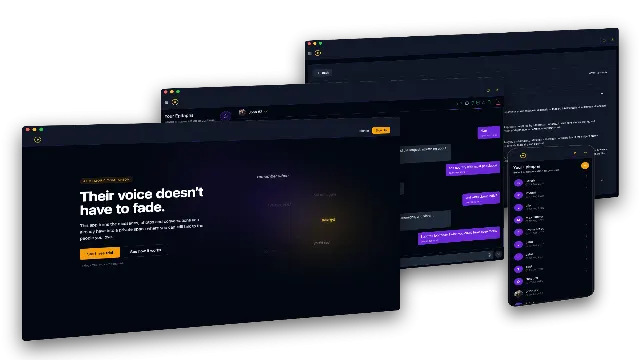
The same discipline protects products we run ourselves. In the AI Grief Companion project, for example, every message is encrypted at ingest with per-message AES-256-GCM under a KMS envelope key, because the data is deeply personal.
MCP server, AI agent or in-product AI feature?
These three solve different problems, and many products end up with more than one.
| Option | Who uses it | Best when |
|---|---|---|
| MCP server | Your users, inside the assistant they already use | Users want to reach your product from Claude, ChatGPT or their tools |
| In-product AI feature | Your users, inside your interface | The AI capability is part of your product experience |
| AI agent | Your team or your system, running a workflow | A multi-step job should run with little human input |
An MCP server is often the cheapest first step, because it reuses your API and lets users bring their own assistant. If you need the model inside your own interface, see AI integration services. If you need software that runs a whole workflow, see AI agent development; our agents usually reach your systems through MCP servers too.
How long does MCP server development take, and what does it cost?
For a product with a clean API, a first remote MCP server with a focused set of tools, OAuth and logging typically takes 2 to 6 weeks. Most of that time goes into choosing the tools, writing descriptions models understand, authorization and testing with real assistants, not into the protocol itself.
The main cost drivers are the number of tools, the state of your API, the complexity of your permission model, whether the server must run on your infrastructure, and how many AI clients you want to support and test.
A focused first server usually fits into one AI Sprint: $10,000 for 4 weeks, fixed, with the source code in your repository. Larger servers, or servers that need an API layer built first, are quoted after a short scoping call. Our minimum project size is $10,000.
Why teams choose us for MCP servers
- We run our own. We build and run MCP servers in production for our own systems, so we have already met the failure modes that appear only after weeks of real use.
- We build the clients too. We integrate the Claude API and the OpenAI API into products and build agents on top of them, so we design tools from the model's side as well as the API's side.
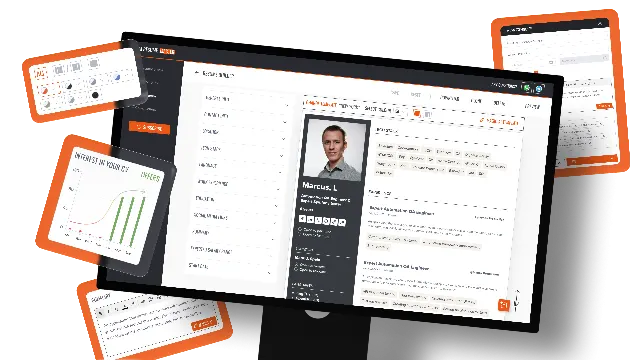
- We ship AI to real users. Our own AI Resume Master, an AI SaaS built on the OpenAI API, was built in about three months and reached 50,000 monthly active users.
- Senior engineers with AI coding agents. Senior engineers own architecture, security and review; AI coding agents speed up the routine work under their supervision.
Lytvynov Production was founded in 2020 in Dnipro, Ukraine.
Next step
Send us a link to your API documentation and a few things your users would ask an assistant to do. In a 30-minute call we will propose a first set of tools, flag the permission and security questions, and tell you whether it fits into one sprint. Contact us to book the call.