 Es
Es
 En
En
 Fr
Fr
 De
De
 It
It
 Uk
Uk
What OpenAI API integration covers
OpenAI API integration connects GPT models to your software so it can draft and rewrite text, extract fields from documents, classify requests, search your content by meaning and call your own functions. The model is called from your back end, never from the browser, so your API key, prompts, limits and logs stay under your control.
A production integration usually includes:
- Model selection measured on your real examples, with a smaller model for simple steps and a larger one where it measurably helps.
- The Responses API as the foundation for new features, with conversation state and built-in tools where they fit.
- Function calling so the model can call your APIs with typed arguments.
- Structured outputs that follow a JSON schema, validated before they reach other systems.
- Embeddings for semantic search, deduplication, clustering and retrieval (RAG).
- Streaming so users see output as it is generated.
- Evaluation, logging and cost limits from the first release.
Deciding between providers first? Our guide on integrating ChatGPT or Claude into your product walks through that choice. This page is for teams that want OpenAI built into their product properly.
OpenAI API features we build with
| Feature | What it does | Typical use |
|---|---|---|
| Responses API | OpenAI's main API for text, tools and multi-turn state | New features and assistants |
| Function calling | The model calls functions you define with JSON arguments | Lookups, drafts, actions in your systems |
| Structured outputs | Output constrained to your JSON schema | Extraction, form filling, data for other services |
| Embeddings | Turns text into vectors for similarity search | Semantic search, RAG, recommendations |
| Built-in tools | File search, web search and code execution on supported models | Prototypes and assistants over uploaded files |
| Batch API | Asynchronous jobs at a lower price than live calls | Bulk classification, enrichment, backfills |
| Vision input | Reads images and screenshots | Document intake, visual checks |
| Moderation | Classifies harmful content | Screening user input and output |
OpenAI changes models and features often, so we confirm the current options against the API documentation during scoping, not from memory.
Migrating from the Assistants API or Chat Completions
Many products were built on the Assistants API or on Chat Completions with custom glue code. OpenAI has deprecated the Assistants API in favour of the Responses API, so products still on it need a migration, and Chat Completions users often gain from moving to Responses for tools and state.
Our migration process:
- Inventory. List assistants, instructions, tools, files, vector stores and how threads are stored and used.
- Mapping. Translate each piece to Responses and the current tool set, and decide where conversation state should live: with OpenAI or in your own database.
- Evaluation baseline. Run your real conversations through the old version and record results before changing anything.
- Parallel run. Build the new path behind a feature flag and compare outputs on the same evaluation set.
- Gradual switch. Move traffic in steps while monitoring quality, latency and cost.
The evaluation baseline is the step teams skip and regret. Without it, nobody can tell whether the migration made answers better or worse.
Function calling: letting GPT models act in your product
Function calling lets the model decide when to call one of your functions and with what arguments; your code runs the call and returns the result. The model never touches your database directly.
We keep tool sets small and well-described, run every call with the current user's permissions, require confirmation for risky actions and log each call. When the same tools should serve several assistants, including Claude and developer tools, we expose them through an MCP server, which OpenAI's platform can also connect to in supported modes. See MCP server development.
For multi-step workflows that run with little human input, see AI agent development.
Embeddings and RAG on OpenAI
Embeddings let the product find content by meaning instead of keywords: a support question finds the right help article even if it uses different words. We store vectors in pgvector, inside your existing PostgreSQL, or in a dedicated vector database such as Qdrant, and combine semantic and keyword search when exact terms matter.
For answers over your own documents, embeddings are one part of a retrieval-augmented generation pipeline, along with ingestion, chunking, reranking, permissions and an evaluation set. Our RAG development service covers that in depth, and our AI chatbot development service applies it to customer and employee assistants.
How we keep OpenAI API cost under control
- Model routing: the smallest model that passes the evaluation set handles each step.
- Prompt caching: OpenAI discounts repeated prompt prefixes, so we keep stable instructions at the start of the prompt.
- Context discipline: send relevant sections, not whole histories.
- Batch API for work that can wait.
- Hard limits per user, per feature and per month.
Every call is logged with token counts, so cost is visible per feature and per customer. To estimate the bill before building, use our LLM API cost calculator.
Guardrails and evaluation
- Data minimization and masking of personal data before it reaches the API.
- Grounding factual answers in retrieved sources with citations.
- Schema validation of every structured output.
- Prompt injection defenses: user and document content is data, never instructions; tool calls are checked against real permissions.
- A fixed evaluation set of real inputs, rerun on every prompt or model change, including OpenAI model upgrades.
Our experience with the OpenAI API
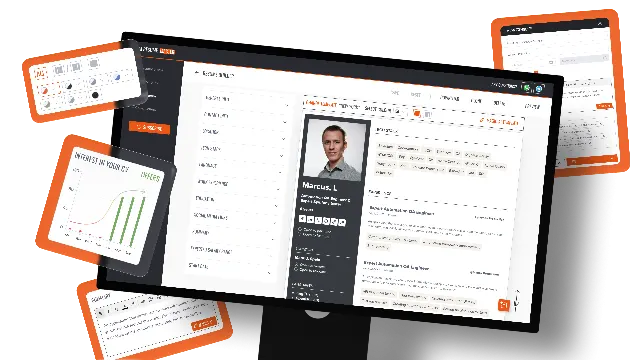
Our own AI Resume Master is an AI SaaS built on the OpenAI API. It generates, rewrites and improves resume content and cover letters, was built in about three months and reached 50,000 monthly active users. Running it ourselves taught us what matters after launch: prompt versioning, cost per user, model upgrades that silently change output, and limits that stop abuse.
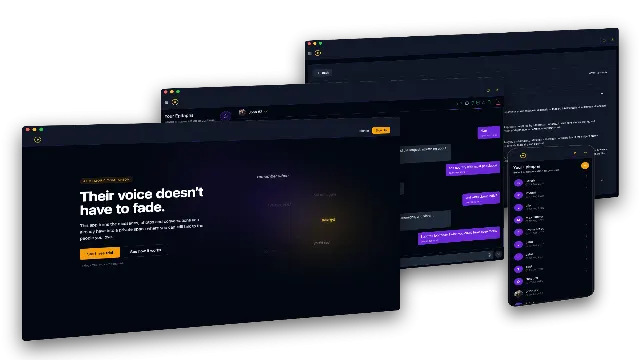
We are model-neutral beyond that. For a US grief-tech startup we built the AI Grief Companion with LoRA fine-tuning on an open model, Qwen2.5-7B, plus RAG memory, because reproducing one specific person's voice required it. If Claude measures better on your data, we will say so; see Claude API integration.
Process, timeline and cost
A first OpenAI-powered feature in an existing product typically takes 4 to 8 weeks: 1 to 2 weeks of scoping with model tests on your examples, 1 to 2 weeks for a prototype behind a feature flag, 1 to 3 weeks of hardening and about a week of gradual rollout. Migrations from the Assistants API depend on how many assistants and tools you run.
We quote a fixed price after scoping. AI features for an existing product start from $10,000 with us, and our minimum project size is $10,000. A focused first feature or a small migration can run as one AI Sprint: $10,000 fixed for 4 weeks. API usage is billed by OpenAI or Azure directly and estimated up front.
Why teams choose us for OpenAI integration
- We run an OpenAI product ourselves, at 50,000 monthly active users.
- Senior engineers with AI coding agents, who own architecture, security and review.
- Your stack: PHP and Symfony, Node, React and Next.js, React Native and Flutter.
- Fixed quotes after a short scoping phase.
Lytvynov Production was founded in 2020 in Dnipro, Ukraine.
Next step
Tell us which feature you want, or which old integration needs to move. In a 30-minute call we will recommend an approach, flag the risks and propose a scoping phase that ends with a fixed quote. Contact us to book the call.