 Uk
Uk
 En
En
 Fr
Fr
 De
De
 It
It
 Es
Es
Symfony vs Laravel for SaaS: which should you choose in 2026?
Symfony vs Laravel for SaaS comes down to one trade-off: Laravel optimizes for speed of development and a complete, opinionated ecosystem; Symfony optimizes for explicit architecture and long-term maintainability. Both are mature, actively developed PHP frameworks that power large commercial SaaS products, and neither is a wrong choice in 2026.
We should be upfront: Lytvynov Production is a Symfony team. Our core back-end stack is PHP/Symfony, and we build and maintain SaaS platforms on it through our Symfony development services. That gives us deep experience with Symfony's strengths and its costs. This guide tries to be fair, including the cases where we would tell a client to pick Laravel.
In short:
- Pick Laravel if you are a small team, your product is mostly standard SaaS features, and time to first paying customer matters most.
- Pick Symfony if your domain is complex, the product must live and evolve for many years, you expect several teams or integrations, or you need long-term support releases for compliance.
How do Symfony and Laravel compare side by side?
The table below summarizes the differences that matter for a SaaS product. Scores are not absolute; each row describes the default experience, and experienced teams can close most gaps.
| Criterion | Symfony | Laravel |
|---|---|---|
| Philosophy | Explicit configuration, reusable components, dependency injection everywhere | Convention over configuration, expressive helpers, facades |
| ORM | Doctrine (data mapper, unit of work) | Eloquent (active record) |
| Speed to first release | Good, slightly more setup | Very fast, many first-party packages |
| Long-term maintainability | Strong for large, complex domains | Good with discipline; conventions can blur boundaries as code grows |
| API building | API Platform (OpenAPI, JSON-LD, GraphQL), native serializer | API resources, Sanctum or Passport; API Platform now also supports Laravel |
| Admin panels | EasyAdmin, Sonata | Filament (community), Nova (commercial, first-party) |
| Queues and background jobs | Messenger component, many transports | Queues with Horizon dashboard, very easy setup |
| Real time | Mercure, Symfony UX Turbo | Reverb (WebSockets), Broadcasting, Livewire |
| Testing | PHPUnit, functional test client, Panther | PHPUnit and Pest, rich testing helpers |
| Release cycle | Minor every six months; LTS every two years with longer support | One major version per year with a fixed support window |
| Hosting ecosystem | Any PHP host; Platform.sh / Upsun partnership | Forge, Vapor, Laravel Cloud, plus any PHP host |
| Hiring pool | Smaller, strong in Europe and enterprise | Larger worldwide, more juniors and mids |
How do the architectures differ?
Symfony is a set of decoupled components glued together by an explicit dependency injection container, while Laravel is a full-stack framework with conventions, facades and helper functions that make common tasks short. Laravel even uses several Symfony components internally, so the difference is philosophy, not quality.
In practice, a Symfony application pushes you toward services with constructor-injected dependencies, configuration you can read, and entities that are plain PHP objects persisted by Doctrine. A Laravel application pushes you toward Eloquent models that know how to save themselves, facades for quick access to services, and conventions that remove boilerplate. Laravel code is often shorter; Symfony code is often easier to trace when something breaks two years later. Both frameworks support clean architecture if the team chooses it, and both can be misused.
Which is easier to maintain over the long term?
For large, long-lived SaaS products, Symfony is usually easier to maintain, mainly because of Doctrine's separation of domain objects from persistence, explicit wiring and predictable upgrade paths. Laravel products stay maintainable too, but it takes more team discipline to keep business logic out of models and controllers as the codebase grows.
A real example: we built Ritoria, a serialized-fiction platform, on Symfony with 54 domain entities covering stories and chapters, an in-app currency bought through Stripe, PayPal or Braintree, a cover-design marketplace, forums, messaging and moderation, plus an EasyAdmin back office with 38 sections. It ran in production on AWS for two and a half years through 292 commits and 120 database migrations of continuous evolution. See the Ritoria case study. That kind of steady change over years is where explicit architecture earns its cost.
How do API Platform and the Laravel equivalents compare?
For API-first SaaS, Symfony's API Platform is one of the strongest tools in any language: define resources and it generates REST and GraphQL endpoints with OpenAPI docs, pagination, filtering, validation and security rules. Laravel covers the same ground with API resources, form requests and Sanctum or Passport for authentication, which is simpler to start with but more hand-written code per endpoint.
The gap has narrowed: since version 4, API Platform also supports Laravel, so Laravel teams can use it with Eloquent models. If your SaaS exposes a public API, serves a separate React, Vue or mobile front end, or needs strict API contracts, both frameworks now have a good path, with API Platform on Symfony still being the most mature combination.
What about admin panels, queues and real-time features?
Both frameworks have strong options for the back office and background work, so this is rarely a deciding factor. The difference is mostly in how much is first-party and how quickly you get started.
- Admin: Symfony has EasyAdmin, which is quick for CRUD-heavy back offices and scales to dozens of sections, as in Ritoria. Laravel has Filament, a very popular community admin framework, and Nova, a paid first-party product. Filament is often faster for rich dashboards.
- Queues: Laravel queues with Horizon give a polished dashboard and simple setup. Symfony Messenger is flexible (RabbitMQ, Redis, Amazon SQS, Doctrine transports), supports retries and failure transports, and works well for event-driven designs, with a bit more configuration.
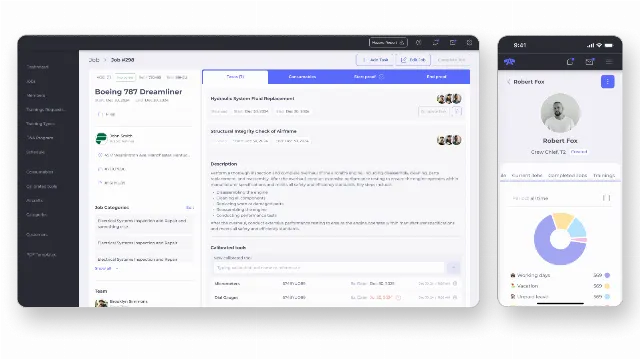
- Real time: Symfony has Mercure for server-sent updates; Laravel has Reverb and broadcasting. Our custom ERP for a US aircraft service company used Symfony, React and Mercure to keep scheduling and warehouse data live across departments.
How do testing and code quality tools compare?
Testing is excellent in both. Laravel offers very expressive helpers (HTTP fakes, queue and mail fakes, factories) and Pest, a popular testing framework with a concise syntax. Symfony offers a functional test client, PHPUnit integration, Panther for browser tests and strong tooling around Doctrine fixtures.
Static analysis (PHPStan, Psalm) and code style tools work in both ecosystems. Symfony's explicit dependency injection tends to make static analysis stricter out of the box; Laravel relies more on IDE helper packages and framework-aware plugins because of facades and magic methods. For a SaaS with AI coding agents in the workflow, as in our own delivery process, explicit and strictly typed code gives better, safer automated changes.
Is it easier to hire for Laravel or Symfony?
Laravel has the bigger talent pool worldwide, which helps if you plan to hire in-house quickly or rely on freelancers. Symfony talent is smaller but concentrated in Europe and in teams used to long-lived enterprise codebases.
For a founder, the practical question is who maintains the product in year three. If you plan to build an internal team in the US, Laravel candidates are easier to find. If you work with an external team or hire senior engineers, both are fine; strong PHP engineers usually move between the frameworks in weeks, not months. Avoid choosing a framework only because one freelancer knows it.
Which is faster in production?
Neither framework is a meaningful performance bottleneck for a typical SaaS. Response times are dominated by database queries, N+1 problems, missing indexes, external API calls and caching strategy.
Both frameworks run on modern PHP with OPcache and JIT. Both can run in long-lived worker mode with FrankenPHP or RoadRunner (Laravel via Octane, Symfony via its runtime component), which removes the per-request bootstrap cost and makes PHP competitive with other back-end stacks for API workloads. Symfony's compiled container and Doctrine's unit of work give a small edge in complex write-heavy flows; Laravel's Eloquent is quick to write but easier to misuse with lazy loading. Measure your own hot paths before optimizing.
How do the release cycles and LTS policies differ?
Symfony publishes a minor version every six months and a long-term support (LTS) version every two years, with LTS releases receiving several years of bug and security fixes. Symfony 7.4 LTS and Symfony 8.0 were released in late 2025, so a SaaS started in 2026 can build on a supported LTS line for years.
Laravel releases one major version per year, and each version has a fixed window of bug fixes and security fixes that is shorter than a Symfony LTS. Laravel upgrades are usually small and well documented, and tools like Laravel Shift automate much of the work, but you should plan an upgrade roughly every year. For regulated industries or clients who require predictable support windows, Symfony's LTS policy is a real advantage; for teams that upgrade continuously anyway, Laravel's yearly rhythm is manageable.
When should you pick Symfony, and when Laravel?
Pick the framework that matches your product's complexity, lifetime and team, not the one with the louder community.
| Your situation | Our recommendation |
|---|---|
| Solo founder or 1-3 developers, standard SaaS features, need to launch in weeks | Laravel |
| Complex domain (finance, logistics, ERP, marketplaces with payouts) | Symfony |
| API-first product with public API and separate front ends | Symfony with API Platform (Laravel with API Platform is a viable option) |
| Product expected to evolve for 5+ years with changing teams | Symfony |
| Team already experienced in one framework | Stay with that framework |
| Heavy compliance, need for LTS versions | Symfony |
| Rich admin dashboards needed very fast | Laravel with Filament, or Symfony with EasyAdmin |
| Existing Symfony or Laravel codebase that works | Upgrade and refactor, do not rewrite |
If you are still at the idea stage, the framework decision matters less than scope. Our guides on the MVP development process and MVP development cost explain how to cut scope so the first version ships in weeks either way.
How we work on Symfony SaaS projects
At Lytvynov Production we build and maintain SaaS products on Symfony with React, Vue or Angular front ends, and we upgrade legacy Symfony and PHP applications. We start with a short scoping call, review your requirements or existing code, give an honest stack recommendation, even when it is Laravel, and then a fixed quote; a SaaS product starts from $10,000 with us. See our SaaS development services or contact us to discuss your product.