 Es
Es
 En
En
 Fr
Fr
 De
De
 It
It
 Uk
Uk
What an AI proof of concept should prove
An AI proof of concept should prove one thing with evidence: that a specific AI approach does a specific job on your real data, accurately enough and cheaply enough to be worth building properly. A demo on hand-picked examples does not prove that. A measured result on a set of real inputs does.
So every AI PoC we run ends with numbers, not impressions:
- Accuracy on an evaluation set of your real cases, judged against outputs you agreed are correct.
- Failure patterns: which inputs break it and why, such as scanned documents, missing fields or ambiguous requests.
- Latency: how long a user or process would wait.
- Cost per request and an estimate of monthly running cost at your expected volume.
- A go or no-go recommendation, with what the full build would include and roughly cost if the answer is go.
That is the difference between an AI prototype and a proof of concept. A prototype shows what a feature could look like; a PoC tells you whether it will work.
When an AI PoC is the right first step
An AI PoC is the right first step when the idea is clear but the outcome is uncertain. Typical signals:
- The data is messy or unusual: scanned PDFs, handwritten forms, mixed languages, domain jargon, or years of inconsistent records.
- Accuracy matters: a wrong answer costs money, trust or compliance, so you need a measured error rate before deciding.
- The budget decision needs numbers: leadership or investors want accuracy and running cost on paper before approving a larger project.
- Several approaches are possible: prompting, retrieval (RAG), fine-tuning or an agent with tools, and you do not want to bet on the wrong one.
- The approach is new to your team, such as an agent acting in your systems or a model reproducing a specific style.
You probably do not need a PoC when the task is well understood and low risk, such as summarizing support threads or drafting text from structured data. In that case start building directly with AI integration. And if you have several competing ideas and no clear first candidate, start with AI consulting to rank them, or with an AI audit if the question is where AI fits in an existing product.
How our AI proof of concept works, week by week
We run every PoC as a fixed-scope AI Sprint: one question, one team, up to 4 weeks, one price. When the question is narrow, the go or no-go answer is usually ready in about 2 weeks, and the remaining time turns the prototype into a pilot your team can try.
| When | What we do | What you get |
|---|---|---|
| Before start | 30-minute call, then a written scope: the task, the success threshold, the data | A one-page PoC brief |
| Week 1 | Data access, 30 to 100 real examples collected into an evaluation set, two or three models tested | First measured results per model |
| Week 2 | Prompt, retrieval or pipeline tuning against the evaluation set; failure analysis | Accuracy, latency and cost per request; preliminary go or no-go |
| Weeks 3 to 4 | A usable pilot: simple interface or API, logging, cost limits, a trial with real users | A pilot your team can use and a final report |
The success threshold is agreed before we start, for example "at least 90 percent of extracted fields correct on the evaluation set" or "a support lead accepts 8 of 10 drafted replies without edits". Agreeing it up front keeps the result honest on both sides.
What you get at the end of an AI PoC
- Working prototype code in your repository, written so the core can carry into a production build.
- The evaluation set: your real examples with expected outputs, plus a script that scores any future version against it.
- A results report: accuracy, failure patterns, latency, cost per request, monthly cost estimate and the models compared.
- An architecture note for the production version: data flow, guardrails, integration points and open risks.
- A go or no-go recommendation and, if go, a fixed quote for the next stage.
You own all of it, whether or not you continue with us.
Examples of what we have prototyped and built
Our evidence comes from building AI systems ourselves and for clients, including work where the hard question was whether the approach would work at all.
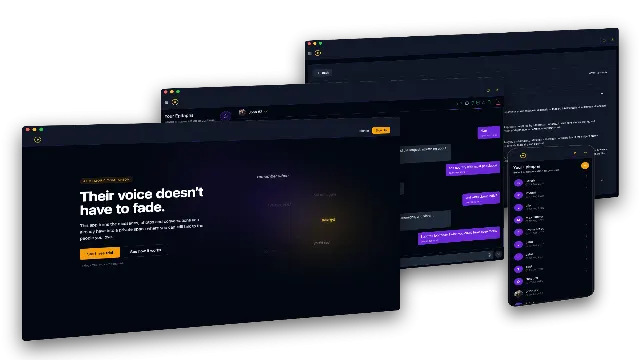
- AI Grief Companion: for a US startup we built ingestion of ten chat-export formats, LoRA fine-tuning on Qwen2.5-7B to reproduce one specific person's voice, RAG memory and a fact graph in Neo4j. Prompting alone could not reproduce the voice; that is exactly the kind of question a PoC settles early.
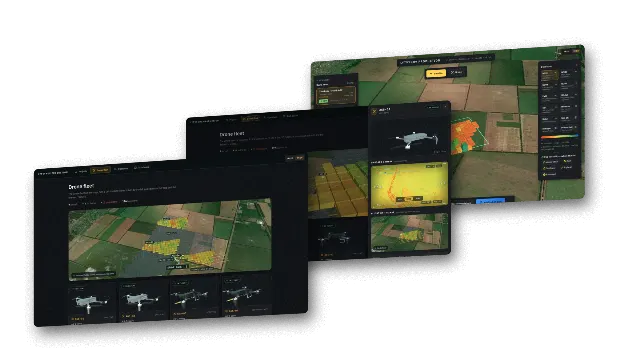
- Autonomous drone swarm prototype: our own R&D, turning Sentinel-2 satellite data into per-zone diagnoses and tasks that a fleet picks up without a dispatcher.
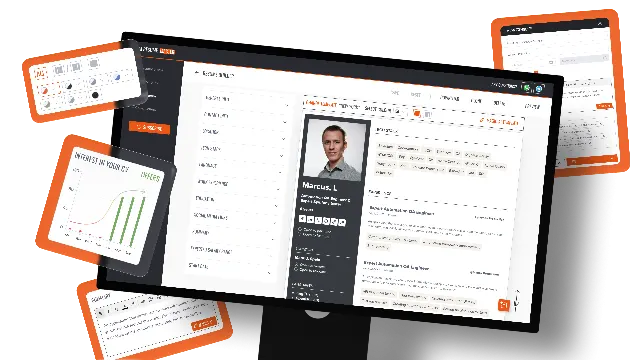
- AI Resume Master: our own AI SaaS on the OpenAI API, built in about three months, which reached 50,000 monthly active users.
How we keep a PoC from becoming a demo that never ships
Most AI pilots that stall do so for predictable reasons: they were tested on clean examples, nobody agreed what success meant, or the running cost was discovered after launch. We design against each of these.
- Real inputs only. The evaluation set comes from your actual documents, tickets or records, including the ugly ones.
- A threshold agreed in advance. The PoC passes or fails against a number set before the first line of code.
- Cost measured, not guessed. Every call is logged with token counts, so the monthly estimate is based on measurement.
- Production-minded code. Model calls run on the server behind a provider abstraction, so switching between OpenAI, Claude or an open model is configuration, not a rewrite.
- A person who judges quality. Someone on your side who knows what a correct answer looks like reviews outputs weekly.
What does an AI proof of concept cost?
$10,000 fixed, for up to 4 weeks, run as one AI Sprint. That includes scoping, data preparation for the evaluation set, prototype development, model comparison, the pilot, the report and a handover call. Model and hosting usage during the PoC is paid directly by you and is usually small; we estimate it up front.
If the result is go, the next stage is either more sprints at the same fixed price or a fixed quote for the full build. A working AI MVP after a successful PoC typically takes 8 to 14 weeks; see AI product development. Our guide to fixed-price AI development explains how we keep AI work on a fixed budget.
Why run your AI PoC with us
- Engineers, not presenters. The senior engineers who run the PoC are the people who would build the production version.
- Model-neutral. We test OpenAI, Anthropic Claude and open models on your data and pick on measured results.
- Fast without cutting the measurement. Senior engineers working with AI coding agents build quickly; the evaluation still runs on real data.
- Honest outcomes. A clear no-go is a valid result, and we report it as one.
Lytvynov Production was founded in 2020 in Dnipro, Ukraine.
Next step
Describe the task and send a few real examples. In a 30-minute call we will tell you whether a PoC is the right step, what the success threshold should be, and what data we need. Contact us to book the call.